
[Paper Review] Advancements in Scientific Controllable Text Generation Methods
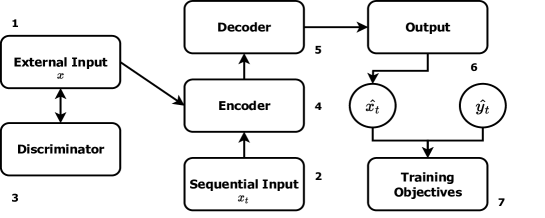
This paper introduces a novel seven-module schema for scientific controllable text generation, organizing existing methods into a unified framework that enables precise control over text attributes like style, sentiment, and structure. By systematically analyzing modulation strategies across encoding, decoding, and training objectives, the work enables the design of new architectures through component combination, offering a foundation for future empirical comparison and improved controllability in scientific text generation using LLMs.
The previous work on controllable text generation is organized using a new schema we provide in this study. Seven components make up the schema, and each one is crucial to the creation process. To accomplish controlled generation for scientific literature, we describe the various modulation strategies utilised to modulate each of the seven components. We also offer a theoretical study and qualitative examination of these methods. This insight makes possible new architectures based on combinations of these components. Future research will compare these methods empirically to learn more about their strengths and utility.
Motivation & Objective
- To organize fragmented research in controllable text generation into a coherent, unified framework.
- To identify and analyze seven key components essential for controlled scientific text generation.
- To provide a theoretical and qualitative foundation for designing new architectures by combining modular components.
- To guide future empirical research by highlighting strengths and utility of different modulation strategies.
- To enhance controllability in scientific text generation using LLMs through structured decomposition of generation pipelines.
Proposed method
- Proposes a seven-module schema: External Inputs, Sequential Inputs, Discriminator, Encoding Operations, Decoding Strategies, Output Projection, and Training Objectives.
- Each module is analyzed for its role in controlling text generation properties such as style, sentiment, and intent.
- Introduces modulation strategies—e.g., conditional input injection, loss-based training, and attention mechanisms—for each component to enable fine-grained control.
- Emphasizes the use of auto-regressive and unconditional language models as base generators, enhanced via modular control mechanisms.
- Recommends combining techniques like RLHF, prompting (e.g., Chain of Thought, Least-to-Most), and retrieval-augmentation to improve accuracy and reduce hallucinations.
- Suggests using domain-specific fine-tuning and retrieval-augmented generation to constrain model outputs within scientific corpora.
Experimental results
Research questions
- RQ1How can existing controllable text generation methods in scientific literature be systematically organized and unified?
- RQ2What are the core components and modulation strategies that enable control over text attributes such as style, sentiment, and intent?
- RQ3How can modular combinations of these components lead to novel, effective text generation architectures?
- RQ4What role do techniques like prompting, retrieval, and fine-tuning play in improving controllability and reducing hallucinations?
- RQ5How can future empirical evaluation compare the strengths and utility of different component combinations?
Key findings
- The proposed seven-module schema provides a comprehensive, systematic framework for organizing and understanding controllable text generation in scientific contexts.
- Modulation strategies such as conditional input injection and loss-based training enable precise control over text attributes like sentiment and formality.
- Retrieval-augmented generation and prompting techniques like Chain of Thought and Tree of Thoughts significantly reduce hallucinations and improve reasoning in citation generation.
- Fine-tuning with domain-specific corpora and using models like Llama, PaLM, and Alpaca enhances performance on scientific text generation tasks.
- Current systems still lack the ability to cite multiple documents simultaneously, suggesting a key area for future development.
- The schema enables the design of new architectures by combining promising techniques from each module, paving the way for future empirical benchmarking.
Read this paper
Open the full text in the Nubint reader and ask about any passage as you read.
Read this paper on NubintThis review was generated by AI from the original paper. Please check the paper before citing it.