
[Paper Review] AI-Powered Autonomous Weapons Risk Geopolitical Instability and Threaten AI Research
The paper argues that fully autonomous weapons (AWS) could heighten geopolitical instability and jeopardize open AI research, proposing policy measures to mitigate near-future risks and promote responsible development.
The recent embrace of machine learning (ML) in the development of autonomous weapons systems (AWS) creates serious risks to geopolitical stability and the free exchange of ideas in AI research. This topic has received comparatively little attention of late compared to risks stemming from superintelligent artificial general intelligence (AGI), but requires fewer assumptions about the course of technological development and is thus a nearer-future issue. ML is already enabling the substitution of AWS for human soldiers in many battlefield roles, reducing the upfront human cost, and thus political cost, of waging offensive war. In the case of peer adversaries, this increases the likelihood of "low intensity" conflicts which risk escalation to broader warfare. In the case of non-peer adversaries, it reduces the domestic blowback to wars of aggression. This effect can occur regardless of other ethical issues around the use of military AI such as the risk of civilian casualties, and does not require any superhuman AI capabilities. Further, the military value of AWS raises the specter of an AI-powered arms race and the misguided imposition of national security restrictions on AI research. Our goal in this paper is to raise awareness among the public and ML researchers on the near-future risks posed by full or near-full autonomy in military technology, and we provide regulatory suggestions to mitigate these risks. We call upon AI policy experts and the defense AI community in particular to embrace transparency and caution in their development and deployment of AWS to avoid the negative effects on global stability and AI research that we highlight here.
Motivation & Objective
- Raise awareness among ML researchers and policy communities about near-future AWS risks to global stability.
- Analyze how AWS proliferation could affect civilian AI research and academic norms.
- Propose regulatory and transparency-focused strategies to mitigate military-AI integration harms.
- Recommend international standards for AWS autonomy levels and oversight to prevent escalation and abuse.
- Advocate responsible development practices and collaboration between policymakers, researchers, and industry.
Proposed method
- Review current AWS development and deployment across air, land, sea, and command systems.
- Analyze proliferation dynamics and why restricting ML hardware or knowledge is ineffective.
- Discuss geopolitical and societal impacts of AWS-driven warfare and reduced human oversight.
- Propose policy and governance approaches to mitigate risks without a total ban.
- Highlight the need for transparency in autonomy levels and military-civilian research overlap.
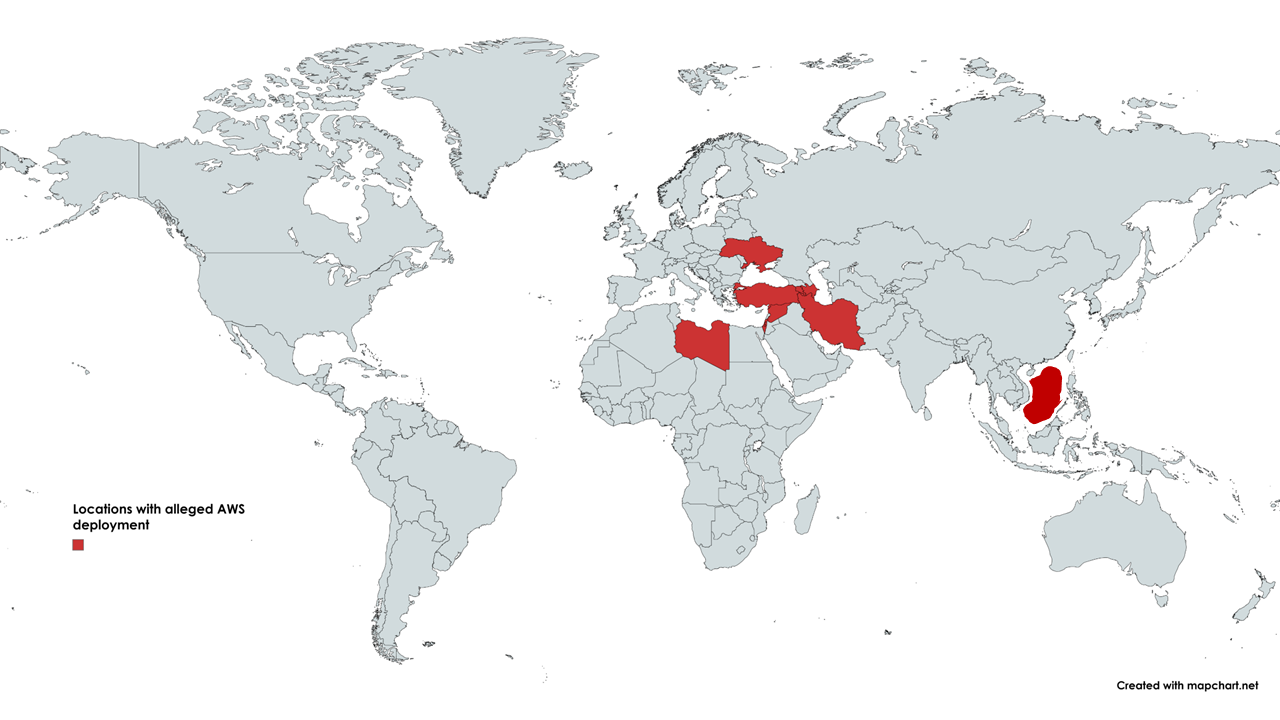
Experimental results
Research questions
- RQ1What near-term geopolitical instabilities are likely to arise from highly autonomous AWS deployment?
- RQ2How might AWS proliferation affect global AI research, collaboration, and dual-use dynamics?
- RQ3What regulatory and governance measures can mitigate AWS risks without stifling general AI progress?
- RQ4How should autonomy levels and human oversight be standardized and communicated internationally?
Key findings
- Fully autonomous AWS can lower the human costs of war, potentially increasing conflict frequency and escalation risk.
- AWS proliferation may trigger an AI-powered arms race and expansion of military-civilian research overlap, impacting global research norms.
- Blocking ML research or hardware exports is unlikely to prevent AWS development and may harm scientific progress.
- Transparency about AWS autonomy levels, capabilities, and human oversight is essential to accountability and governance.
- Dual-use nature of AI means civilian research and industry could be co-opted for defense, necessitating stronger ethics and oversight in universities and companies.
- Regulatory approaches should avoid broad AI research restrictions and instead target explicit AWS-related datasets and deployment practices.
Read this paper
Open the full text in the Nubint reader and ask about any passage as you read.
Read this paper on NubintThis review was generated by AI from the original paper. Please check the paper before citing it.