
[Paper Review] Are Proactive Interventions for Reddit Communities Feasible?
This paper investigates the feasibility of proactive, machine-aided identification of problematic Reddit communities using explainable machine learning models trained on evolutionary features of subreddits. It demonstrates that problematic subreddits exhibit distinct early behavioral patterns, enabling accurate prediction of future policy violations and enabling timely, human-in-the-loop interventions.
Reddit has found its communities playing a prominent role in originating and propagating problematic socio-political discourse. Reddit administrators have generally struggled to prevent or contain such discourse for several reasons including: (1) the inability for a handful of human administrators to track and react to millions of posts and comments per day and (2) fear of backlash as a consequence of administrative decisions to ban or quarantine hateful communities. Consequently, administrative actions (community bans and quarantines) are often taken only when problematic discourse within a community spills over into the real world with serious consequences. In this paper, we investigate the feasibility of deploying tools to proactively identify problematic communities on Reddit. Proactive identification strategies show promise for three reasons: (1) they have potential to reduce the manual efforts required to track communities for problematic content, (2) they give administrators a scientific rationale to back their decisions and interventions, and (3) they facilitate early and more nuanced interventions (than banning or quarantining) to mitigate problematic discourse.
Motivation & Objective
- To investigate whether proactive identification of problematic Reddit communities is feasible using automated tools.
- To understand the evolutionary dynamics of subreddits and identify predictors of problematic behavior.
- To develop explainable machine learning models that can flag communities likely to violate content policies before harmful discourse spreads.
- To evaluate the real-world applicability of such models in a continuous learning setting.
- To support human administrators with data-driven, timely, and justifiable intervention decisions.
Proposed method
- Tracked subreddit evolution using linguistic features (e.g., vocabulary shifts), user participation dynamics, and structural metrics over time.
- Collected and engineered features across four categories: structural, linguistic, community-level, and user-related attributes.
- Trained explainable machine learning models (e.g., LIME or SHAP-based) to predict whether a subreddit would later be classified as problematic.
- Validated model performance using historical data and evaluated generalization in a continuous learning setup mimicking real-world deployment.
- Integrated model interpretability to allow administrators to inspect and override predictions based on domain expertise.
- Deployed the model in a real-world scenario to assess long-term stability and predictive accuracy.
Experimental results
Research questions
- RQ1Do subreddits exhibit stable or evolving characteristics over time, necessitating continuous monitoring?
- RQ2Can early-stage evolutionary patterns in subreddits predict future policy violations with sufficient accuracy?
- RQ3What combination of linguistic, structural, community, and user-level features best predicts problematic subreddit evolution?
- RQ4How effective are explainable machine learning models in supporting human administrators for proactive moderation?
- RQ5Can such tools be sustainably deployed in real-world, continuous learning environments?
Key findings
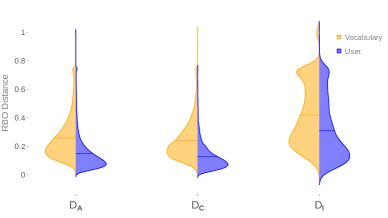
- Subreddits do not converge to stability, as evidenced by continuous changes in vocabulary and active user bases, validating the need for ongoing monitoring.
- Problematic subreddits exhibit distinct evolutionary patterns in their early lifetimes, making them predictable using machine learning.
- The proposed explainable ML models achieved high accuracy in predicting future policy violations, enabling early identification of at-risk communities.
- Model interpretability provided administrators with actionable insights into the drivers of classification decisions, supporting informed intervention.
- The system demonstrated robust performance in a continuous learning deployment scenario, confirming feasibility for real-world use.
- Proactive, machine-aided identification reduces reliance on reactive bans and allows for more nuanced, timely, and defensible moderation actions.
Read this paper
Open the full text in the Nubint reader and ask about any passage as you read.
Read this paper on NubintThis review was generated by AI from the original paper. Please check the paper before citing it.