
[Paper Review] Asynchronous Decentralized Federated Lifelong Learning for Landmark Localization in Medical Imaging
This paper proposes Asynchronous Decentralized Federated Lifelong Learning (ADFLL), a privacy-preserving, scalable framework for landmark localization in medical imaging that eliminates central servers and synchronous training. It achieves a mean distance error of 7.81 on the BraTS dataset—significantly better than conventional lifelong learning (15.17) and central aggregation agents (11.78), with robustness to network failures and agent dropout.
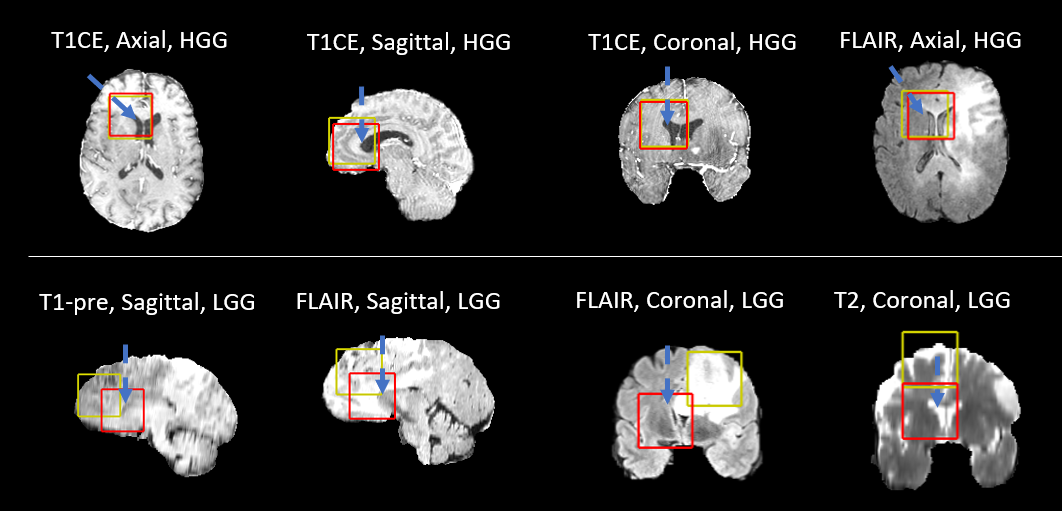
Federated learning is a recent development in the machine learning area that allows a system of devices to train on one or more tasks without sharing their data to a single location or device. However, this framework still requires a centralized global model to consolidate individual models into one, and the devices train synchronously, which both can be potential bottlenecks for using federated learning. In this paper, we propose a novel method of asynchronous decentralized federated lifelong learning (ADFLL) method that inherits the merits of federated learning and can train on multiple tasks simultaneously without the need for a central node or synchronous training. Thus, overcoming the potential drawbacks of conventional federated learning. We demonstrate excellent performance on the brain tumor segmentation (BRATS) dataset for localizing the left ventricle on multiple image sequences and image orientation. Our framework allows agents to achieve the best performance with a mean distance error of 7.81, better than the conventional all-knowing agent's mean distance error of 11.78, and significantly (p=0.01) better than a conventional lifelong learning agent with a distance error of 15.17 after eight rounds of training. In addition, all ADFLL agents have comparable or better performance than a conventional LL agent. In conclusion, we developed an ADFLL framework with excellent performance and speed-up compared to conventional RL agents.
Motivation & Objective
- Address privacy and computational constraints in medical imaging by enabling decentralized model training without data sharing.
- Overcome bottlenecks in federated learning caused by centralized aggregation and synchronous training.
- Enable lifelong learning in medical imaging to prevent catastrophic forgetting when adapting to new imaging sequences or environments.
- Develop a scalable, robust, and flexible system that maintains performance despite agent dropout or heterogeneous computational capabilities.
- Demonstrate superior performance and speedup compared to centralized and conventional lifelong learning baselines on real-world medical imaging tasks.
Proposed method
- Propose an asynchronous decentralized federated lifelong learning (ADFLL) framework that eliminates the need for a central server or synchronized training.
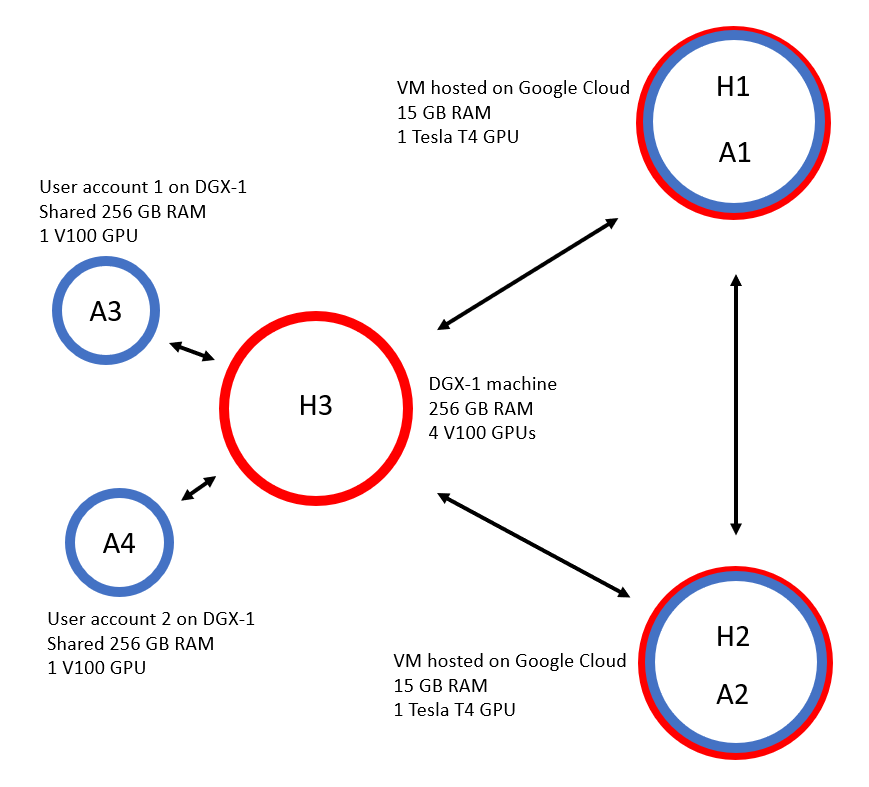
- Use decentralized communication where agents exchange model updates via hubs or peer-to-peer links, enabling flexible system topology.
- Implement a lifelong learning mechanism that stores and reuses experience replay buffers (ERBs) to retain knowledge across tasks and prevent catastrophic forgetting.
- Allow agents to train independently and asynchronously, with model updates shared and merged in a way that maintains consistency and convergence.
- Leverage deep reinforcement learning for landmark localization, with agents learning policies to predict landmark positions across multiple imaging sequences.
- Design the system to be resilient to network failures by ensuring knowledge persistence in ERBs and rapid convergence when new agents join.
Experimental results
Research questions
- RQ1Can a decentralized, asynchronous federated learning system effectively perform lifelong learning in medical imaging without a central server?
- RQ2How does ADFLL perform in comparison to centralized aggregation and conventional lifelong learning agents in terms of localization accuracy and training speed?
- RQ3To what extent is the ADFLL framework robust to agent dropout and network failures in real-world medical imaging deployments?
- RQ4Can ADFLL maintain high performance across diverse imaging sequences and orientations without catastrophic forgetting?
- RQ5How scalable is the ADFLL framework when increasing the number of agents in the system?
Key findings
- ADFLL achieved a mean distance error of 7.81 on the BraTS dataset after three rounds of training, significantly outperforming the conventional lifelong learning agent (15.17, p=0.01).
- ADFLL outperformed the all-knowing central aggregation agent (11.78 mean distance error), despite the latter having access to all data from the start.
- The framework demonstrated scalability, maintaining low error across 24 agents, with average Euclidean distance error decreasing to 16.89 after four rounds.
- In robustness tests, the system maintained performance under 75% agent dropout, achieving an average error of 8.55 after five rounds, showing knowledge persistence.
- New agents could catch up to existing agents within one training round, indicating strong adaptability and convergence speed.
- The framework showed superior speedup and performance compared to both traditional lifelong learning and centralized aggregation baselines.
Read this paper
Open the full text in the Nubint reader and ask about any passage as you read.
Read this paper on NubintThis review was generated by AI from the original paper. Please check the paper before citing it.