
[논문 리뷰] Atmospheric Reconnaissance of TRAPPIST-1 b with JWST/NIRISS: Evidence for Strong Stellar Contamination in the Transmission Spectra
이 연구는 TRAPPIST-1 b의 첫 번째 JWST/NIRISS 투과 스펙트럼을 제시하며, 표면에 드러나지 않은 sunspot과 faculae로 인한 강한 항성 오염이 신호를 지배하고 있음을 밝혀냈다. 구름 없는 수소 기반 대기가 존재하지 않음을 확인했지만, 저중력 및 자기장 효과에 대한 항성 모델의 부정확성이 신뢰할 수 있는 대기 특성화를 제한하며, 향후 냉각된 항성 주변의 외계행성 연구에 있어 핵심 과제임을 시사한다.
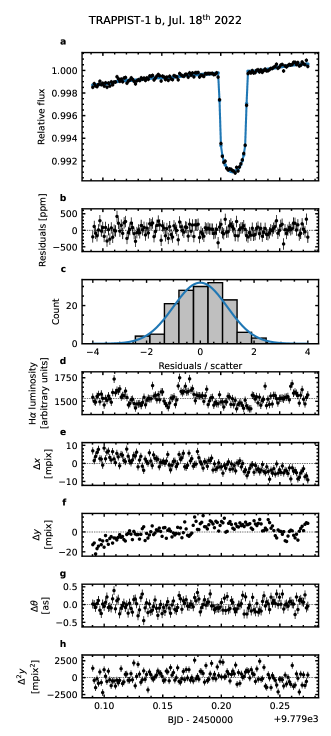
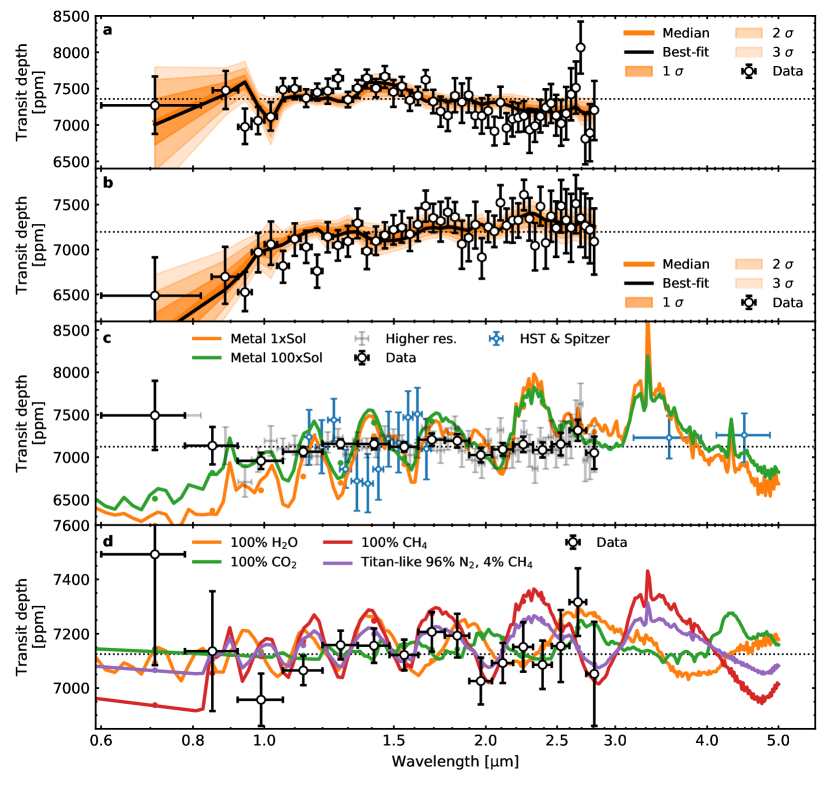
TRAPPIST-1 is a nearby system of seven Earth-sized, temperate, rocky exoplanets transiting a Jupiter-sized M8.5V star, ideally suited for in-depth atmospheric studies. Each TRAPPIST-1 planet has been observed in transmission both from space and from the ground, confidently rejecting cloud-free, hydrogen-rich atmospheres. Secondary eclipse observations of TRAPPIST-1 b with JWST/MIRI are consistent with little to no atmosphere given the lack of heat redistribution. Here we present the first transmission spectra of TRAPPIST-1 b obtained with JWST/NIRISS over two visits. The two transmission spectra show moderate to strong evidence of contamination from unocculted stellar heterogeneities, which dominates the signal in both visits. The transmission spectrum of the first visit is consistent with unocculted starspots and the second visit exhibits signatures of unocculted faculae. Fitting the stellar contamination and planetary atmosphere either sequentially or simultaneously, we confirm the absence of cloud-free hydrogen-rich atmospheres, but cannot assess the presence of secondary atmospheres. We find that the uncertainties associated with the lack of stellar model fidelity are one order of magnitude above the observation precision of 89 ppm (combining the two visits). Without affecting the conclusion regarding the atmosphere of TRAPPIST-1 b, this highlights an important caveat for future explorations, which calls for additional observations to characterize stellar heterogeneities empirically and/or theoretical works to improve model fidelity for such cool stars. This need is all the more justified as stellar contamination can affect the search for atmospheres around the outer, cooler TRAPPIST-1 planets for which transmission spectroscopy is currently the most efficient technique.
연구 동기 및 목표
- 두 개의 독립된 전행을 통해 JWST/NIRISS 데이터를 이용해 TRAPPIST-1 b의 대기 투과 스펙트럼을 특성화하기.
- 특히 드러나지 않은 항성 sunspot과 faculae와 같은 항성 이질성이 투과 스펙트럼 신호에 미치는 영향을 조사하기.
- 항성 오염과 모델 정확도의 제약 조건이 존재하는 상황에서 대기 회수 결과의 신뢰성 평가하기.
- 현재 사용 중인 항성 대기 모델(PHOENIX 및 SPHINX)이 TRAPPIST-1의 관측된 스펙트럼을 NIRISS 파장 범위에서 정확히 재현할 수 있는지 평가하기.
- 해결되지 않은 항성 활동으로 인해 M-주계성 주변의 온난한 암석 행성에 대한 향후 투과 스펙트럼 연구에서의 주요 경고 사항 도출하기.
제안 방법
- 두 개의 별도 전행 동안 JWST/NIRISS를 사용해 TRAPPIST-1 b의 고정밀 투과 스펙트럼 확보하기.
- 행성 대기와 항성 오염을 동시에 모델링하기 위해 POSEIDON을 활용한 대기 회수와 비 occult된 이질성에 대한 항성 오염 모델을 결합한 공동 모델에 관측 스펙트럼를 적합하기.
- 효과 온도(2300–2800 K)와 표면 중력(2.5–5.5 dex)의 격자에서 관측된 SOSS 스펙트럼을 PHOENIX 및 SPHINX 항성 대기 모델과 비교하기.
- emcee와 PyMultiNest를 사용한 마르코프 체인 몬테카를로(MCMC)를 통해 항성 오염 및 행성 대기 파rameter를 동시에 적합하기.
- 관측된 스펙트럼과 모델링된 스펙트럼 간의 χ²를 계산하여 모델 정확도를 정량화하고, 주요 스펙트럼 영역에서 체계적인 불일치를 식별하기.
- 데이터 기반 및 이론적 접근을 통해 저중력 및 자기장 효과에 대한 불완전한 항성 모델에서 기인하는 불확실성 평가하기.
실험 결과
연구 질문
- RQ1JWST/NIRISS 관측에서 드러나지 않은 항성 sunspot과 faculae가 TRAPPIST-1 b의 투과 스펙트럼에 얼마나 강한 오염을 유발하는가?
- RQ2현재 사용 중인 항성 대기 모델(PHOENIX 및 SPHINX)이 NIRISS 파장 범위에서 TRAPPIST-1의 관측 스펙트럼을 정확히 재현할 수 있는가?
- RQ3항성 모델 정확도의 불확실성이 TRAPPIST-1 b의 대기 회수 결과의 신뢰성에 어떤 영향을 미치는가?
- RQ4항성 이질성이 M-주계성 주변의 온난한 암석 행성에 대한 투과 스펙트럼 해석에 어떤 영향을 미치는가?
- RQ5관측된 스펙트럼 불일치는 자기장 또는 비균일한 중력과 같은 누락된 물리적 요소 때문인가?
주요 결과
- 첫 번째 관측에서 드러나지 않은 sunspot의 강한 증거를 확인했고, 두 번째 관측에서는 faculae의 징후를 발견했다.
- 두 관측 모두 항성 오염이 신호를 지배하며, 모델 정확도에서 기인한 불확실성이 관측 정밀도보다 한 단계 높은 89 ppm을 차지한다.
- 최적의 PHOENIX 모델은 효과 온도 2600 K와 표면 중력 3.5 dex를 가지나, 0.7–0.8 μm 범위의 특징을 재현하지 못한다.
- SPHINX 모델은 0.9–1.1 μm 범위에서 더 나은 적합도를 보이나, 낮은 스펙트럼 해상도와 중력 커버리지의 제한으로 1.5–1.7 μm의 수증기 밴드 날개에서 어려움을 겪는다.
- 테스트된 모든 항성 모델(PHOENIX 및 SPHINX)은 관측된 SOSS 스펙트럼을 충분한 정확도로 재현하지 못하며, 자기장 또는 비균일한 중력과 같은 누락된 물리적 요소가 있음을 시사한다.
- 오염이 존재하더라도 분석은 TRAPPIST-1 b에 구름 없는 수소 기반 대기가 존재하지 않음을 확인했지만, 항성 모델의 제약으로 인해 보조 대기의 특성을 제약할 수는 없다.
더 나은 연구,지금 바로 시작하세요
논문 읽기부터 검토까지, 연구 시간을 획기적으로 줄여보세요.
카드 등록 없음 · 무료 플랜 제공
이 리뷰는 AI가 만들고, 인간 에디터가 검토했습니다.