
[Paper Review] Calibration in Deep Learning: A Survey of the State-of-the-Art
This survey reviews the state-of-the-art deep learning calibration methods, classifies them into four categories, and discusses calibration challenges, metrics, and future directions, including large models and LLMs.
Calibrating deep neural models plays an important role in building reliable, robust AI systems in safety-critical applications. Recent work has shown that modern neural networks that possess high predictive capability are poorly calibrated and produce unreliable model predictions. Though deep learning models achieve remarkable performance on various benchmarks, the study of model calibration and reliability is relatively under-explored. Ideal deep models should have not only high predictive performance but also be well calibrated. There have been some recent advances in calibrating deep models. In this survey, we review the state-of-the-art calibration methods and their principles for performing model calibration. First, we start with the definition of model calibration and explain the root causes of model miscalibration. Then we introduce the key metrics that can measure this aspect. It is followed by a summary of calibration methods that we roughly classify into four categories: post-hoc calibration, regularization methods, uncertainty estimation, and composition methods. We also cover recent advancements in calibrating large models, particularly large language models (LLMs). Finally, we discuss some open issues, challenges, and potential directions.
Motivation & Objective
- Define model calibration and identify root causes of miscalibration in deep learning.
- Survey and categorize recent calibration methods and their underlying principles.
- Explain calibration metrics and their biases, and discuss applications to large models and LLMs.
- Highlight open issues, challenges, and potential directions for future research.
Proposed method
- Classify calibration methods into post-hoc calibration, regularization, uncertainty estimation, and composition.
- Explain principles by relating over-parameterization, overfitting, and over-confidence to calibration.
- Summarize measurement metrics such as ECE, MCE, CECE, and AECE, and discuss reliability diagrams.
- Discuss calibrating large pre-trained models and LLMs, including zero-shot and few-shot settings.
- Provide discussion of open issues and future research directions.
Experimental results
Research questions
- RQ1What causes miscalibration in modern deep networks and how can it be mitigated?
- RQ2What are the effective calibration methods and their trade-offs across different settings (post-hoc, regularization, uncertainty, composition)?
- RQ3How do calibration metrics capture reliability, and what biases exist in these metrics?
- RQ4How can calibration be effectively achieved for large models and LLMs, including zero-shot/few-shot scenarios?
Key findings
- Calibration errors often increase with model size and capacity due to over-parameterization and overfitting on training data.
- Post-hoc calibration methods like temperature scaling and its extensions provide data-efficient calibration without retraining.
- Regularization-based and differentiable calibration proxies can improve calibration during training, sometimes with varying computational costs.
- Data augmentation and mixup can improve calibration and generalization, particularly under distribution shift and for out-of-distribution data.
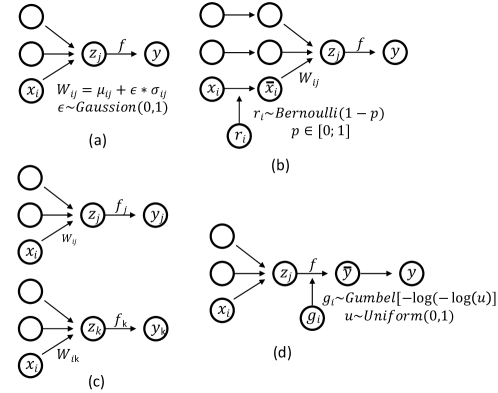
- Uncertainty-estimation methods (Bayesian nets, MC dropout, ensembles) offer calibration along with uncertainty quantification but require multiple inferences and higher computation.
- Calibrating large models, including LLMs and vision-language models, presents unique challenges and opportunities, with methods like prototypical calibration and contextual calibration showing promise.
Read this paper
Open the full text in the Nubint reader and ask about any passage as you read.
Read this paper on NubintThis review was generated by AI from the original paper. Please check the paper before citing it.