
[Paper Review] Composing an Ensemble Standstill Work for Myo and Bela
This paper presents a portable, embedded system using Myo gesture armbands and Bela embedded platforms to enable ensemble-based 'standstill' performances where minimal muscle tension controls sound output. By developing custom Myo-to-Bela and Myo-to-OSC software bridges, the authors overcome Linux incompatibility and BLE connection limits, enabling real-time, low-latency control of eight sine oscillators via EMG and IMU data, with sound activated only during micro-movements—demonstrated in the composition 'Stillness Under Tension.'
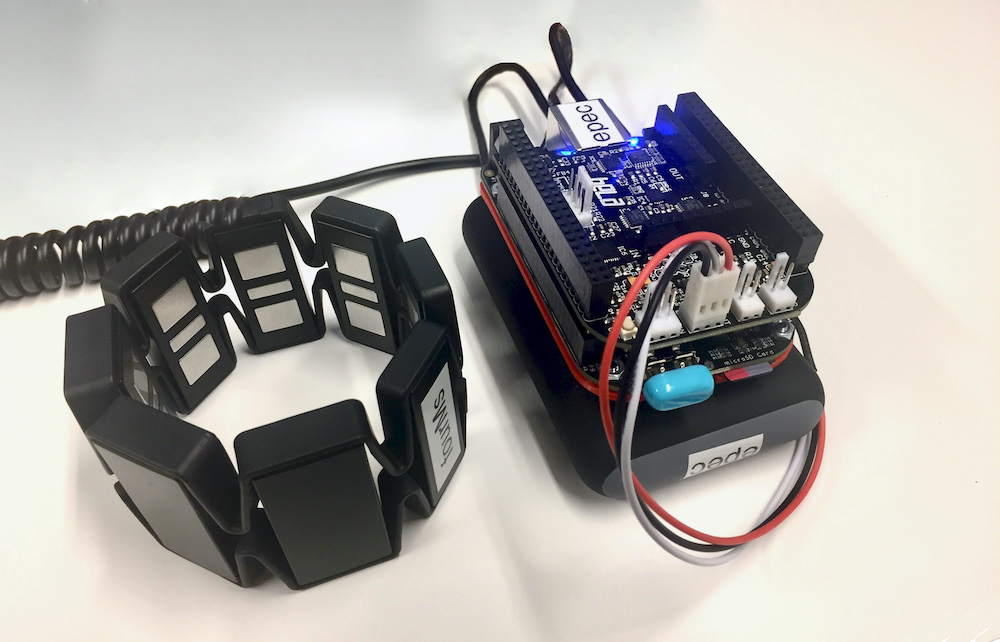
This paper describes the process of developing a standstill performance work using the Myo gesture control armband and the Bela embedded computing platform. The combination of Myo and Bela allows a portable and extensible version of the standstill performance concept while introducing muscle tension as an additional control parameter. We describe the technical details of our setup and introduce Myo-to-Bela and Myo-to-OSC software bridges that assist with prototyping compositions using the Myo controller.
Motivation & Objective
- To develop a portable, real-time performance system for gestural music using Myo armbands and Bela platforms.
- To address the limitation of Myo Connect's lack of Linux support and BLE connection caps in multi-performer setups.
- To explore the expressive potential of micro-movements and sustained muscle tension in digital music performance.
- To implement a novel inverse mapping where minimal motion produces maximal sound, defining the 'standstill' performance concept.
- To enable reliable, self-booting performance setups with pre-configured audio patches on embedded hardware.
Proposed method
- Developed a C++-based Myo-to-Bela render file using MyoLinux to stream EMG and IMU data directly to Pure Data patches on Bela.
- Implemented a pure-Python Myo-to-OSC bridge to enable cross-platform prototyping of Myo-based interactions on Linux and other systems.
- Designed a performance setup with one Bela per performer, each connected to a Myo via BLE, eliminating the need for multiple computers.
- Used Bela’s ability to boot directly into a pre-loaded audio patch, ensuring consistent and reliable performance startup in under 40 seconds.
- Mapped EMG signals to oscillator amplitudes, pitch to Myo orientation (pitch), timbral spread to yaw, and distortion gain to roll angle.
- Implemented a QoM (Quantity of Motion) metric based on acceleration and rotation magnitudes to trigger silence after motion exceeds a threshold.
Experimental results
Research questions
- RQ1How can Myo armbands be effectively integrated with embedded audio platforms like Bela for real-time, portable music performance?
- RQ2What technical solutions can overcome the limitations of Myo Connect’s lack of Linux support and BLE connection caps in ensemble settings?
- RQ3How can muscle tension and micro-movements be mapped to sound in a way that supports expressive, standstill-based performance?
- RQ4Can a system based on inverse mapping—where stillness produces sound and motion silences it—enable novel forms of ensemble interaction?
- RQ5What are the practical and expressive implications of using EMG and IMU data from multiple Myo performers in a synchronized, low-motion performance?
Key findings
- The custom Myo-to-Bela C++ render file successfully enabled real-time streaming of EMG and IMU data from Myo armbands to Pure Data patches on Bela, with reliable boot and connection performance.
- The Myo-to-OSC Python bridge allowed for effective prototyping of Myo-based interactions on Linux, supporting cross-platform development and testing.
- Each performer’s setup, consisting of one Bela and one Myo, enabled independent control without BLE connection conflicts, solving the three-connection limit of the standard Myo BLE dongle.
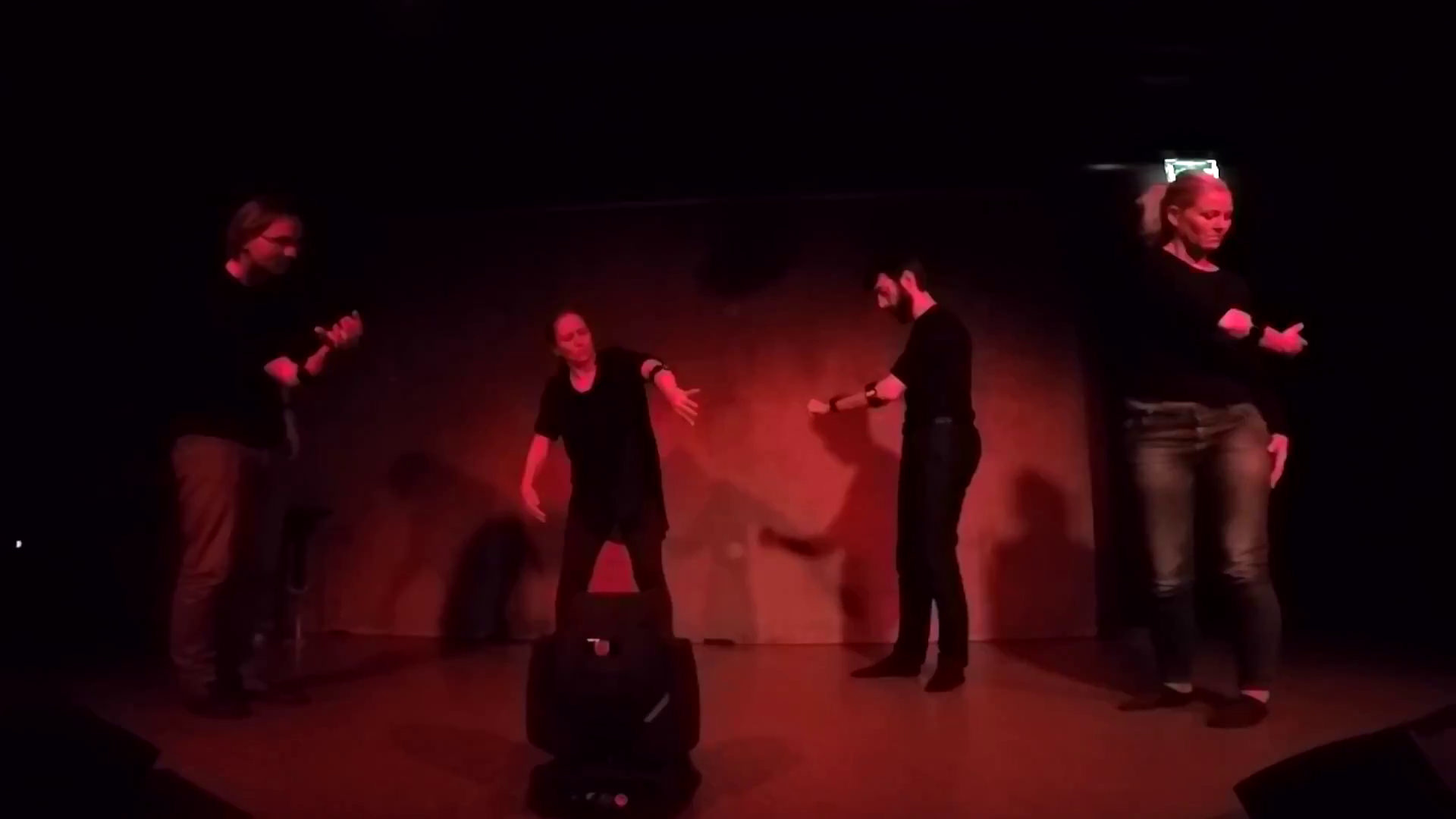
- The composition 'Stillness Under Tension' demonstrated that sustained muscle tension could produce continuous sound, while any motion above a threshold silenced the output within seconds.
- Performers achieved expressive sonic variation through subtle muscle activation and arm positioning, with distinct harmonic and timbral profiles across performers due to individualized settings.
- The performance structure, with four distinct poses over 9 minutes, allowed for controlled exploration of sonic possibilities while maintaining the core principle of minimal motion.
Read this paper
Open the full text in the Nubint reader and ask about any passage as you read.
Read this paper on NubintThis review was generated by AI from the original paper. Please check the paper before citing it.