
[論文レビュー] Conformal Dynamics for TeV Physics and Cosmology
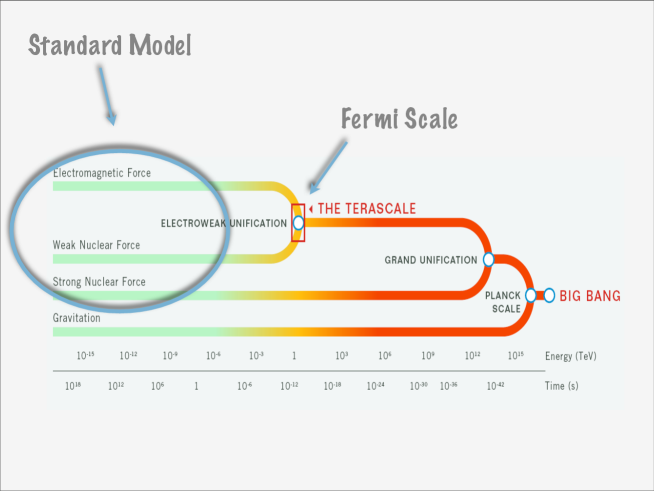
本稿は、超対称性のないゲージ理論における conformal 動力学を統一的枠組みで扱うものであり、SU(N)、Sp(2N)、SO(N) のゲージ理論(フェルミオンがさまざまな表現に属する場合)の位相図をマッピングする、全オーダーにわたる新しい β 関数を導入している。特に、TeV スケール以下の軽い複合ヒッグスを実現する最小の conformal モデル(特に最小歩行的技術色理論)を同定し、標準模型ヒッグスの代替案として、検証可能な物性論的性質を有する。
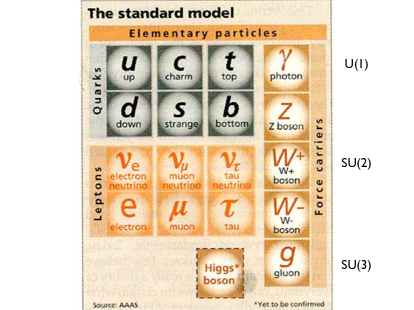
We introduce the topic of dynamical breaking of the electroweak symmetry and its link to unparticle physics and cosmology. The knowledge of the phase diagram of strongly coupled theories plays a fundamental role when trying to construct viable extensions of the standard model (SM). Therefore we present the state-of-the-art of the phase diagram for SU, Sp and SO gauge theories with fermionic matter transforming according to arbitrary representations of the underlying gauge group. We summarize several analytic methods used recently to acquire information about these gauge theories. We also provide new results for the phase diagram of the generalized Bars-Yankielowicz and Georgi-Glashow chiral gauge theories. These theories have been used for constructing grand unified models and have been the template for models of extended technicolor interactions. To gain information on the phase diagram of chiral gauge theories we will introduce a novel all orders beta function for chiral gauge theories. This permits the first unified study of all non-supersymmetric gauge theories with fermionic matter representation both chiral and non-chiral. To the best of our knowledge the phase diagram of these complex models appears here for the first time. We will introduce recent extensions of the SM featuring minimal conformal gauge theories known as minimal walking models. Finally we will discuss the electroweak phase transition at nonzero temperature for models of dynamical electroweak symmetry breaking.
研究の動機と目的
- フェルミオンの物質を有する強い結合ゲージ理論の解析を通じて、標準模型を越えた動的電弱対称性の自発的破れの理解を拡張すること。
- TeV スケール未満の軽い複合ヒッグスを実現する理論を同定することで、実現可能な複合ヒッグスモデルの構築という課題を解決すること。
- 新規の全オーダー β 関数を用いて、非超対称な chirality あり・なしのゲージ理論を統一的に初めて研究すること。
- 歩行的技術色理論モデルにおける電弱相転移を調査し、その宇宙論的および物性論的妥当性を評価すること。
- 電弱精度測定データおよび LHC の制約と整合する最小の conformal モデル(特に最小歩行的技術色理論)を確立すること。
提案手法
- chiral ゲージ理論における全オーダーの β 関数の予想を導入し、その位相構造の体系的解析を可能にした。
- シュヴィンガー=ダイソン方程式をルビー近似で用い、熱的自由度の数え上げを含む解析的手法を適用した。
- 大 N スケーリングおよび 't Hooft の極限を用いて、QCD に類似したスペクトルを、より多くの色数やフレーバーを持つ技術色理論に拡張した。
- 最小歩行的技術色理論の有効ラグランジュ関数を構築し、軸ベクトルスペクトル関数を介して Weinberg まとめ規則および S パラメータと関連づけた。
- 幾何的スケーリングおよび異常性制約を用いて、複合状態(例:技術ベクトルおよびスカラー)を物理的観測量にマッピングした。
- 熱場理論の技術および conformal ウィンドウ解析を用いて、歩行的技術色理論モデルにおける電弱相転移を評価した。
実験結果
リサーチクエスチョン
- RQ1超対称性のない SU(N)、Sp(2N)、SO(N) ゲージ理論(フェルミオンが任意の表現に属する場合)の位相図は何か?
- RQ2電弱精度制約を破らずに、歩行的技術色理論モデルで軽い複合ヒッグスを実現できるか?
- RQ3chiral ゲージ理論の全オーダー β 関数は、conformal および破れた位相を統一的に記述するためにどのように機能するか?
- RQ4最小歩行的技術色理論モデルの宇宙論的および加速器実験的シグネチャは何か?
- RQ5高次元フェルミオン表現(例:二重対称/反対称表現)は、複合ヒッグスと技術ベクトル励起状態との間の質量階層にどのように影響するか?
主な発見
- 本稿は、一般化された Bars-Yankielowicz モデルおよび Georgi-Glashow モデルを含む、非超対称な chirality ありゲージ理論の初めての統一的位相図を提示した。
- 二重対称反対称フェルミオンを有する SU(N) 及び Sp(2N) ゲージ理論において、最も軽いスカラー(複合ヒッグスと同定)は、すべての N_TC ≥ 3 に対して、それに対応する技術ベクトルメソンより軽いままである。
- 大 N_TC 限界において、複合ヒッグス質量は M_H ~ v_weak / F_π × √(3√2 / (N_D N_TC (N_TC - 1))) のようにスケーリングし、大 N_TC で軽いヒッグスをもたらす。
- conformal 固定点付近で、スカラー質量とパイオンの崩壊定数の比は有限のままであるため、歩行的技術色理論において軽い複合ヒッグスが実現可能であると考えられる。
- 最小歩行的技術色理論(MWT)モデルは、Weinberg まとめ規則および S パラメータと整合しており、新しいレプトンおよびカスティオドル対称性拡張に関する制約が得られた。
- 二重対称表現におけるベクトルおよびスカラー励起状態のスペクトルは、反対称表現の場合よりも N_TC の増加に伴いより速く軽くなる傾向にあり、大 N 限界ではヒッグスなしに類似した振る舞いを示す。
より良い研究を、今すぐ始めましょう
論文設計から論文執筆まで、研究時間を劇的に削減しましょう。
クレジットカード登録不要
このレビューはAIが作成し、人間の編集者が確認しました。