
[論文レビュー] Deep Neural Networks and Brain Alignment: Brain Encoding and Decoding (Survey)
このサーベイは、fMRIデータを用いた深層ニューラルネットワーク(DNN)ベースの脳符号化および復号化モデルをレビューし、DNNが刺激(テキスト、画像、音声)から意味的表現を学習し、それらを脳活動にマッピングする方法に焦点を当てる。最近のDNNアーキテクチャ、刺激表現、データセットの進展を統合し、意味的ベクトルの復号化および刺激の再構成における改善を強調。ブレインコンピュータインターフェースおよび認知神経科学への応用を含む。
Can artificial intelligence unlock the secrets of the human brain? How do the inner mechanisms of deep learning models relate to our neural circuits? Is it possible to enhance AI by tapping into the power of brain recordings? These captivating questions lie at the heart of an emerging field at the intersection of neuroscience and artificial intelligence. Our survey dives into this exciting domain, focusing on human brain recording studies and cutting-edge cognitive neuroscience datasets that capture brain activity during natural language processing, visual perception, and auditory experiences. We explore two fundamental approaches: encoding models, which attempt to generate brain activity patterns from sensory inputs; and decoding models, which aim to reconstruct our thoughts and perceptions from neural signals. These techniques not only promise breakthroughs in neurological diagnostics and brain-computer interfaces but also offer a window into the very nature of cognition. In this survey, we first discuss popular representations of language, vision, and speech stimuli, and present a summary of neuroscience datasets. We then review how the recent advances in deep learning transformed this field, by investigating the popular deep learning based encoding and decoding architectures, noting their benefits and limitations across different sensory modalities. From text to images, speech to videos, we investigate how these models capture the brain's response to our complex, multimodal world. While our primary focus is on human studies, we also highlight the crucial role of animal models in advancing our understanding of neural mechanisms. Throughout, we mention the ethical implications of these powerful technologies, addressing concerns about privacy and cognitive liberty. We conclude with a summary and discussion of future trends in this rapidly evolving field.
研究の動機と目的
- テキスト、視覚、音声のマルチモodalな文脈における深層学習ベースの脳符号化および復号化の最新進展を統合すること。
- 自然的刺激からの脳表現をモデル化するための深層ニューラルネットワークアーキテクチャの役割を分析すること。
- fMRI活動を予測するための異なる刺激表現(例:BERT、単語埋め込み、ビジョントランスフォーマー)の有効性を評価すること。
- 現在の自然的fMRI研究における限界、特に受動的刺激処理およびL2言語理解に関する限界を特定すること。
- 脳にインspiredされたAI、マルチモーダル復号化、神経的耐性を持つニューラルネットワーク設計における今後の研究方向を提示すること。
提案手法
- fMRIを用いた脳符号化および復号化に関する230件以上の研究を対象とした体系的レビュー。深層学習モデルに焦点を当てる。
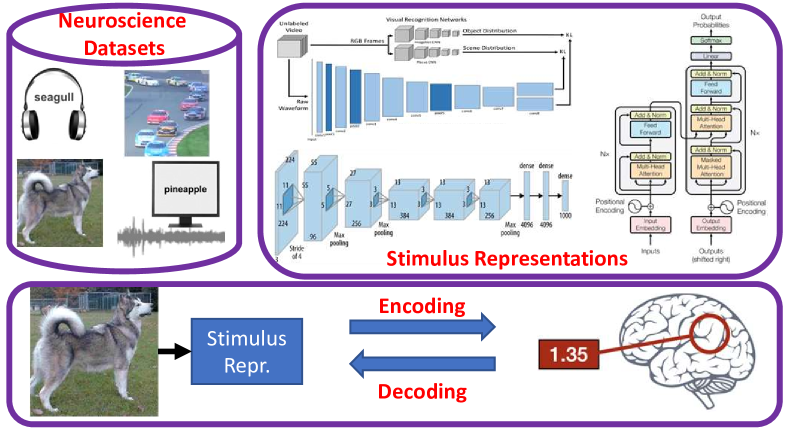
- モダリティ(テキスト、画像、音声、動画)および刺激タイプ(物語、映画、自然的刺激)別に神経科学データセットを分類。
- 刺激表現技術の分析:分散単語埋め込み、文変換器(例:InferSent、BERT)、ビジョントランスフォーマー。
- 符号化モデルの評価:fMRI活動を意味的表現から予測する関数 e: R → F を用いた回帰関数。
- 復号化モデルの評価:脳活動から意味的表現を再構成する関数 d: F → R を用い、マルチビューおよびクロスビュー復号化設定を含む。
- 性能向上のため、最近のアーキテクチャ(例:トランスフォーマー)およびファインチューニング戦略(例:BERTの脳復号化用ファインチューニング)を統合。
実験結果
リサーチクエスチョン
- RQ1従来のモデルと比較して、深層ニューラルネットワークは脳符号化および復号化の精度をどのように向上させるか?
- RQ2どのようなタイプの刺激表現(例:BERT、単語埋め込み、ビジョントランスフォーマー)がfMRI脳活動と最もよく一致するか?
- RQ3脳復号化モデルは、fMRIデータから意味的ベクトルや、さらには完全な刺激(例:画像、文)をどの程度再構成できるか?
- RQ4マルチビューおよびクロスビュー復号化フレームワークは、脳復号化モデルの一般化性および耐性をどのように向上させるか?
- RQ5受動的刺激露出時の真の認知処理を捉えるために、現在の自然的fMRIパラダイムにどのような主な限界があるか?
主な発見
- BERTやInferSentなどのトランスフォーマー基盤モデルは、NLUタスクでファインチューニングされた場合、脳復号化性能を顕著に向上させる。
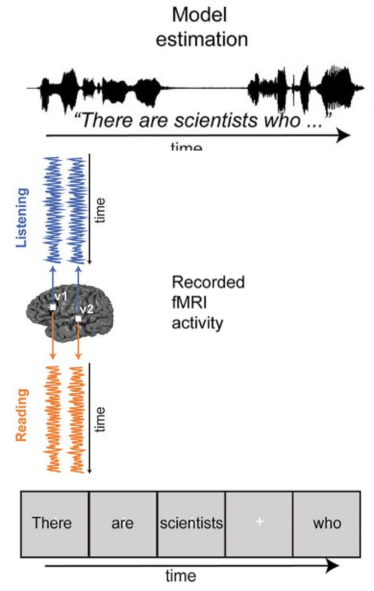
- クロスビュー復号化(CVD)により、あるモダリティ(例:テキスト)の意味的表現を、別のモダリティ(例:画像)の処理中に記録された脳活動から復号可能となり、画像キャプション作成やキーワード抽出などのタスクが可能になる。
- マルチビュー復号化(MVD)モデルは、異なる刺激ビュー間で一般化可能であり、入力モダリティの変動に対する耐性が向上する。
- 構文を軽視した意味的表現を出力するモデルでは、復号化性能が高くなる傾向がある。これは、より単純で意味的な表現が脳活動とよりよく一致することを示唆する。
- 最近のモデルは意味的ベクトルだけでなく、連続的な言語、画像、さらには音声をfMRIから再構成可能であり、マルチモーダル復号化の実現可能性を示している。
- 受動的聴取時の脳活動の解釈には限界が残っており、特にL2言語処理では、脳活動がL1の抑制を反映している可能性があり、L2理解そのものではない可能性がある。
より良い研究を、今すぐ始めましょう
論文の読解から最終レビューまで、研究時間を劇的に削減しましょう。
クレジットカード登録不要
このレビューはAIが作成し、人間の編集者が確認しました。