
[論文レビュー] Discovery of eight z ~ 6 quasars from Pan-STARRS1
本論文では、パンスタールス1調査を用い、光学および赤外データを組み合わせた多波長選別戦略を採用することで、赤方偏移 z ~ 6 の8つの新しいクェーサーの発見を報告する。研究結果は、これまでに観測されたよりも、これらの初期宇宙時代において弱線クェーサーの割合が高くなっていることを示しており、z > 5.7 ではこのような対象がより豊富に存在する可能性を示唆している。ただし、この傾向を確認するには、より大きなサンプルが必要である。
High-redshift quasars are currently the only probes of the growth of supermassive black holes and potential tracers of structure evolution at early cosmic time. Here we present our candidate selection criteria from the Panoramic Survey Telescope & Rapid Response System 1 and follow-up strategy to discover quasars in the redshift range 5.75.7 by more than 10%. We additionally recovered 18 previously known quasars. The eight quasars presented here span a large range of luminosities (-27.3 < M_{1450} < -25.4; 19.6 < z_ps1 < 21.2) and are remarkably heterogeneous in their spectral features: half of them show bright emission lines whereas the other half show a weak or no Ly$α$ emission line (25% with rest-frame equivalent width of the Ly$α$ + Nv line lower than 15Å). We find a larger fraction of weak-line emission quasars than in lower redshift studies. This may imply that the weak-line quasar population at the highest redshifts could be more abundant than previously thought. However, larger samples of quasars are needed to increase the statistical significance of this finding.
研究の動機と目的
- パノラマスタールス1調査を用いて、初期の超大質量ブラックホールおよび銀河形成を理解するための重要な窓である、赤方偏移 z ~ 6 の高赤方偏移クェーサーを特定すること。
- 宇宙再イオン化期における超大質量ブラックホールの成長および国際ガス媒体の状態に関する制約を強化すること。
- 特にLyα線の発光線が弱いか、または存在しない状況の頻度を調査することにより、z > 5.7 におけるクェーサーのスペクトル的多様性を調査すること。
- 既存の z > 5.7 クェーサーのサンプルサイズを10%以上増加させ、宇宙論的研究における統計的パワーを高めること。
提案手法
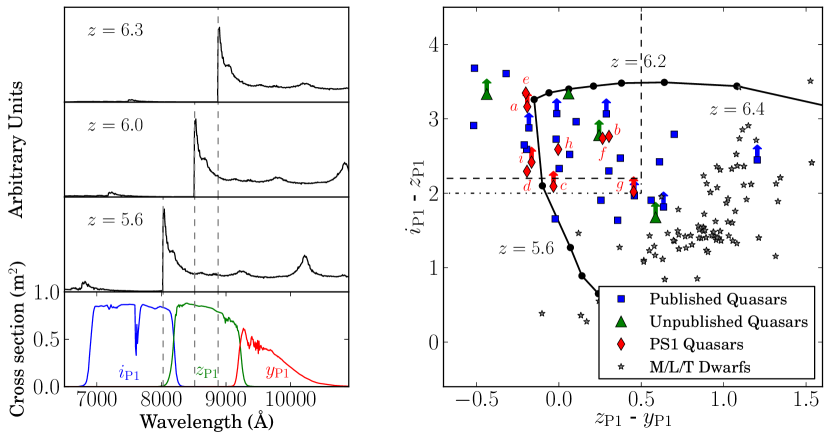
- パノラマスタールス1の3π調査において、gP1、rP1、iP1、zP1、yP1フィルタを用いた光学的色および光度赤方偏移推定に基づく候補選別戦略を適用した。
- クェーサー赤方偏移の確認および発光線特性の測定のために、主要な地上望遠鏡を用いたフォローアップ分光測定を実施した。
- 赤外対応体の特定およびソースの信頼性向上のため、WISE全天調査データを統合した。
- 光度赤方偏移推定値および色-色カットを用いて、星および銀河の混入物から高赤方偏移候補を分離した。
- W1バンドにおけるS/N閾値(S/N > 5.0)を適用し、W1バンドで明確に検出された対象を信頼性の高いW1対応体として選別した。
- リストフレームにおけるLyα + Nv発光線の等価幅に基づいてクェーサーを分類し、スペクトル的多様性を評価した。
実験結果
リサーチクエスチョン
- RQ1z ~ 6 におけるクェーサーの明るさ分布およびスペクトル的特徴、特に弱いか、またはLyα発光線が欠落しているものの割合はどの程度か?
- RQ2z ~ 6 における弱線クェーサー集団は、低赤方偏移におけるそれらと比べてどのように異なっているのか? これはクェーサー進化に何を示唆するか?
- RQ3パノラマスタールス1調査は、高赤方偏移クェーサーを効率的に発見できるのか? また、過去の光学調査と比較して、その収量はどの程度か?
- RQ4z ~ 6 におけるクェーサーは、再イオン化時代および国際ガス媒体の状態を調査する上で果たす役割は何か?
- RQ5z ~ 6 における弱線クェーサーと強線クェーサーの、宿主銀河やブラックホール質量の性質に、系統的な違いがあるか?
主な発見
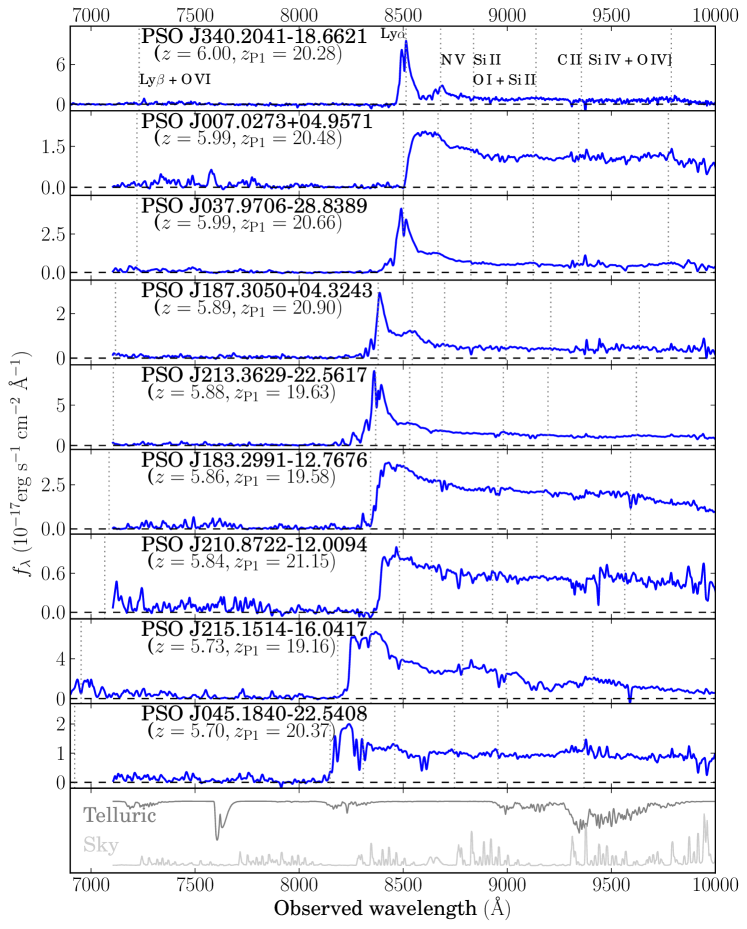
- 赤方偏移 5.7 ≤ z ≤ 6.0 の8つの新しいクェーサーが発見され、既知の z > 5.7 クェーサーの数が10%以上増加した。
- 新規クェーサーの明るさは、M1450 = -27.3 から M1450 = -25.4 の広い範囲にわたり、多様な降着状態を示している。
- 半数のクェーサーが明るい発光線を示している一方、残りの半数は弱いか、Lyα発光線が欠落しており、25%のクェーサーではリストフレーム等価幅がLyα + Nvで15 Å未満であった。
- z ~ 6 における弱線クェーサーの観測された割合は、低赤方偏移研究におけるそれよりも高いことが示され、初期宇宙時代にはこのような対象がより一般的である可能性を示唆している。
- 研究チームは、18個の既知のクェーサーを再発見し、選別およびフォローアップ戦略の有効性を裏付けた。
- クェーサーは顕著なスペクトル的多様性を示しており、明るさと発光線強度の間に明確な相関は認められず、その広帯域領域における多様な物理的状態を示している。
より良い研究を、今すぐ始めましょう
論文の読解から最終レビューまで、研究時間を劇的に削減しましょう。
クレジットカード登録不要
このレビューはAIが作成し、人間の編集者が確認しました。