
[Paper Review] Eigenvalue tests for the number of latent factors in short panels
This paper proposes eigenvalue-based tests for determining the number of latent factors in short panels with fixed time dimension (T) and large cross-sectional size (n). Using perturbation theory for symmetric matrices and eigenvalue spacings, it develops asymptotically valid tests under spherical errors or instrumental variables, finding empirical evidence for 5–7 latent factors in both bull and bear markets—contradicting the common belief in a single-factor model during downturns.
This paper studies new tests for the number of latent factors in a large cross-sectional factor model with small time dimension. These tests are based on the eigenvalues of variance-covariance matrices of (possibly weighted) asset returns, and rely on either the assumption of spherical errors, or instrumental variables for factor betas. We establish the asymptotic distributional results using expansion theorems based on perturbation theory for symmetric matrices. Our framework accommodates semi-strong factors in the systematic components. We propose a novel statistical test for weak factors against strong or semi-strong factors. We provide an empirical application to US equity data. Evidence for a different number of latent factors according to market downturns and market upturns, is statistically ambiguous in the considered subperiods. In particular, our results contradicts the common wisdom of a single factor model in bear markets.
Motivation & Objective
- Address the challenge of identifying the number of latent factors in large cross-sectional panels with small time dimension (T fixed, n → ∞).
- Develop asymptotically valid statistical tests for the number of latent factors under weak, semi-strong, or strong factor structures.
- Overcome limitations of existing methods that require large T or assume Gaussian errors, by leveraging finite-dimensional eigenvalue distributions.
- Introduce a novel test to distinguish weak factors from semi-strong or strong factors using eigenvalue spacing ratios.
- Provide empirical evidence on factor stability across market regimes, particularly testing the common wisdom of a single-factor model in bear markets.
Proposed method
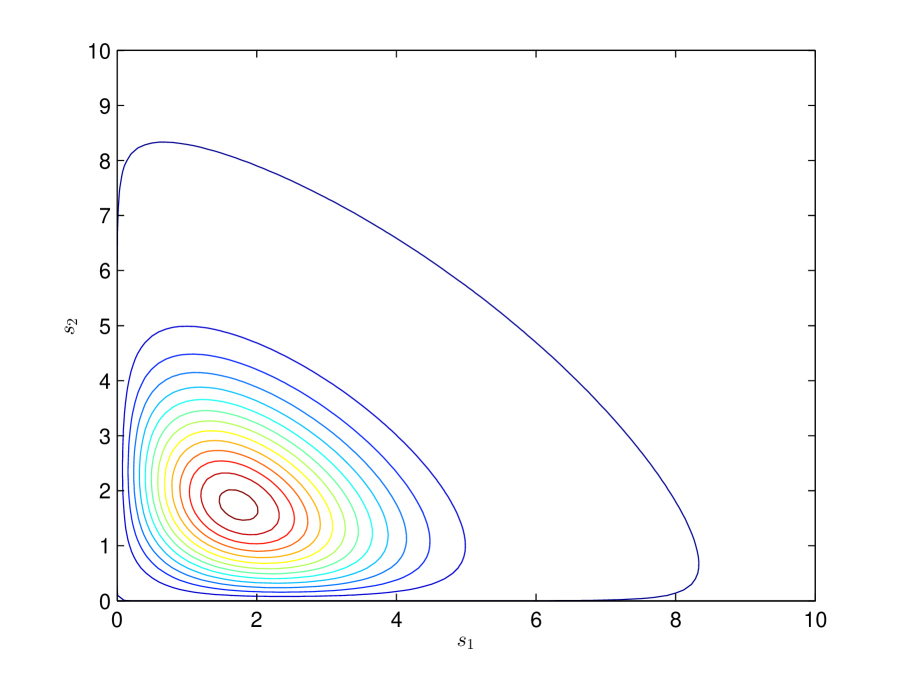
- Propose test statistics based on eigenvalues and spacings of the sample variance-covariance matrix of asset returns.
- Use uniform perturbation expansion for small eigenvalues of symmetric matrices to derive asymptotic distributions under n → ∞ and fixed T.
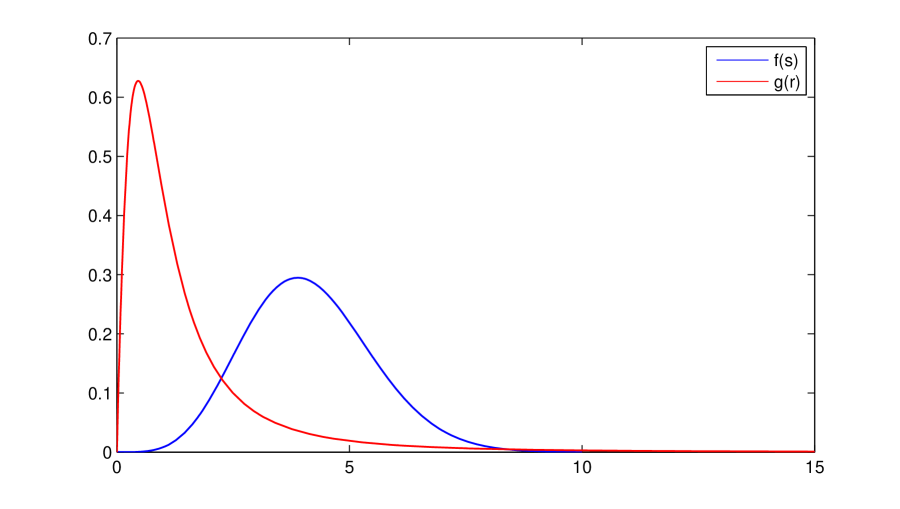
- Derive asymptotic distributions using finite-dimensional Wishart and Gaussian matrix eigenvalue theory.
- Implement two distinct identification strategies: (1) spherical error assumption (for √nS(k)), and (2) instrumental variables for factor betas (for nT(k)).
- Introduce a new test statistic S*(k) based on eigenvalue spacing ratios to detect weak vs. semi-strong/strong factors.
- Apply sequential testing with p-values to select the number of factors, ensuring robustness across identification assumptions.
Experimental results
Research questions
- RQ1What is the asymptotic distribution of the smallest eigenvalues of the sample covariance matrix in short panels with fixed T and large n?
- RQ2Can eigenvalue-based tests reliably detect the number of latent factors when T is small and fixed?
- RQ3How do the proposed tests perform under different factor strength regimes (weak, semi-strong, strong)?
- RQ4Is there empirical evidence for a change in the number of latent factors during market downturns compared to upturns?
- RQ5Does the common belief in a single dominant factor during bear markets hold under rigorous eigenvalue-based testing?
Key findings
- The test statistics √nS(k) and nT(k) yield concordant results across all four subperiods, with p-values indicating 5 to 7 latent factors in both bull and bear markets.
- For the subperiod 1977/03–1978/02, the null hypothesis of zero factors is rejected at the 1% level (p-value < 0.01), while the null of one factor is not rejected (p-value ≈ 0.09).
- The eigenvalue spacing ratio test S*(k) shows low power for detecting small numbers of factors, particularly rejecting only higher-order hypotheses.
- Empirical results contradict the common wisdom that a single-factor model dominates in bear markets, as no significant reduction in the number of factors is found during downturns.
- The number of latent factors remains relatively stable across market regimes, with both statistics selecting 5–7 factors in all subperiods.
- Concordance between the two test statistics—based on different identification assumptions (sphericity vs. instruments)—provides strong robustness to the findings.
Read this paper
Open the full text in the Nubint reader and ask about any passage as you read.
Read this paper on NubintThis review was generated by AI from the original paper. Please check the paper before citing it.