
[論文レビュー] Emergency Incident Detection from Crowdsourced Waze Data using Bayesian Information Fusion
本稿では、空間的・時間的不確実性とレポート報告者の信頼性をモデル化することで、ノイズの多いクラウドソーシングWazeデータから緊急事案を検出するベイジアン情報統合フレームワークを提案する。この手法は、ベースラインと比較してF1スコアで5%以上の相対的改善を達成し、公式記録よりも平均して5.92分早く事案を検出できる。
The number of emergencies have increased over the years with the growth in urbanization. This pattern has overwhelmed the emergency services with limited resources and demands the optimization of response processes. It is partly due to traditional `reactive' approach of emergency services to collect data about incidents, where a source initiates a call to the emergency number (e.g., 911 in U.S.), delaying and limiting the potentially optimal response. Crowdsourcing platforms such as Waze provides an opportunity to develop a rapid, `proactive' approach to collect data about incidents through crowd-generated observational reports. However, the reliability of reporting sources and spatio-temporal uncertainty of the reported incidents challenge the design of such a proactive approach. Thus, this paper presents a novel method for emergency incident detection using noisy crowdsourced Waze data. We propose a principled computational framework based on Bayesian theory to model the uncertainty in the reliability of crowd-generated reports and their integration across space and time to detect incidents. Extensive experiments using data collected from Waze and the official reported incidents in Nashville, Tenessee in the U.S. show our method can outperform strong baselines for both F1-score and AUC. The application of this work provides an extensible framework to incorporate different noisy data sources for proactive incident detection to improve and optimize emergency response operations in our communities.
研究の動機と目的
- Wazeからの不確実で信頼性の低いクラウドソーシング事故報告を扱い、能動的緊急対応を可能にする。
- 遅延する911通報に依存する従来の反応型緊急対応システムの限界を克服する。
- 空間的・時間的不確実性を持つノイズの多い報告を、時間的・空間的に統合する原理的で整合性のある手法を開発する。
- 公式のE-TRIMS記録と比較して、リアルタイムのWazeデータを用いた早期事案検出を向上させる。
- ベイジアン確率更新を用いて、事案予測の定量的信頼性測定を提供する。
提案手法
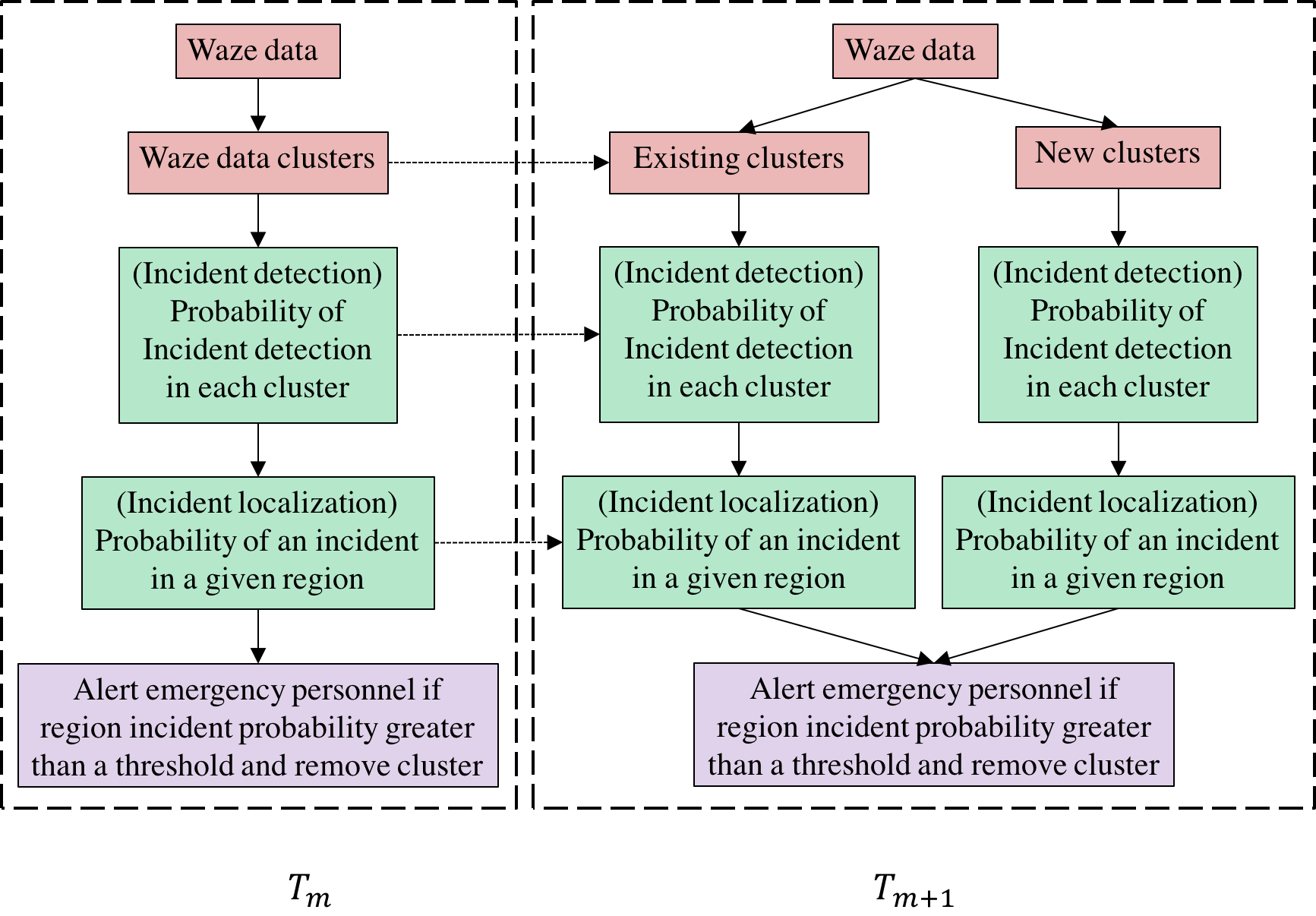
- Wazeレポートをノイズの多いセンサ読み取り値としてモデル化し、時間経過に伴う事故確率を推定するためにベイジアン推論を適用する。
- 空間的・時間的ウィンドウ内で報告を集約するために、スパティオトロピカルグリッドベースのアプローチを用いる。
- 報告者の信頼性をベイジアンフレームワーク内の学習可能なパラメータとして組み込み、報告を動的に重み付ける。
- 新しい報告が到着するたびに逐次ベイジアン更新を適用し、事故確率を精緻化する。
- F1スコアを最大化するために、グリッドサーチを用いてハイパーパラメータ(例:25分の時間ウィンドウ、100mの空間アパーチャ)を最適化する。
- 報告の密度と信頼性に基づいて事故発生確率をモデル化するために、ベイジアンフレームワーク内にロジスティック回帰を用いる。
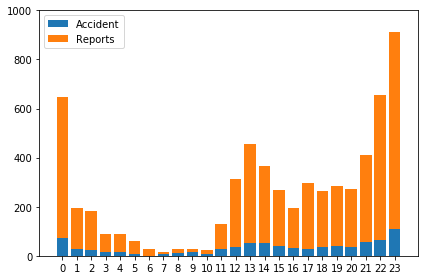
実験結果
リサーチクエスチョン
- RQ1ノイズの多いWazeデータを用いて、公式報告システムよりも早期に事故を検出できるか、ベイジアン情報統合が有効であるか?
- RQ2報告者の信頼性と空間的・時間的不確実性をモデル化することで、ベースライン手法と比較して検出性能がどのように向上するか?
- RQ3時間ウィンドウや空間アパーチャなどのハイパーパラメータ設定(例:25分、100m)は、事故検出の正確性とF1スコアを最適化するか?
- RQ4公式のE-TRIMS記録が利用可能になる前に、システムがどれほど事前に事故を予測できるか?
- RQ5事故発生間隔、空間グリッドサイズ、時間ステップの違いに応じて、性能はどのように変化するか?
主な発見
- 提案されたベイジアン統合手法は、強力なベースライン手法と比較して、F1スコアで5%以上の相対的改善を達成した。
- 最良のモデル(M6)は、公式のE-TRIMS記録よりも平均して5.92分の早期検出を実現した。
- ロジスティック回帰ベースの手法が、F1スコアとAUCの両方で他の分類器を上回り、精度と再現率のバランスに優れていることを示した。
- モデルの性能は空間アパーチャのサイズに敏感であり、最適な性能は100メートルで達成された。これは、空間解像度のチューニングの重要性を示している。
- 事故発生間隔を延ばすとF1スコアがわずかに向上し、これは稀な出来事に対して、より長い検出ウィンドウが信頼性を高めることを示唆している。
- 本手法は、報告が希薄で一貫性のない状況でも、ベイジアン不確実性評価により高い信頼性を維持した予測を可能にし、ロバストであることが示された。
より良い研究を、今すぐ始めましょう
論文の読解から最終レビューまで、研究時間を劇的に削減しましょう。
クレジットカード登録不要
このレビューはAIが作成し、人間の編集者が確認しました。