
[Paper Review] Enacting Musical Worlds: Common Approaches to using NIMEs within Performance and Person-Centred Arts Practices
This paper proposes that musical engagement through NIMEs (New Instruments for Musical Expression) is best understood as an enactive, embodied process shaped by sensorimotor interaction, physiology, and sociocultural context. Through ethnographic and practice-led research in live electronic performance and person-centred arts for individuals with complex disabilities, it demonstrates that NIMEs achieve their greatest impact when personalized to individual histories and needs, enabling unique, expressive, and socially meaningful musical worlds to emerge through iterative, context-sensitive design.
Live music making can be understood as an enactive process, whereby musical experiences are created through human action. This suggests that musical worlds coevolve with their agents through repeated sensorimotor interactions with the environment (where the music is being created), and at the same time cannot be separated from their sociocultural contexts. This paper investigates this claim by exploring ways in which technology, physiology, and context are bound up within two different musical scenarios: live electronic musical performance; and person-centred arts applications of NIMEs. In this paper I outline an ethnographic and phenomenological enquiry into my experiences as both a performer of live electronic and electro-instrumental music, as well as my extensive background in working with new technologies in various therapeutic and person-centred artistic situations. This is in order to explore the sociocultural and technological contexts in which these activities take place. I propose that by understanding creative musical participation as a highly contextualised practice, we may discover that the greatest impact of rapidly developing technological resources is their ability to afford richly diverse, personalised, and embodied forms of music making. I argue that this is applicable over a wide range of musical communities.
Motivation & Objective
- To investigate how NIMEs function as embodied, socioculturally embedded practices in diverse musical contexts.
- To address the challenge of designing music technologies that respond to individual physiological, cognitive, and cultural needs, especially for people with complex disabilities.
- To demonstrate that effective NIME development arises not from technical optimization, but from deep, iterative engagement with users' lived experiences and sensorimotor capacities.
- To bridge gaps between experimental electronic music practices and person-centred arts by highlighting shared principles of enactive, relational music-making.
Proposed method
- Conducting ethnographic and phenomenological inquiry into personal experiences as a performer of live electronic music and as a collaborator in person-centred arts projects.
- Designing and iteratively refining NIMEs through prolonged, user-centered engagement with individuals, including real-time feedback loops and adaptive software.
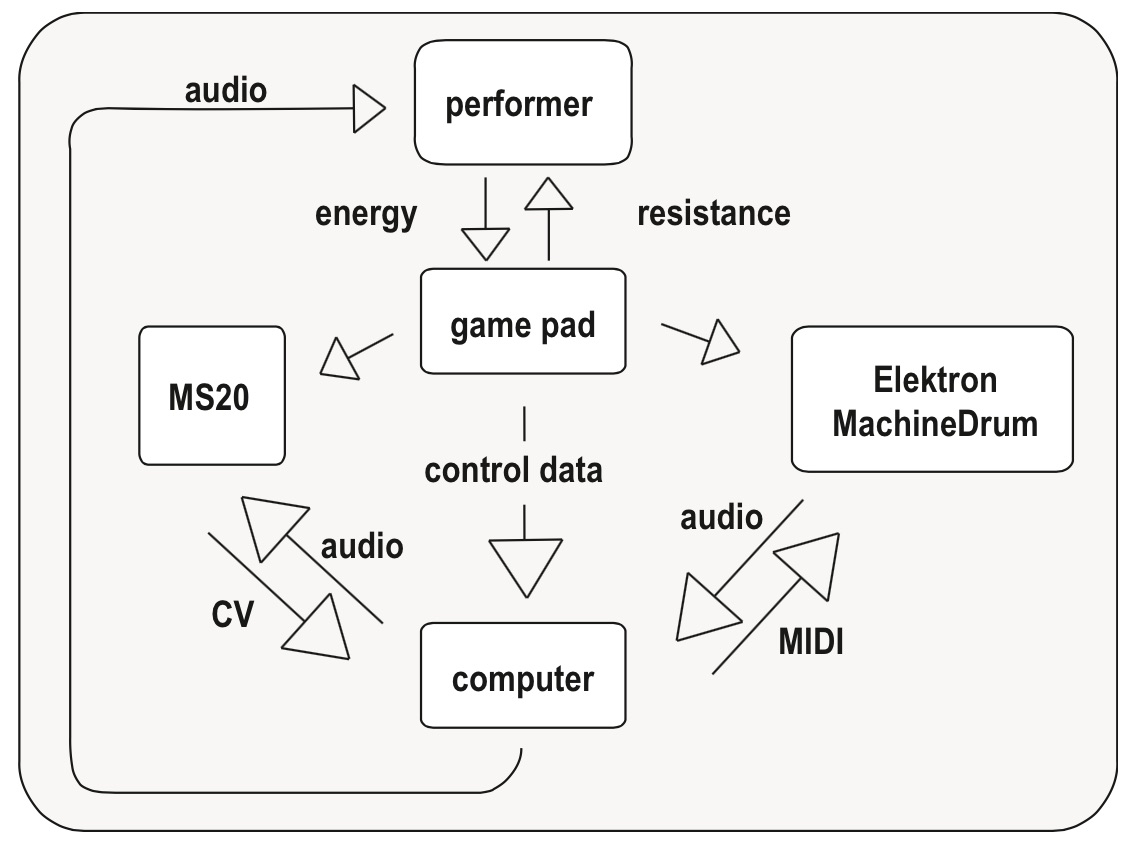
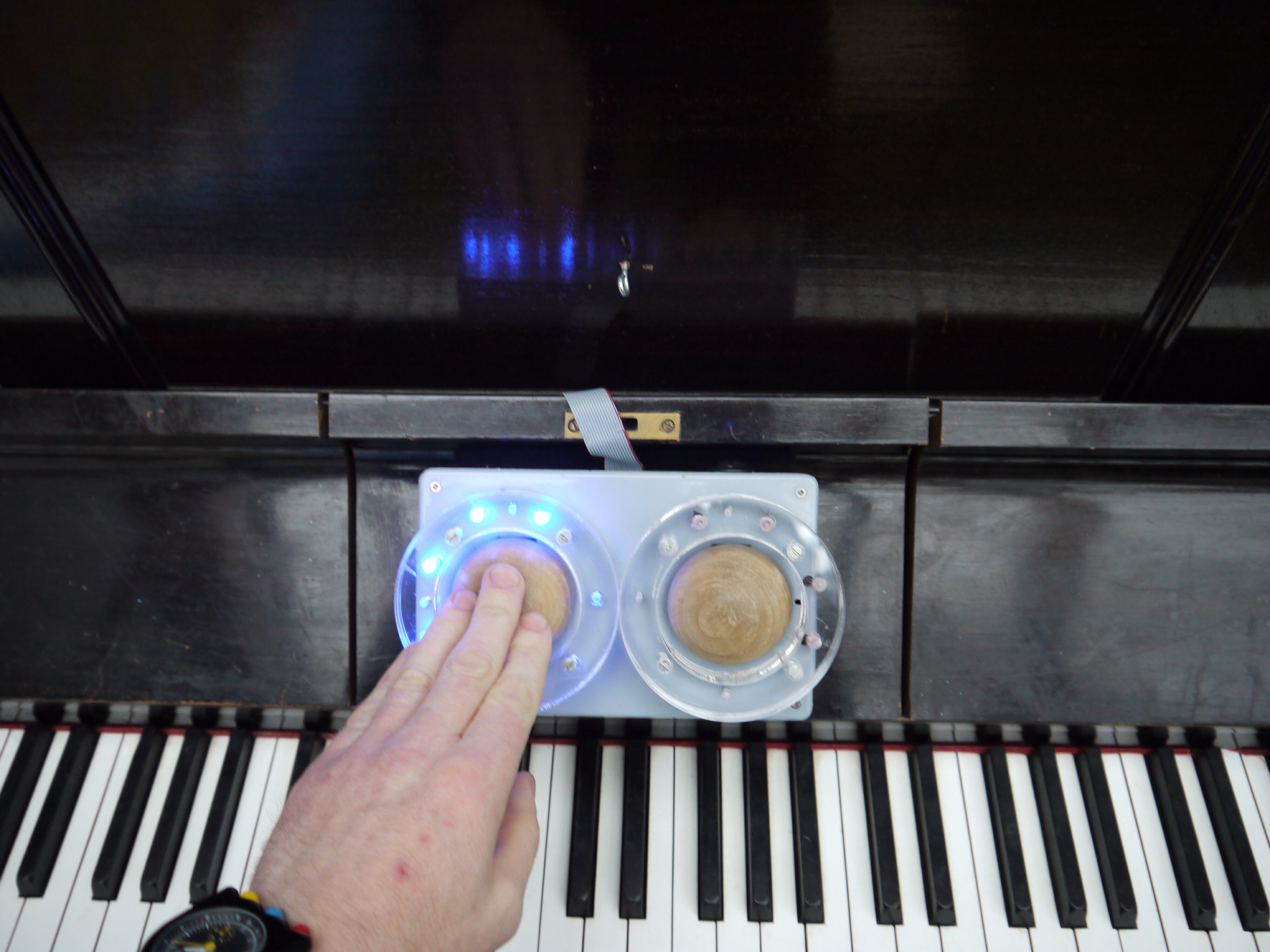
- Employing multimodal feedback (haptic, visual, auditory) in NIME interfaces to support sensorimotor coupling and user agency.
- Using structural coupling theory from enaction to frame the coevolution of performer, instrument, and environment over time.
- Creating customized sound libraries from personal and culturally meaningful sources (e.g., family voices, familiar sounds) to ground musical expression in lived experience.
- Implementing physical design constraints (e.g., enclosed buttons, vibration feedback) to ensure safety and accessibility for users with complex needs.
Experimental results
Research questions
- RQ1How do physiological, cultural, and musical histories shape the development and use of NIMEs in performance and therapeutic contexts?
- RQ2In what ways do sensorimotor interactions with NIMEs co-evolve with the performer’s embodied experience and the sociocultural environment?
- RQ3How can NIMEs be designed to support agency and intentionality in individuals with complex disabilities without relying on standard musical training or instruments?
- RQ4What role does structural coupling between user and instrument play in shaping unique, personalized musical worlds?
- RQ5How might insights from live electronic music performance inform the design of accessible, expressive NIMEs for person-centred arts?
Key findings
- NIME development is most effective when it evolves through repeated, context-sensitive interactions that reflect the user’s physiological and cultural history.
- The most impactful NIMEs are not technically advanced per se, but are deeply personalized to individual users’ sensory preferences, motor capacities, and emotional responses.
- Musical engagement through NIMEs functions as a medium of social relation, where meaning emerges from dynamic relationships between people, instruments, and environments.
- Sensory feedback mechanisms—such as vibration motors and LED lights—significantly enhance user engagement and confirm interaction, especially for users with limited verbal communication.
- The iterative, user-driven design process allows for adaptive changes in software and interface, ensuring long-term engagement and developmental relevance.
- The same principles of enactive, embodied music-making apply across diverse contexts, from avant-garde performance to therapeutic arts, revealing shared foundations in relational and expressive practice.
Read this paper
Open the full text in the Nubint reader and ask about any passage as you read.
Read this paper on NubintThis review was generated by AI from the original paper. Please check the paper before citing it.