
[Paper Review] Energy Disaggregation & Appliance Identification in a Smart Home: Transfer Learning enables Edge Computing
This paper proposes a transfer learning-based deep learning framework for energy disaggregation and appliance identification in smart homes using seq2-[3]-point CNN for NILM and fine-tuned 2D-CNNs (ResNet-18, DenseNet-121) on wavelet and STFT-based electrical signatures. It achieves 94.6% accuracy in home-NILM, 81% in site-NILM, and 88.9% in appliance identification using the REDD and REFIT datasets.
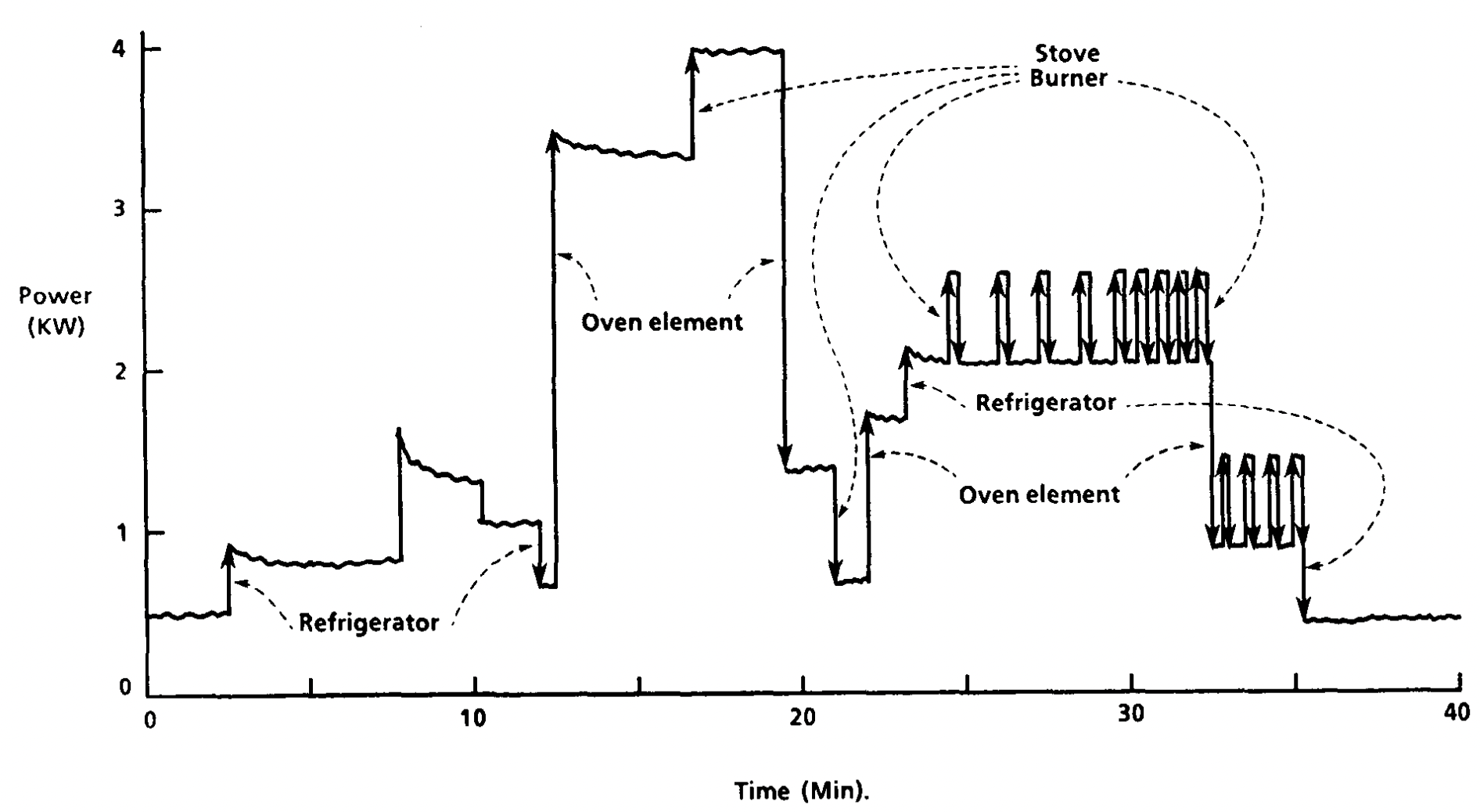
Non-intrusive load monitoring (NILM) or energy disaggregation aims to extract the load profiles of individual consumer electronic appliances, given an aggregate load profile of the mains of a smart home. This work proposes a novel deep-learning and edge computing approach to solve the NILM problem and a few related problems as follows. 1) We build upon the reputed seq2-point convolutional neural network (CNN) model to come up with the proposed seq2-[3]-point CNN model to solve the (home) NILM problem and site-NILM problem (basically, NILM at a smaller scale). 2) We solve the related problem of appliance identification by building upon the state-of-the-art (pre-trained) 2D-CNN models, i.e., AlexNet, ResNet-18, and DenseNet-121, which are fine-tuned two custom datasets that consist of Wavelets and short-time Fourier transform (STFT)-based 2D electrical signatures of the appliances. 3) Finally, we do some basic qualitative inference about an individual appliance's health by comparing the power consumption of the same appliance across multiple homes. Low-frequency REDD dataset is used for all problems, except site-NILM where REFIT dataset has been used. As for the results, we achieve a maximum accuracy of 94.6\% for home-NILM, 81\% for site-NILM, and 88.9\% for appliance identification (with Resnet-based model).
Motivation & Objective
- To address the non-intrusive load monitoring (NILM) problem by estimating individual appliance power profiles from aggregate mains data.
- To enable appliance identification using deep transfer learning on 2D electrical signatures derived from wavelet and STFT transforms.
- To perform qualitative health assessment of appliances by comparing their power consumption patterns across multiple homes.
- To demonstrate the feasibility of deploying these models on edge devices via transfer learning for real-time smart home applications.
Proposed method
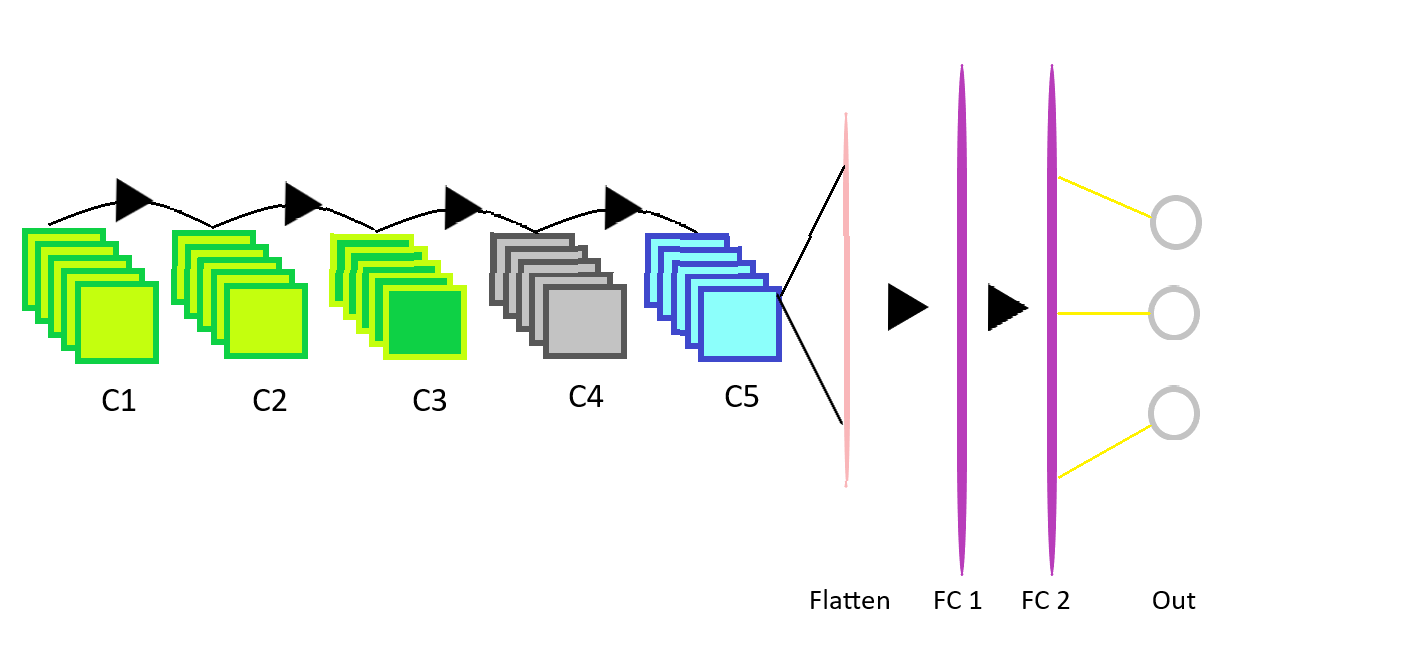
- Proposes a novel seq2-[3]-point CNN model that maps sequence-to-sequence predictions for home and site-level NILM, improving upon the standard seq2-point architecture.
- Converts 1D power time-series data into 2D image-like representations using wavelet transform and short-time Fourier transform (STFT), with fusion of both for enhanced feature extraction.
- Fine-tunes pre-trained 2D-CNNs (AlexNet, ResNet-18, DenseNet-121) with custom fully connected layers for appliance classification on custom datasets of electrical signatures.
- Applies transfer learning by freezing convolutional layers after pre-training on one appliance and fine-tuning on others to improve generalization and reduce training time.
- Uses data augmentation to minimize class imbalance and improve model robustness in classification tasks.
- Employs accuracy and F1 score as evaluation metrics, with threshold-based translation of continuous predictions into discrete appliance states for NILM evaluation.
Experimental results
Research questions
- RQ1Can a seq2-[3]-point CNN model achieve high-accuracy energy disaggregation for individual appliances in a home using only aggregate mains data?
- RQ2How effective are transfer learning-based 2D-CNN models (ResNet-18, DenseNet-121, AlexNet) in classifying appliance types from wavelet and STFT-based electrical signatures?
- RQ3What is the impact of different fusion strategies (e.g., wavelet + STFT) on appliance identification performance?
- RQ4Can power consumption patterns across multiple homes be used to infer qualitative health states of individual appliances?
- RQ5How does the proposed framework perform on real-world datasets like REDD and REFIT in both home-NILM and site-NILM scenarios?
Key findings
- The proposed seq2-[3]-point CNN achieved a maximum home-NILM accuracy of 94.6% for a dishwasher, with thresholds optimized per appliance.
- Site-NILM on the REFIT dataset achieved an overall test accuracy of 81%, demonstrating the model’s scalability to smaller-scale monitoring.
- The ResNet-18-based model achieved the highest appliance identification accuracy at 88.9% with an F1 score of 88% on wavelet-transformed signatures.
- DenseNet-121 showed improved performance with a lower learning rate (0.001), achieving 86.17% accuracy on fused wavelet-STFT signatures.
- The AlexNet model achieved 80.67% accuracy and 81% F1 score on wavelet signatures, indicating moderate performance compared to deeper architectures.
- Qualitative analysis revealed that cross-home comparison of identical appliances’ power profiles can yield insights into appliance health and operational anomalies.
Read this paper
Open the full text in the Nubint reader and ask about any passage as you read.
Read this paper on NubintThis review was generated by AI from the original paper. Please check the paper before citing it.