
[Paper Review] Evaluating forecasts for high-impact events using transformed kernel scores
This paper introduces weighted multivariate scoring rules based on kernel scores to evaluate forecasts for high-impact events, such as compound weather phenomena. It demonstrates that the threshold-weighted CRPS is a kernel score, enabling efficient ensemble evaluation and generalization to new weighted scores like threshold-weighted energy and variogram scores, which better identify forecasts that predict high-impact outcomes even when individual events are not extreme.
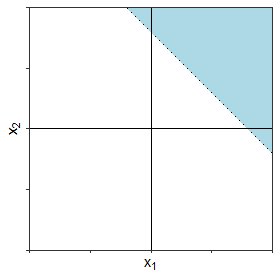
It is informative to evaluate a forecaster's ability to predict outcomes that have a large impact on the forecast user. Although weighted scoring rules have become a well-established tool to achieve this, such scores have been studied almost exclusively in the univariate case, with interest typically placed on extreme events. However, a large impact may also result from events not considered to be extreme from a statistical perspective: the interaction of several moderate events could also generate a high impact. Compound weather events provide a good example of this. To assess forecasts made for high-impact events, this work extends existing results on weighted scoring rules by introducing weighted multivariate scores. To do so, we utilise kernel scores. We demonstrate that the threshold-weighted continuous ranked probability score (twCRPS), arguably the most well-known weighted scoring rule, is a kernel score. This result leads to a convenient representation of the twCRPS when the forecast is an ensemble, and also permits a generalisation that can be employed with alternative kernels, allowing us to introduce, for example, a threshold-weighted energy score and threshold-weighted variogram score. To illustrate the additional information that these weighted multivariate scoring rules provide, results are presented for a case study in which the weighted scores are used to evaluate daily precipitation accumulation forecasts, with particular interest on events that could lead to flooding.
Motivation & Objective
- To address the limitation of unweighted scoring rules in evaluating forecasts for high-impact events that arise from compound, non-extreme conditions.
- To extend weighted scoring rules beyond univariate settings to multivariate outcomes using kernel scores.
- To develop a flexible framework for emphasizing specific regions of the outcome space, particularly those relevant to high-impact events.
- To evaluate forecast performance for precipitation accumulation with focus on flooding risk, using both weighted and unweighted scores.
- To demonstrate that weighted kernel scores can yield different conclusions than unweighted scores, highlighting forecast strategies that perform best for high-impact events.
Proposed method
- Utilizes kernel scores—proper scoring rules based on conditionally negative definite (c.n.d.) kernels—to construct weighted multivariate scoring rules.
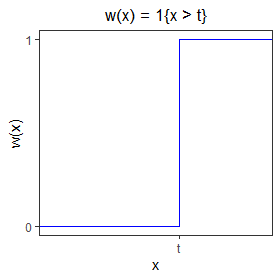
- Proves that the threshold-weighted continuous ranked probability score (twCRPS) is a kernel score, enabling efficient computation for ensemble forecasts.
- Generalizes the twCRPS to other kernels, introducing threshold-weighted energy scores and threshold-weighted variogram scores.
- Introduces vertically re-scaled kernel scores as an alternative weighting mechanism that preserves the kernel score framework.
- Employs the inverse multiquadric kernel as a new strictly proper kernel for univariate and multivariate settings with strong discrimination ability.
- Applies the proposed weighted scores to MeteoSwiss daily precipitation accumulation forecasts, comparing multivariate post-processing methods using both weighted and unweighted evaluations.
Experimental results
Research questions
- RQ1Can weighted multivariate scoring rules be constructed within the kernel score framework to better evaluate forecasts for high-impact events?
- RQ2Is the threshold-weighted CRPS a kernel score, and does this enable more efficient evaluation for ensemble forecasts?
- RQ3How do threshold-weighted energy and variogram scores compare to their unweighted counterparts in detecting forecast performance for high-impact events?
- RQ4Do weighted kernel scores lead to different conclusions about forecast quality than unweighted scores in real-world applications?
- RQ5Can the choice of kernel influence the sensitivity of scoring rules to specific regions of the outcome space, particularly those associated with compound high-impact events?
Key findings
- The threshold-weighted CRPS is formally shown to be a kernel score, enabling its use with ensemble forecasts through a closed-form expression.
- The framework allows generalization of the twCRPS to other kernels, leading to new weighted scoring rules such as threshold-weighted energy and variogram scores.
- Vertically re-scaled kernel scores provide an alternative weighting mechanism that is equivalent to threshold-weighting under specific conditions but extends the range of possible weight functions.
- In a case study on daily precipitation accumulation forecasts, weighted scores identified different optimal post-processing methods than unweighted scores, particularly for flood-risk events.
- The inverse multiquadric kernel is shown to be strictly proper for all probability measures on R^d and competitive in discrimination ability, making it suitable for multivariate forecast evaluation.
- Weighted kernel scores can detect differences in forecast behavior across outcome space regions, especially in high-impact areas, which unweighted scores fail to capture.
Read this paper
Open the full text in the Nubint reader and ask about any passage as you read.
Read this paper on NubintThis review was generated by AI from the original paper. Please check the paper before citing it.