
[Paper Review] Finding origins of CMB anomalies in the inflationary quantum fluctuations
This paper proposes direct-sum inflation (DSI), a new quantum fluctuation mechanism in early universe cosmology that generates a parity-asymmetric, scale-dependent power spectrum through forward- and backward-in-time evolving components at parity-conjugate points. DSI explains key CMB anomalies—low quadrupole power, hemispherical asymmetry, and temperature anticorrelations—better than standard inflation, with a p-value of 3.5% for the quadrupole (39× higher than standard inflation), and DSI is 50–650 times more probable than standard inflation when combining parity and low-ℓ statistics.
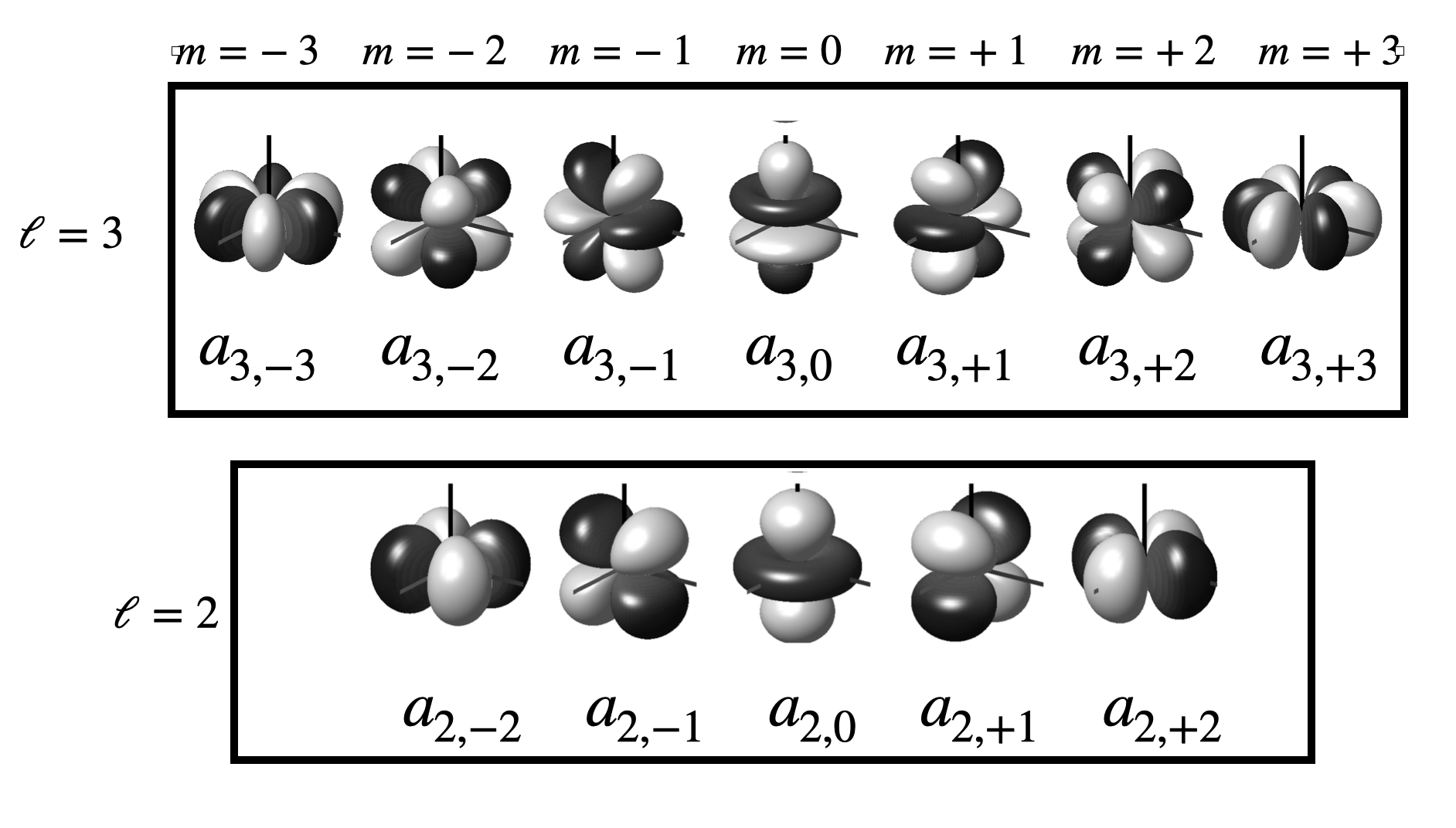
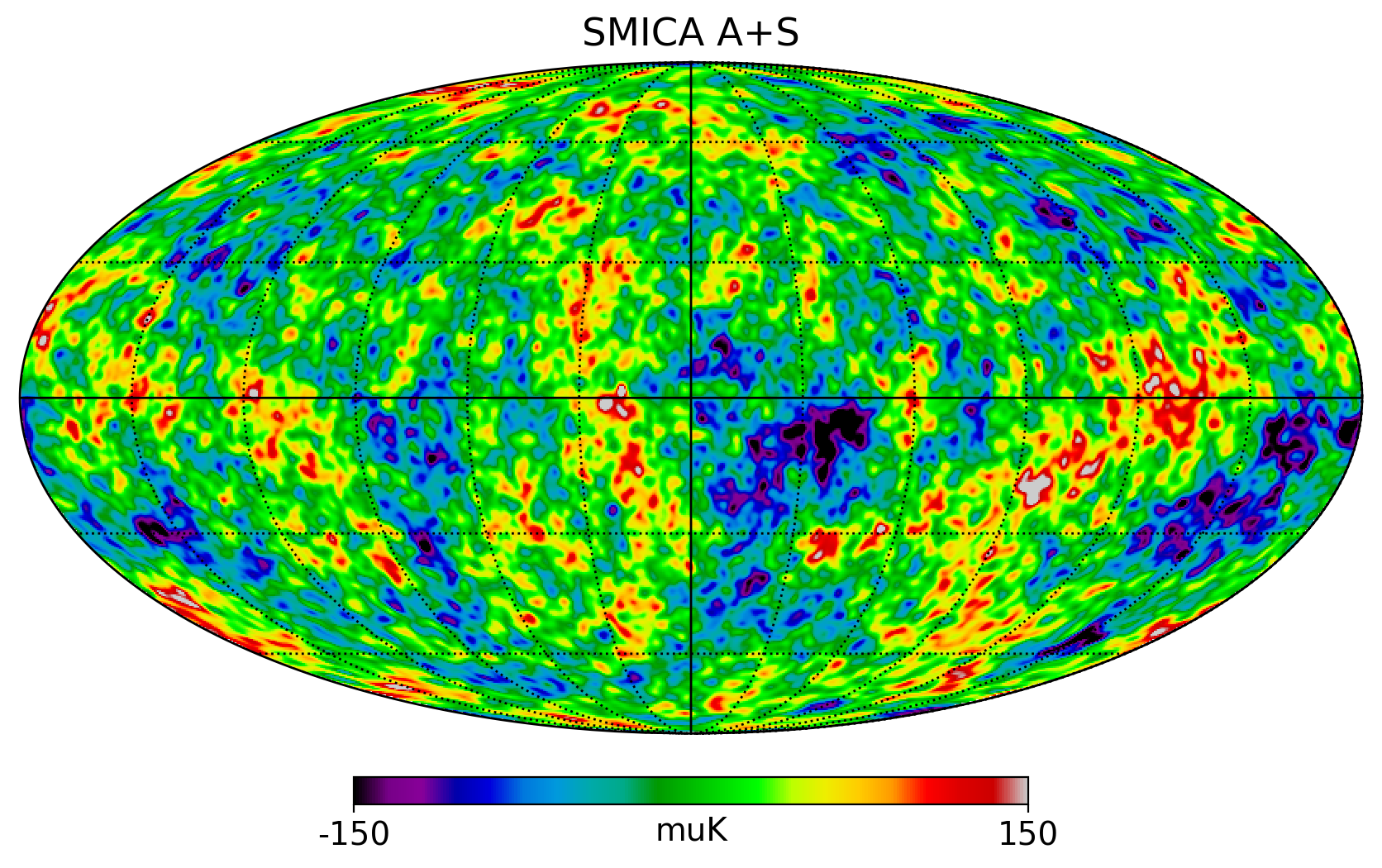
In this paper, we present compelling evidence for the parity asymmetry (a discrete symmetry that is separate from isotropy) in the Cosmic Microwave Background (CMB) map, measured through two-point temperature correlations. This parity asymmetric CMB challenges our understanding of the quantum physics of the early Universe rather than LCDM ($Λ$ Cold-Dark-Matter). We commence by conducting a comprehensive analysis of the Planck CMB, focusing on the distribution of power in low-multipoles and temperature anticorrelations at parity conjugate points in position space. We find tension with the near scale-invariant power-law power spectrum of Standard Inflation (SI), with p-values of the order $\mathcal{O}\left( 10^{-4}-10^{-3} ight)$. Alternatively, we explore the framework of direct-sum inflation (DSI), where a quantum fluctuation arises as a direct-sum of two components evolving forward and backward in time at parity conjugate points in physical space. We found that DSI is consistent with data on parity asymmetry, the absence of power at $θ>60^{\circ}$, and power suppression at low-even-multipoles, which are major data anomalies in the SI. Furthermore, we discover that the parameters characterizing the hemispherical power asymmetry anomaly become statistically insignificant when the large SI quadrupole amplitude is reduced to align with the data. DSI explains this low quadrupole with a p-value of $3.5\%$, 39 times higher than SI. Combining statistics from parameters measuring parity and low-$\ell$ angular power spectrum, we find that DSI is 50-650 times more probable than SI. In summary, our investigation suggests that CMB temperature fluctuations exhibit homogeneity and isotropy but parity-asymmetric consistent with predictions of DSI. This observation provides tantalizing evidence for the quantum mechanical nature of gravity.
Motivation & Objective
- To investigate the origins of long-standing CMB anomalies, including low-multipole power suppression and hemispherical power asymmetry, within the framework of quantum gravity and inflationary physics.
- To test whether observed parity-violating features in the CMB temperature map—particularly temperature anticorrelations at parity-conjugate points—can be explained by a new quantum mechanical mechanism beyond standard inflation.
- To re-evaluate the statistical significance of the hemispherical power asymmetry (HPA) anomaly, challenging prior claims of cosmological principle violation.
- To propose and validate a new inflationary model, direct-sum inflation (DSI), that naturally produces parity-asymmetric power spectra without additional free parameters.
- To assess the compatibility of DSI with key observational constraints: suppression of power at θ > 60°, low even multipoles, and the observed low quadrupole amplitude.
Proposed method
- Analyzing Planck CMB data using two-point temperature correlation functions in position space to detect parity-asymmetric features, particularly through the construction of parity-conjugate maps T(−n̂).
- Defining odd and even parity components T⁻ = (T − T̄)/2 and T⁺ = (T + T̄)/2 to isolate parity-violating structures in the CMB sky.
- Introducing the product map Z = T × T̄ and G = T⁺ × T⁻ to quantify parity asymmetry and verify statistical independence between even and odd multipoles.
- Implementing 4-sigma clipping to mitigate contamination from rare extreme events (e.g., cold/hot spots) that could bias parity statistics.
- Comparing DSI model realizations with Planck data and standard inflation (SI) via statistical metrics such as p-values for quadrupole amplitude and global isotropy measures.
- Using the ratio w⁺/w⁻ of even-to-odd power spectra and the distribution P(Z) to quantify parity asymmetry and compare model predictions with observations.
Experimental results
Research questions
- RQ1Does the observed CMB temperature map exhibit statistically significant parity violation beyond what is predicted by standard inflation?
- RQ2Can the low quadrupole amplitude and suppression of power at ℓ < 4 be explained by a new quantum mechanical mechanism in inflation, rather than cosmological principle violation?
- RQ3Is the hemispherical power asymmetry anomaly statistically robust, or is it an artifact of the large observed quadrupole in standard inflation models?
- RQ4Can a direct-sum inflation (DSI) mechanism—where quantum fluctuations evolve as a sum of forward- and backward-in-time components—reproduce the observed parity-asymmetric features in the CMB?
- RQ5How does the statistical evidence for DSI compare to standard inflation when combining multiple anomalies: parity asymmetry, low-ℓ power suppression, and quadrupole amplitude?
Key findings
- The CMB exhibits significant parity-asymmetric features, with temperature anticorrelations at parity-conjugate points, resulting in a p-value of order 10⁻⁴ to 10⁻³ when tested against standard inflation’s scale-invariant power spectrum.
- The direct-sum inflation (DSI) model explains the low quadrupole amplitude with a p-value of 3.5%, which is 39 times higher than the p-value under standard inflation, indicating stronger consistency with data.
- When the large quadrupole amplitude in standard inflation is corrected to match observations, the hemispherical power asymmetry anomaly becomes statistically insignificant, challenging prior claims of cosmological principle violation.
- Combining statistics from parity asymmetry and low-ℓ angular power spectrum, DSI is found to be 50 to 650 times more probable than standard inflation.
- Visual inspection of CMB maps shows that the observed Planck data closely resembles the odd-parity component T⁻ and the negative Z map, while standard inflation realizations show no such preference.
- The DSI model reproduces key anomalies—low power at θ > 60°, suppression at low-even multipoles, and parity asymmetry—without introducing additional free parameters, suggesting a deeper quantum origin for the observed CMB features.
Read this paper
Open the full text in the Nubint reader and ask about any passage as you read.
Read this paper on NubintThis review was generated by AI from the original paper. Please check the paper before citing it.