
[Paper Review] Grey Literature in Software Engineering: A Critical Review
This tertiary study investigates the use of grey literature (GL) in software engineering (SE) secondary studies from 2011 to 2018, analyzing 446 studies to assess GL usage, selection criteria, motivations, and challenges. It finds that only 21% of secondary studies used GL to answer research questions, with widespread inconsistencies in GL definition, poor search and assessment practices, and 49% of GL URLs becoming inaccessible, highlighting the need for standardized guidelines to improve GL integration and preservation in SE research.
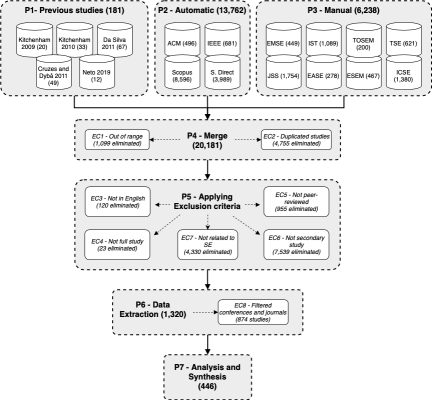
Context: Grey Literature (GL) recently has grown in Software Engineering (SE) research since the increased use of online communication channels by software engineers. However, there is still a limited understanding of how SE research is taking advantage of GL. Objective: This research aimed to understand how SE researchers use GL in their secondary studies. Method: We conducted a tertiary study of studies published between 2011 and 2018 in high-quality software engineering conferences and journals. We then applied qualitative and quantitative analysis to investigate 446 potential studies. Results: From the 446 selected studies, 126 studies cited GL but only 95 of those used GL to answer a specific research question representing almost 21% of all the 446 secondary studies. Interestingly, we identified that few studies employed specific search mechanisms and used additional criteria for assessing GL. Moreover, by the time we conducted this research, 49% of the GL URLs are not working anymore. Based on our findings, we discuss some challenges in using GL and potential mitigation plans. Conclusion: In this paper, we summarized the last 10 years of software engineering research that uses GL, showing that GL has been essential for bringing practical new perspectives that are scarce in traditional literature. By drawing the current landscape of use, we also raise some awareness of related challenges (and strategies to deal with them).
Motivation & Objective
- To understand how software engineering researchers use grey literature (GL) in secondary studies.
- To investigate the motivations, criteria, and challenges behind GL inclusion or exclusion in secondary studies.
- To assess the quality and sustainability of GL sources cited in SE research.
- To identify inconsistencies in GL definition and classification across studies.
- To propose actionable guidelines for searching, selecting, and assessing GL in future SE research.
Proposed method
- Conducted a tertiary study of 446 secondary studies published between 2011 and 2018 in top SE conferences and journals.
- Applied both qualitative and quantitative analysis to examine GL usage, definitions, selection criteria, and assessment practices.
- Used the 'shades of grey' framework to classify GL types based on expertise and outlet levels.
- Manually verified GL citations by cross-referencing reported numbers with actual references to ensure accuracy.
- Assessed GL URL persistence by checking link validity at the time of the study.
- Identified and analyzed motivations for using or avoiding GL, including perceived credibility and accessibility issues.
Experimental results
Research questions
- RQ1What is the extent and pattern of grey literature use in secondary studies in software engineering between 2011 and 2018?
- RQ2How do researchers define and classify grey literature, and what criteria do they use to select or exclude it?
- RQ3What are the motivations for including or avoiding grey literature in secondary studies?
- RQ4What challenges do researchers face in using grey literature, particularly regarding accessibility and quality assessment?
- RQ5How sustainable are grey literature sources cited in secondary studies, and what is their long-term availability?
Key findings
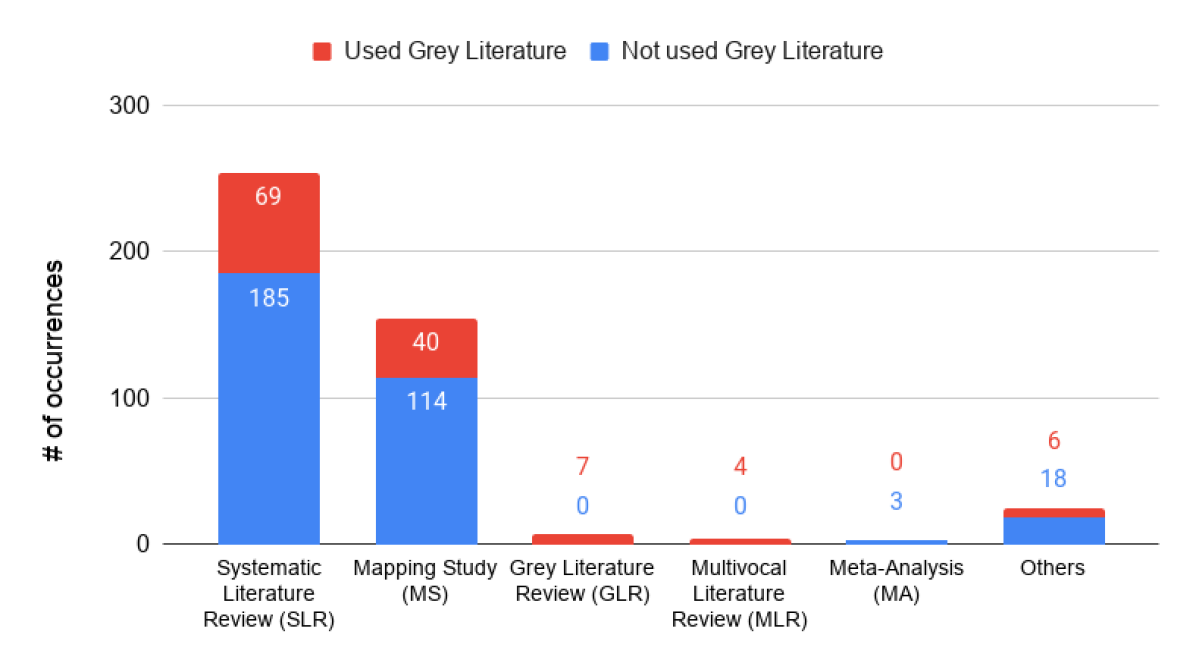
- Only 21% of the 446 secondary studies analyzed used grey literature to answer a specific research question, indicating limited integration despite its potential.
- 49% of the grey literature URLs cited in the studies were no longer accessible at the time of the study, highlighting a major issue of long-term availability.
- Only 126 out of 446 studies cited grey literature, and among those, only 95 used it to directly answer a research question, suggesting inconsistent application.
- There was a lack of standardized definition of grey literature across studies, with significant variation in how different GL types were interpreted and classified.
- Few studies employed systematic search mechanisms or quality assessment criteria for grey literature, indicating weak methodological rigor in GL handling.
- The study identified a need for standardized guidelines to improve the search, selection, and assessment of grey literature in software engineering research.
Read this paper
Open the full text in the Nubint reader and ask about any passage as you read.
Read this paper on NubintThis review was generated by AI from the original paper. Please check the paper before citing it.