
[Paper Review] How Good Are SOTA Fake News Detectors
This study evaluates the real-world robustness of state-of-the-art (SOTA) fake news detectors by comparing traditional machine learning models (e.g., Random Forest, XGBoost) with deep learning models (e.g., BERT, RoBERTa) on out-of-distribution and AI-generated fake news. While SOTA transformers achieve high accuracy on in-domain data, traditional models generalize significantly better to unseen data, suggesting they are more reliable for real-world deployment despite lower benchmark scores.
Automatic fake news detection with machine learning can prevent the dissemination of false statements before they gain many views. Several datasets labeling statements as legitimate or false have been created since the 2016 United States presidential election for the prospect of training machine learning models. We evaluate the robustness of both traditional and deep state-of-the-art models to gauge how well they may perform in the real world. We find that traditional models tend to generalize better to data outside the distribution it was trained on compared to more recently-developed large language models, though the best model to use may depend on the specific task at hand.
Motivation & Objective
- To assess how well SOTA fake news detectors generalize to data outside their training distribution.
- To evaluate the performance of traditional machine learning models versus deep learning models (e.g., BERT) in real-world deployment scenarios.
- To investigate whether the higher accuracy of deep learning models on benchmark datasets translates to robustness in practical settings.
- To explore whether explainability and computational efficiency of traditional models offer advantages despite lower peak performance.
- To examine the impact of data distribution shifts and AI-generated content on detector reliability.
Proposed method
- Trained six classical machine learning models (e.g., Random Forest, XGBoost, KNN) and six transformer-based models (e.g., BERT, RoBERTa) on five publicly available fake news datasets.
- Evaluated models on both in-domain test sets and out-of-sample datasets from different domains (e.g., politics, health) to assess generalization.
- Tested performance on AI-generated fake news using Grover, a GAN-based news generator, to evaluate robustness to stylistic shifts.
- Used only article titles or single news statements as input to reduce computational load and focus on text-level features.
- Compared model performance using accuracy and F1 scores across multiple datasets and evaluation scenarios.
- Employed standard NLP pipelines including TF-IDF and contextual embeddings, with fine-tuning for transformer models on a single GPU.
Experimental results
Research questions
- RQ1How well do fake news detectors perform on out-of-sample datasets from different domains?
- RQ2How accurately can fake news detectors identify AI-generated fake news with different stylistic patterns than their training data?
- RQ3How do traditional machine learning models compare to deep learning models in terms of generalization and robustness?
- RQ4To what extent do high benchmark scores on existing datasets reflect real-world reliability?
- RQ5Can traditional models serve as a more robust foundation for fake news detection than large language models?
Key findings
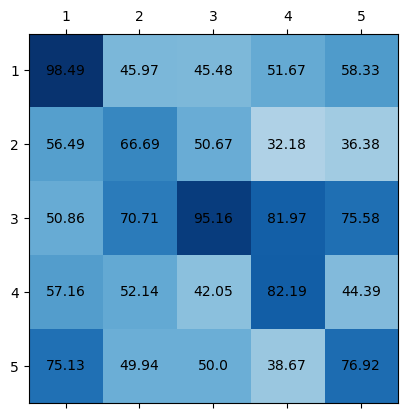
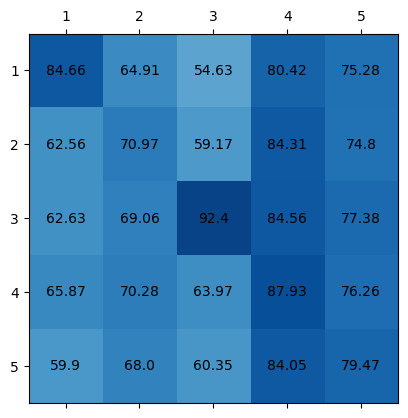
- Traditional models like Random Forest and XGBoost achieved 86.70% and 88.72% accuracy on out-of-sample datasets, respectively, significantly outperforming deep learning models.
- On AI-generated fake news from Grover, most transformer models performed at chance level (around 50% accuracy), with only CT-BERT on the D5 dataset reaching 69.53%.
- BERT and RoBERTa models achieved high in-domain accuracy (e.g., 91.37% on FakeNewsNet), but their performance dropped drastically on out-of-distribution data.
- No single traditional model outperformed all others across all datasets, but Random Forest showed consistent performance across multiple out-of-sample evaluations.
- Traditional models generalized better than deep models, suggesting they learn more generalizable patterns in fake news, despite lower peak accuracy on benchmarks.
- Ensembling multiple traditional models may offer a robust, scalable, and explainable alternative to large language models for real-world fake news detection.
Read this paper
Open the full text in the Nubint reader and ask about any passage as you read.
Read this paper on NubintThis review was generated by AI from the original paper. Please check the paper before citing it.