
[Paper Review] Identifiability of latent-variable and structural-equation models: from linear to nonlinear
This paper establishes identifiability conditions for latent-variable and structural-equation models, showing that non-Gaussianity enables unique recovery of components in linear models (via ICA) and that temporal dependence or nonstationarity ensures identifiability in nonlinear, nonparametric models. The key contribution is a unified theoretical framework linking ICA and SEM, enabling causal discovery and disentangled representation learning.
An old problem in multivariate statistics is that linear Gaussian models are often unidentifiable, i.e. some parameters cannot be uniquely estimated. In factor (component) analysis, an orthogonal rotation of the factors is unidentifiable, while in linear regression, the direction of effect cannot be identified. For such linear models, non-Gaussianity of the (latent) variables has been shown to provide identifiability. In the case of factor analysis, this leads to independent component analysis, while in the case of the direction of effect, non-Gaussian versions of structural equation modelling solve the problem. More recently, we have shown how even general nonparametric nonlinear versions of such models can be estimated. Non-Gaussianity is not enough in this case, but assuming we have time series, or that the distributions are suitably modulated by some observed auxiliary variables, the models are identifiable. This paper reviews the identifiability theory for the linear and nonlinear cases, considering both factor analytic models and structural equation models.
Motivation & Objective
- Address the long-standing identifiability problem in linear Gaussian factor models, where factor rotations are unidentifiable.
- Extend identifiability to nonlinear, nonparametric models by introducing structural assumptions such as temporal dependence or nonstationarity.
- Establish a theoretical link between independent component analysis (ICA) and structural equation models (SEM) for causal discovery.
- Provide conditions under which nonlinear ICA and nonlinear SEM can be uniquely estimated from observational data.
- Motivate the use of identifiability for disentangled representation learning and causal inference in machine learning.
Proposed method
- Use non-Gaussianity as a key assumption to break rotational indeterminacy in linear ICA, enabling unique recovery of independent components.
- Leverage time series structure or observed modulating variables to induce identifiability in nonlinear ICA, even without parametric assumptions.
- Formulate nonlinear ICA as a latent variable model where the mixing function is nonparametric and the latent variables are non-Gaussian.
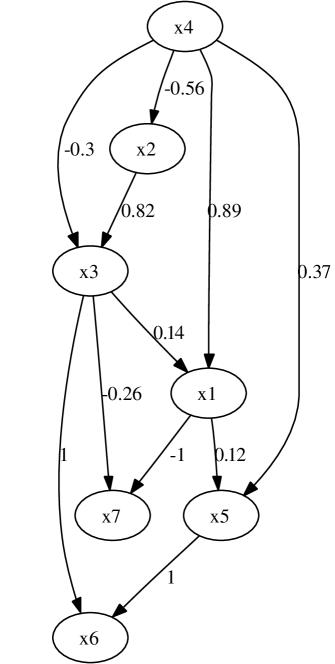
- Apply identifiability results from nonlinear ICA to structural equation models by reducing SEM estimation to ICA estimation.
- Use self-supervised learning and maximum likelihood estimation techniques for practical inference in nonlinear ICA models.
- Propose a recursive identifiability argument to extend identifiability guarantees from the final layer to intermediate layers in deep neural networks.
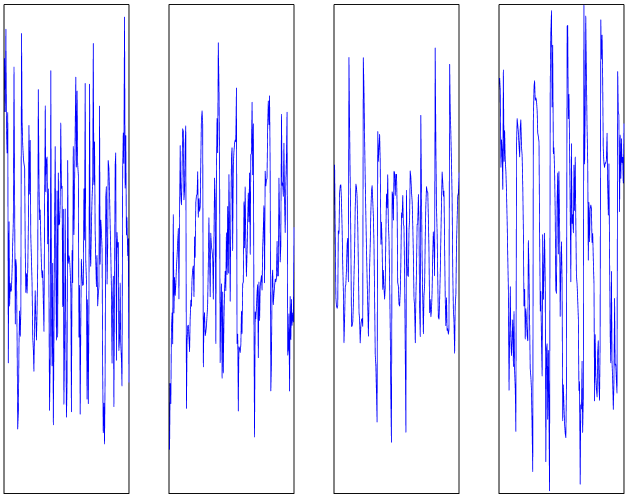
Experimental results
Research questions
- RQ1Under what conditions is a linear Gaussian factor model identifiable, and how can non-Gaussianity resolve the rotational indeterminacy?
- RQ2How can identifiability be achieved in nonlinear, nonparametric ICA models without parametric assumptions on the mixing function?
- RQ3What structural assumptions—such as temporal dependence or nonstationarity—enable identifiability in nonlinear ICA?
- RQ4Can identifiability in nonlinear ICA be extended to intermediate layers in deep neural networks?
- RQ5How can identifiability in ICA be leveraged to estimate and identify structural equation models for causal discovery?
Key findings
- Linear ICA with non-Gaussian latent variables is identifiable, enabling unique recovery of independent components and solving the blind source separation problem.
- Non-Gaussianity alone is insufficient for identifiability in nonlinear ICA; additional assumptions such as time series structure or nonstationarity are required.
- Nonlinear ICA models with temporal or nonstationary structure are identifiable under mild regularity conditions, allowing consistent estimation of latent components.
- The identifiability of nonlinear ICA can be extended to intermediate layers in deep neural networks via recursive propagation of identifiability guarantees.
- Nonlinear ICA provides a foundation for estimating nonlinear SEMs, enabling causal discovery from observational data.
- Estimation methods such as self-supervised learning and maximum likelihood are effective for nonlinear ICA, though statistical efficiency remains an open problem for finite samples.
Read this paper
Open the full text in the Nubint reader and ask about any passage as you read.
Read this paper on NubintThis review was generated by AI from the original paper. Please check the paper before citing it.