
[論文レビュー] Joint cosmological and gravitational-wave population inference using dark sirens and galaxy catalogues
本論文は、暗黒バースト(ダークシレンズ)と銀河カタログを用いて、宇宙論的パラメータ(例えば H₀)と重力波源のコンパクト二重星集団の性質を同時に推定できるように拡張された gwcosmo Python パッケージの改良版を紹介する。質量関数の分布と合体率の時間的変化を同時にモデル化することで、バイアスを低減し、42個のBBHイベントを含む GWTC-3 カタログから H₀ = 69⁺¹²₋₇ km s⁻¹ Mpc⁻¹ の頑健な測定が得られ、レンズ効果のない重力波イベントからの宇宙論的制約が顕著に向上した。
In the absence of numerous gravitational-wave detections with confirmed electromagnetic counterparts, the "dark siren" method has emerged as a leading technique of gravitational-wave cosmology. The method allows redshift information of such events to be inferred statistically from a catalogue of potential host galaxies. Due to selection effects, dark siren analyses necessarily depend on the mass distribution of compact objects and the evolution of their merger rate with redshift. Informative priors on these quantities will impact the inferred posterior constraints on the Hubble constant ($H_0$). It is thus crucial to vary these unknown distributions during an $H_0$ inference. This was not possible in earlier analyses due to the high computational cost, restricting them to either excluding galaxy catalogue information, or fixing the gravitational-wave population mass distribution and risking introducing bias to the $H_0$ measurement. This paper introduces a significantly enhanced version of the Python package GWCOSMO, which allows joint estimation of cosmological and compact binary population parameters. This thereby ensures the analysis is now robust to a major source of potential bias. The gravitational-wave events from the Third Gravitational-Wave Transient Catalogue are reanalysed with the GLADE+ galaxy catalogue, and an updated, more reliable measurement of $H_0=69^{+12}_{-7}$ km s$^{-1}$ Mpc$^{-1}$ is found (maximum a posteriori probability and 68% highest density interval). This improved method will enable cosmological analyses with future gravitational-wave detections to make full use of the information available (both from galaxy catalogues and the compact binary population itself), leading to promising new independent bounds on the Hubble constant.
研究の動機と目的
- 重力波天文学を用いて、独立的かつ高精度な H₀ 測定を可能にすることで、長年の Hubble 矛盾を解決すること。
- ダークシレンズ解析において固定された事前分布がもたらすバイアスを克服すること。
- 重力波イベントと銀河カタログから、宇宙論的および集団パラメータを同時に推定する計算的に効率的な手法を開発すること。
- 将来の宇宙論的解析が、銀河カタログデータと固有のコンパクト二重星集団情報の両方を最大限に活用できるようにすること。
提案手法
- gwcosmo パッケージを拡張し、質量関数分布や合体率の時間的変化を含む、宇宙論的および集団ハイパーパrameterの同時推定を可能にする。
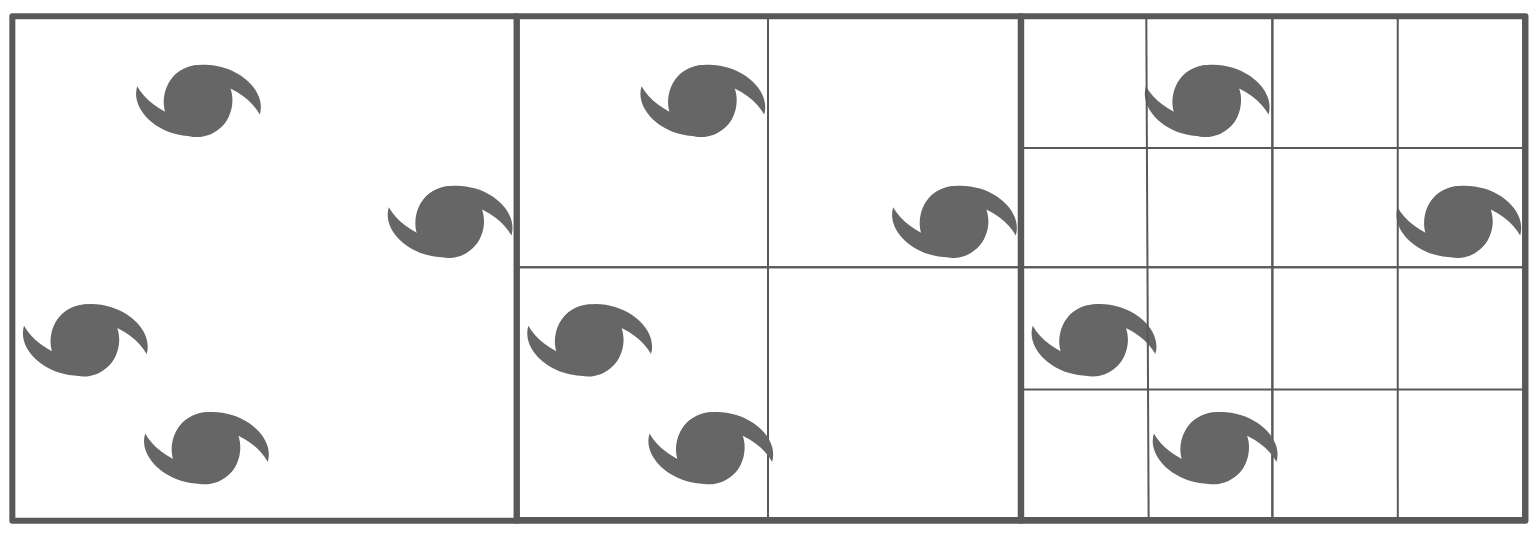
- GLADE+ 銀河カタログを用いて、銀河の宿主となる可能性のある重力波イベントの位置特定領域に赤方偏移の確率を割り当てる。
- 平坦な ΛCDM 宇宙論を用いて、距離の赤方偏移関係をモデル化し、H₀ を主な宇宙論的パrameterとする。
- 赤方偏移依存の合体率の時間的変化と質量分布の事前分布を、推定パイプライン内の自由なハイパーパラメータとして組み込む。
- ベイズ階層的フレームワークを用いて、選択効果と不確実性を考慮しながら、同時に H₀ と集団パラメータを制約する。
- 高次元パラメータ空間に対しても計算が可能となるよう、効率的なサンプリング手法を活用する。
実験結果
リサーチクエスチョン
- RQ1ダークシレンズからの H₀ 測定におけるバイアスを、宇宙論的およびコンパクト二重星集団パラメータを同時に推定することで低減できるか?
- RQ2質量分布および合体率の時間的変化モデルの選択が、H₀ の推定値にどのように影響するか?
- RQ3電波的対応が存在しない状況で、銀河カタログ情報がどれほど H₀ の制約精度を向上させられるか?
- RQ4共通のハイパーパラメータを用いて、複数のコンパクト二重星集団(例:BBH、NSBH)を同時にモデル化できる統一フレームワークが構築可能か?
主な発見
- 同時推定手法により、質量関数分布や合体率の時間的変化といった集団パラメータが H₀ とともに制約可能となり、バイアスが低減された。
- 更新された解析により、GWTC-3 カタログの 42 個の BBH イベントと GLADE+ 銀河カタログを用いて、H₀ = 69⁺¹²₋₇ km s⁻¹ Mpc⁻¹ の頑健な測定が得られた。
- この手法は計算的に効率的であり、銀河カタログのサイズに依存しないスケーリングが可能であり、将来的に DES、LSST、Euclid などの深宇宙調査と組み合わせて利用可能である。
- 結果から、銀河カタログ情報と固有の集団モデリングが、高精度なダークシレンズ宇宙論に不可欠であることが示された。
- このアプローチは非ガウス型の赤方偏移不確実性に対応可能であり、複数の源集団の同時モデリングへも拡張可能である。
より良い研究を、今すぐ始めましょう
論文の読解から最終レビューまで、研究時間を劇的に削減しましょう。
クレジットカード登録不要
このレビューはAIが作成し、人間の編集者が確認しました。