
[Paper Review] Money Over Morals: A Business Analysis of Conti Ransomware
This paper presents the first comprehensive crypto-economic analysis of the Conti ransomware group using leaked chat logs and Bitcoin transaction data. By manually annotating 666 Bitcoin addresses and applying a novel payment-splitting detection methodology, the authors identify $83.9 million in likely ransom payments—over five times more than previous public datasets—while revealing critical vulnerabilities in the group’s operational security and financial infrastructure.
Ransomware operations have evolved from relatively unsophisticated threat actors into highly coordinated cybercrime syndicates that regularly extort millions of dollars in a single attack. Despite dominating headlines and crippling businesses across the globe, there is relatively little in-depth research into the modern structure and economics of ransomware operations. In this paper, we leverage leaked chat messages to provide an in-depth empirical analysis of Conti, one of the largest ransomware groups. By analyzing these chat messages, we construct a picture of Conti's operations as a highly-profitable business, from profit structures to employee recruitment and roles. We present novel methodologies to trace ransom payments, identifying over $80 million in likely ransom payments to Conti and its predecessor -- over five times as much as in previous public datasets. As part of our work, we publish a dataset of 666 labeled Bitcoin addresses related to Conti and an additional 75 Bitcoin addresses of likely ransom payments. Future work can leverage this case study to more effectively trace -- and ultimately counteract -- ransomware activity.
Motivation & Objective
- To provide a detailed economic and organizational analysis of Conti ransomware as a Ransomware-as-a-Service (RaaS) operation.
- To identify and trace ransom payments using on-chain transaction analysis and behavioral heuristics from leaked chat logs.
- To map the internal business structure of Conti, including roles, recruitment, and compensation practices.
- To publish a labeled dataset of 666 Bitcoin addresses linked to Conti for future research and law enforcement use.
- To identify systemic vulnerabilities in the group’s financial infrastructure, particularly reliance on KYC-compliant exchanges.
Proposed method
- Manual annotation of 666 Bitcoin addresses from leaked chat logs to classify their function (e.g., salary, reimbursement, ransom payments).
- Application of on-chain transaction analysis to estimate gross revenue, operating costs, and salary distribution across roles.
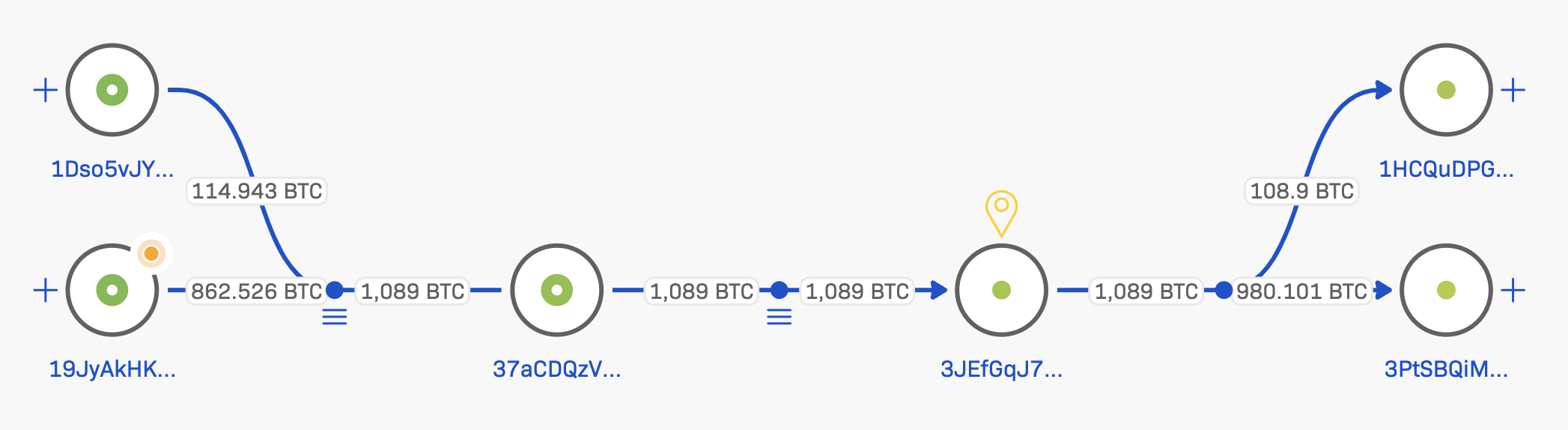
- Development of a novel methodology to detect ransom payments based on common splitting behavior between operators and affiliates.
- Use of Crystal Blockchain’s forensic tools to link addresses and cluster transactions, enhancing traceability.
- Qualitative analysis of chat logs to reconstruct organizational roles, recruitment processes, and internal communication patterns.
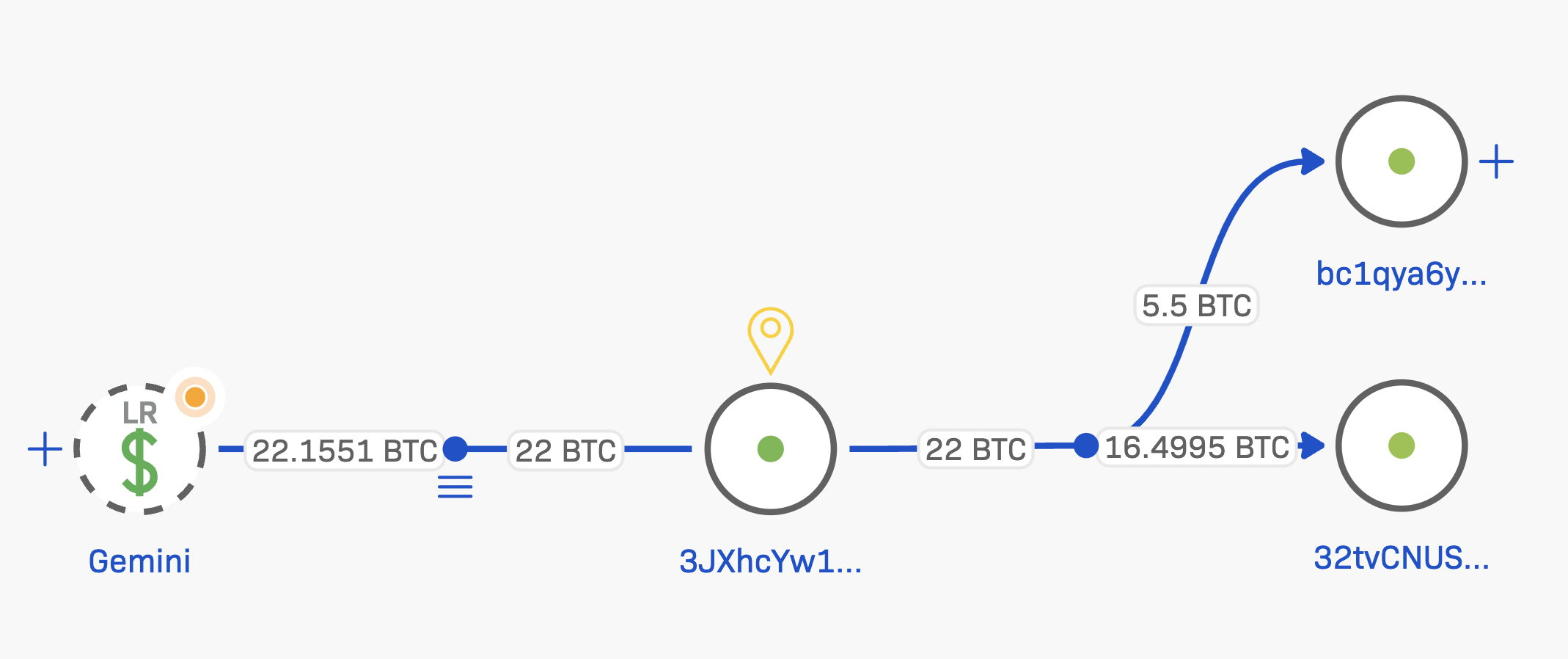
- Cross-referencing of payment flows with known exchanges (e.g., Gemini, Binance) to identify high-risk, centralized cash-out points.
Experimental results
Research questions
- RQ1How can ransom payments in ransomware operations be reliably identified using on-chain transaction patterns and behavioral heuristics?
- RQ2What is the true scale of Conti’s ransom payments, and how does it compare to prior public datasets?
- RQ3What are the internal business structures and operational roles within the Conti ransomware group?
- RQ4How do Conti’s financial practices, such as salary disbursements, expose vulnerabilities in their operational security?
- RQ5To what extent do centralized exchanges like Gemini and Binance serve as critical leverage points in tracking and disrupting ransomware funds?
Key findings
- The study identifies $83.9 million in likely ransom payments to Conti and its predecessor—over five times the amount in prior public datasets.
- Over 90% of identified Conti payments flowed through just two exchanges: an unidentified exchange and Gemini, both of which enforce Know Your Customer (KYC) regulations.
- The group exhibits poor operational security by routing salary and ransom payments through KYC-compliant exchanges, creating traceable financial footprints.
- The analysis reveals a structured RaaS business model with defined roles, recruitment processes, and compensation tiers, indicating a highly organized cybercrime syndicate.
- The study publishes a dataset of 666 labeled Bitcoin addresses and 75 additional ransom payment addresses for public use in future research and law enforcement efforts.
- The findings highlight that targeting the organizational leadership and financial infrastructure—particularly exchange-based cash-outs—represents a high-leverage strategy for disrupting ransomware operations.
Read this paper
Open the full text in the Nubint reader and ask about any passage as you read.
Read this paper on NubintThis review was generated by AI from the original paper. Please check the paper before citing it.