
[Paper Review] No Fair Lunch: A Causal Perspective on Dataset Bias in Machine Learning for Medical Imaging
This paper introduces a causal framework to diagnose and address dataset bias in medical imaging AI, distinguishing three bias mechanisms—prevalence, presentation, and annotation disparities—each requiring tailored mitigation strategies. It proposes a three-step causal reasoning framework to guide fair model development, showing that current methods often fail when applied without understanding the underlying causal structure of bias.
As machine learning methods gain prominence within clinical decision-making, addressing fairness concerns becomes increasingly urgent. Despite considerable work dedicated to detecting and ameliorating algorithmic bias, today's methods are deficient with potentially harmful consequences. Our causal perspective sheds new light on algorithmic bias, highlighting how different sources of dataset bias may appear indistinguishable yet require substantially different mitigation strategies. We introduce three families of causal bias mechanisms stemming from disparities in prevalence, presentation, and annotation. Our causal analysis underscores how current mitigation methods tackle only a narrow and often unrealistic subset of scenarios. We provide a practical three-step framework for reasoning about fairness in medical imaging, supporting the development of safe and equitable AI prediction models.
Motivation & Objective
- To address the growing concern of algorithmic bias in medical imaging machine learning models, which can lead to inequitable clinical outcomes.
- To identify and categorize distinct causal mechanisms of dataset bias—prevalence, presentation, and annotation disparities—that are often conflated in current fairness research.
- To develop a principled, causal reasoning framework to guide the selection of appropriate fairness mitigation strategies based on the underlying source of bias.
- To emphasize that current bias mitigation techniques are often ineffective or even harmful when applied without understanding the causal structure of the bias.
- To advocate for transparency in data collection and curation processes and to encourage the use of causal assumptions in designing fair and equitable AI models.
Proposed method
- Proposes a three-step causal framework: (i) identify the causal nature of bias, (ii) evaluate the ethics of each causal pathway, and (iii) select appropriate mitigation strategies and metrics.
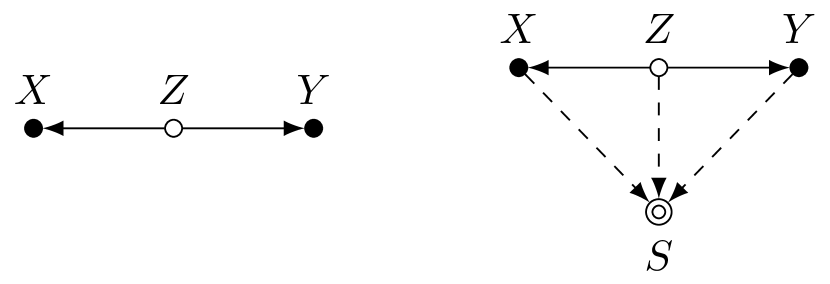
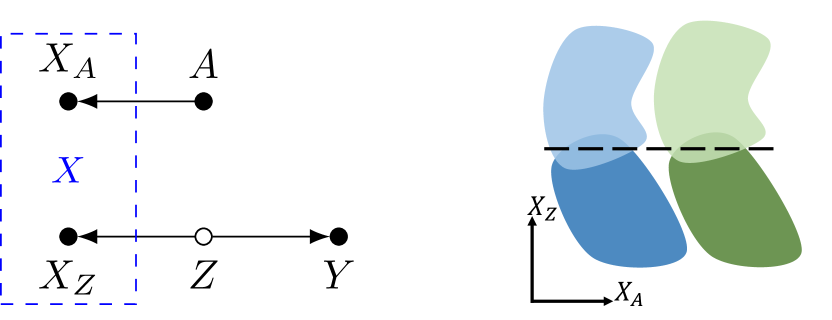
- Uses causal diagrams (DAGs) to model the relationships between sensitive attributes (A), disease status (Z), image features (X), labels (Y), and selection mechanisms (S).
- Classifies bias mechanisms into three families: (1) prevalence disparities (uneven disease rates across subgroups), (2) presentation disparities (disease manifests differently across subgroups), and (3) annotation disparities (inconsistent labeling across subgroups).
- Argues that empirical risk minimization (ERM) is appropriate only for presentation disparities, while other mechanisms require distinct approaches such as debiasing representations or relabeling.
- Recommends using bias-preserving metrics for prevalence disparities and considering sensitive information at inference time when ethically justified.
- Highlights the importance of collecting or generating debiased data and using counterfactual generative models to synthesize fair data under strong causal assumptions.
Experimental results
Research questions
- RQ1How do different causal mechanisms of dataset bias—prevalence, presentation, and annotation disparities—manifest in medical imaging datasets and why are they often conflated?
- RQ2Why do current bias mitigation techniques fail to generalize across different types of dataset bias, and what causal assumptions underlie their limitations?
- RQ3What criteria should guide the selection of fairness mitigation strategies based on the underlying causal structure of bias in medical imaging data?
- RQ4How can causal diagrams be used to make implicit fairness assumptions explicit and improve transparency in AI model development?
- RQ5What role can synthetic data generation and debiasing techniques play in mitigating compound or complex bias mechanisms in medical imaging?
Key findings
- Prevalence disparities—where disease rates differ across subgroups—require careful handling with bias-preserving metrics and subgroup-wise performance monitoring, as ERM alone is insufficient.
- Presentation disparities, where diseases manifest differently across subgroups, are best addressed with ERM if the differences are biologically expected and ethically justifiable.
- Annotation disparities, caused by inconsistent labeling across subgroups, are particularly difficult to detect and fix without a reliable ground truth, and may require relabeling or strong assumptions about bias.
- Current mitigation methods often fail when applied to the wrong bias mechanism, highlighting the need for causal diagnosis before intervention.
- The proposed three-step causal framework enables researchers to systematically assess whether a bias pathway should be preserved or mitigated based on clinical and ethical considerations.
- Active data collection and counterfactual generative models offer promising, yet underutilized, paths to generating debiased training data when causal assumptions are well-specified.
Read this paper
Open the full text in the Nubint reader and ask about any passage as you read.
Read this paper on NubintThis review was generated by AI from the original paper. Please check the paper before citing it.