
[Paper Review] Not All Similarities Are Created Equal: Leveraging Data-Driven Biases to Inform GenAI Copyright Disputes
This paper proposes a data-driven approach to measure expressive genericity in copyrighted works using the inherent biases of Generative AI (GenAI) models like GPT-2 and Stable Diffusion. By analyzing frequency patterns in model outputs, it identifies elements that are generic rather than original, offering a quantitative tool to inform copyright scope, reduce over-protection, and support fairer litigation, registration, and licensing decisions.
The advent of Generative Artificial Intelligence (GenAI) models, including GitHub Copilot, OpenAI GPT, and Stable Diffusion, has revolutionized content creation, enabling non-professionals to produce high-quality content across various domains. This transformative technology has led to a surge of synthetic content and sparked legal disputes over copyright infringement. To address these challenges, this paper introduces a novel approach that leverages the learning capacity of GenAI models for copyright legal analysis, demonstrated with GPT2 and Stable Diffusion models. Copyright law distinguishes between original expressions and generic ones (Scènes à faire), protecting the former and permitting reproduction of the latter. However, this distinction has historically been challenging to make consistently, leading to over-protection of copyrighted works. GenAI offers an unprecedented opportunity to enhance this legal analysis by revealing shared patterns in preexisting works. We propose a data-driven approach to identify the genericity of works created by GenAI, employing "data-driven bias" to assess the genericity of expressive compositions. This approach aids in copyright scope determination by utilizing the capabilities of GenAI to identify and prioritize expressive elements and rank them according to their frequency in the model's dataset. The potential implications of measuring expressive genericity for copyright law are profound. Such scoring could assist courts in determining copyright scope during litigation, inform the registration practices of Copyright Offices, allowing registration of only highly original synthetic works, and help copyright owners signal the value of their works and facilitate fairer licensing deals. More generally, this approach offers valuable insights to policymakers grappling with adapting copyright law to the challenges posed by the era of GenAI.
Motivation & Objective
- To address the legal challenge of distinguishing original expressive elements from generic ones in copyright law, especially in the context of GenAI-generated content.
- To reduce the over-protection of preexisting works by developing a scalable, quantitative measure of genericity that reflects real-world expressive patterns.
- To provide courts and copyright offices with a data-informed tool to assess the scope of protection without relying on vague legal doctrines.
- To support fairer licensing and registration practices by enabling differentiation between highly original and generic synthetic works.
- To inform policymakers on adapting copyright doctrine to the realities of AI-augmented creativity and mass content generation.
Proposed method
- Leverage the training data biases of pre-trained GenAI models (e.g., GPT-2, Stable Diffusion) to detect and rank expressive elements by their frequency across the model’s dataset.
- Use the model’s learned representations to identify patterns that are statistically common across a large corpus of preexisting works, indicating genericity.
- Apply frequency-based scoring to quantify how generic a given expressive element is—higher frequency implies lower originality and weaker copyright protection.
- Integrate these genericity scores into legal reasoning to assess whether a GenAI output infringes on a copyrighted work by comparing similarity to generic, non-protectable elements.
- Avoid rigid binary filters or algorithmic stability methods by instead using data-driven bias as a continuous measure of originality.
- Use the output of GenAI models as a proxy for cultural consensus on what constitutes common, non-protectable expression in a given domain.
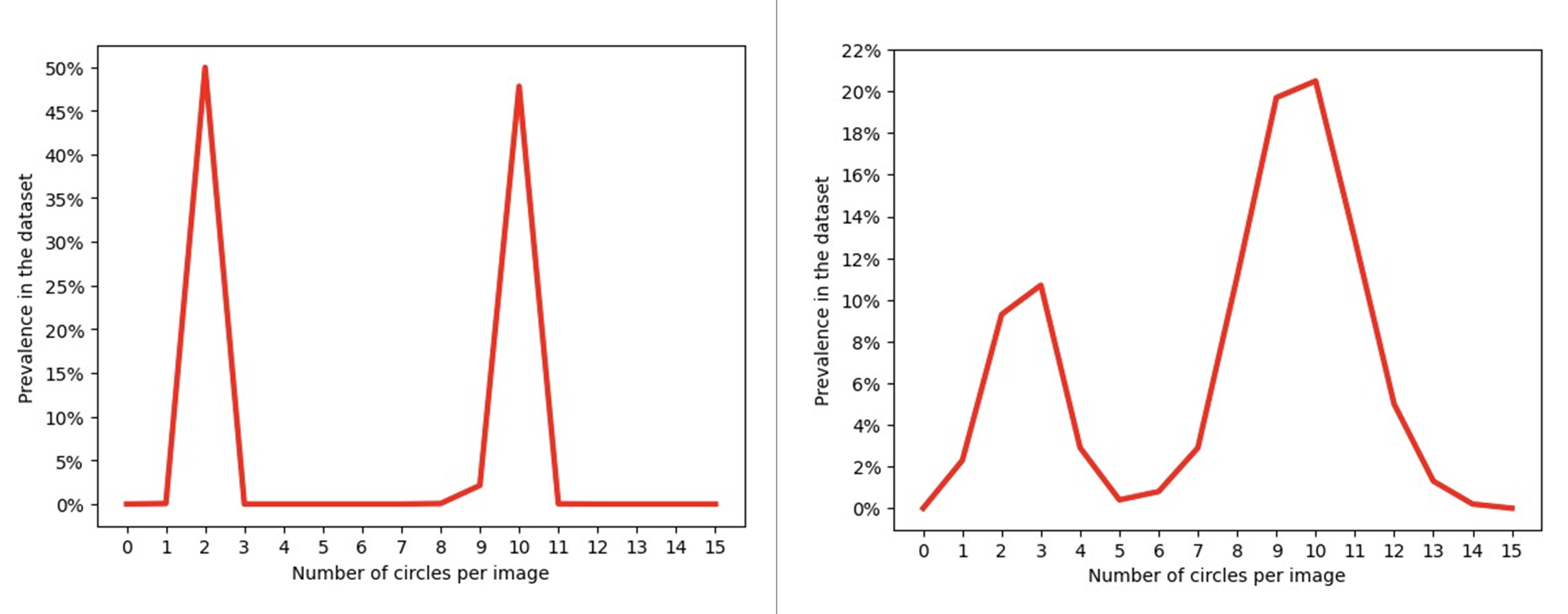
Experimental results
Research questions
- RQ1How can GenAI models be used to systematically identify and measure the genericity of expressive elements in copyrighted works?
- RQ2To what extent can data-driven biases in GenAI models serve as a reliable proxy for legal doctrines like Scènes à faire and idea/expression dichotomy?
- RQ3Can genericity scores derived from GenAI outputs improve the predictability and fairness of copyright infringement rulings?
- RQ4How might such scores inform copyright office practices for registering AI-generated works?
- RQ5What are the limitations of relying on algorithmic stability or output filtering as binary solutions for copyright compliance in GenAI?
Key findings
- GenAI models exhibit data-driven biases that reflect the frequency of expressive elements in their training data, enabling the identification of generic, non-protectable content.
- Elements with high frequency across the training distribution are less likely to be protected under copyright law, aligning with legal principles like Scènes à faire.
- The proposed method avoids the pitfalls of rigid filters or algorithmic stability techniques, which can fail to detect infringement even when outputs are derivative of protected works.
- Genericity scoring provides a continuous, quantifiable measure of originality that can inform judicial decisions, reducing over-protection of common expressive patterns.
- Copyright offices could use these scores to refine registration policies, allowing protection only for highly original AI-generated works while excluding generic outputs.
- The approach supports more nuanced legal reasoning by grounding abstract doctrines in empirical data from large-scale generative models.
Read this paper
Open the full text in the Nubint reader and ask about any passage as you read.
Read this paper on NubintThis review was generated by AI from the original paper. Please check the paper before citing it.