
[Paper Review] Nutrition5k: Towards Automatic Nutritional Understanding of Generic Food
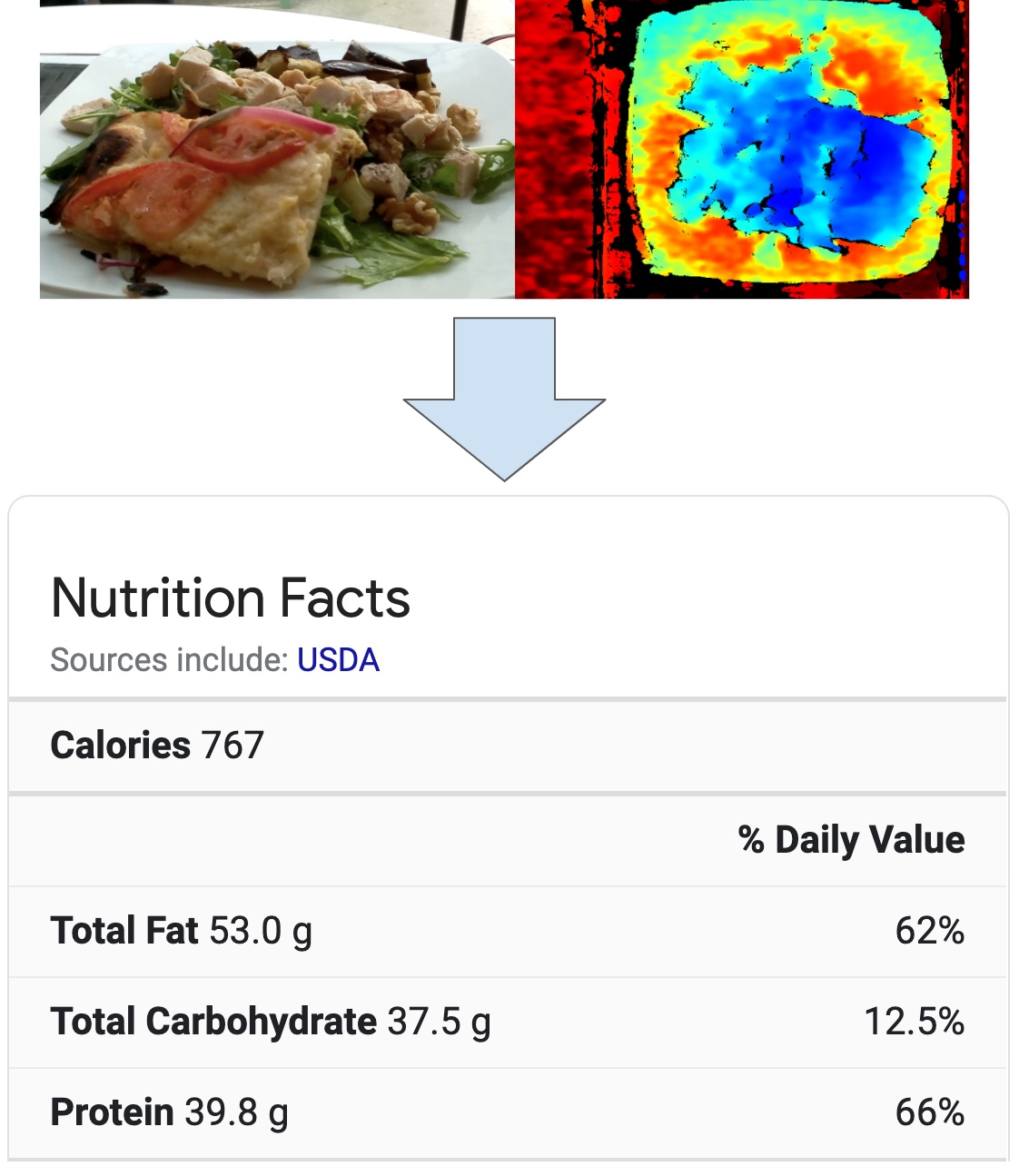
Nutrition5k introduces a novel dataset of 5,000 real-world, generic food dishes with high-accuracy nutritional annotations, RGB video, depth images, and component weights. The study demonstrates that a deep learning model trained on this data can predict caloric and macronutrient content more accurately than professional nutritionists, with depth data significantly improving portion size estimation.
Understanding the nutritional content of food from visual data is a challenging computer vision problem, with the potential to have a positive and widespread impact on public health. Studies in this area are limited to existing datasets in the field that lack sufficient diversity or labels required for training models with nutritional understanding capability. We introduce Nutrition5k, a novel dataset of 5k diverse, real world food dishes with corresponding video streams, depth images, component weights, and high accuracy nutritional content annotation. We demonstrate the potential of this dataset by training a computer vision algorithm capable of predicting the caloric and macronutrient values of a complex, real world dish at an accuracy that outperforms professional nutritionists. Further we present a baseline for incorporating depth sensor data to improve nutrition predictions. We will publicly release Nutrition5k in the hope that it will accelerate innovation in the space of nutritional understanding.
Motivation & Objective
- To address the lack of diverse, accurately labeled datasets for automatic nutritional understanding of generic food dishes.
- To overcome the limitations of existing datasets that lack portion size and precise nutritional annotations.
- To develop a scalable data collection method using incremental weighing and scanning in real-world cafeterias.
- To train a deep learning model that outperforms human nutritionists in visual nutritional estimation.
- To explore the integration of depth sensor data to improve portion size and nutritional prediction accuracy.
Proposed method
- Collected data in real-world cafeterias by incrementally weighing and scanning each ingredient as it was added to a plate.
- Used rotating RGB cameras and an overhead Intel RealSense depth sensor to capture 360° video and depth images of each dish.
- Logged detailed ingredient-level annotations with precise weights and derived the total nutritional content using recipe databases.
- Trained deep convolutional neural networks (CNNs) on RGB images to predict total calories and macronutrient ratios.
- Extended the model to incorporate depth data as an additional input modality to improve portion size estimation.
- Split the dataset into training and test sets while preserving the temporal relationship between incremental scans.
Experimental results
Research questions
- RQ1Can a deep learning model trained on a real-world, high-accuracy dataset outperform professional nutritionists in visual estimation of caloric and macronutrient content?
- RQ2How effective is depth sensor data in improving the accuracy of portion size and nutritional content prediction from 2D images?
- RQ3To what extent does the incremental scanning method enable the collection of diverse, realistic, and accurately labeled food data?
- RQ4What is the performance gap between non-expert and expert human estimators in visual portion size estimation, and can it be reliably used for data annotation?
- RQ5Can a model trained on a single RGB image achieve superior performance to human experts in predicting nutritional content of complex, generic dishes?
Key findings
- The deep learning model achieved a mean absolute error (MAE) of 13.4 kcal in caloric prediction, outperforming non-nutritionists (53% error) and nutritionists (41% error) in visual estimation.
- The model's macronutrient prediction accuracy exceeded that of professional nutritionists, demonstrating superior generalization on complex, real-world dishes.
- Incorporating depth data reduced the MAE of mass estimation by 40% compared to 2D-only models, significantly improving portion size prediction.
- Human portion size estimation was highly inaccurate, with non-nutritionists averaging 53% error and nutritionists 41%, indicating that human labeling is not a viable data collection method.
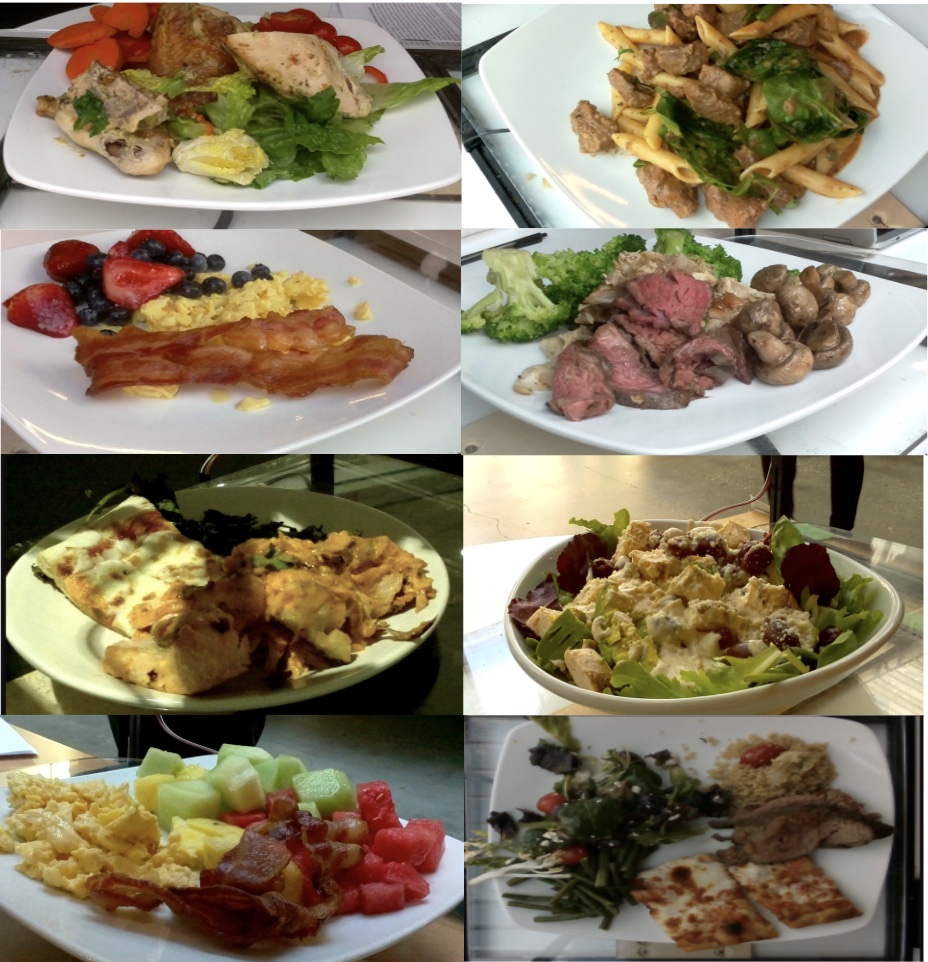
- The Nutrition5k dataset contains 5,000 diverse, real-world dishes with fine-grained ingredient-level annotations, component weights, and high-accuracy nutritional values.
- The dataset is publicly released at https://github.com/google-research-datasets/Nutrition5k to accelerate research in automatic nutritional understanding.
Read this paper
Open the full text in the Nubint reader and ask about any passage as you read.
Read this paper on NubintThis review was generated by AI from the original paper. Please check the paper before citing it.