
[Paper Review] Overview of Memotion 3: Sentiment and Emotion Analysis of Codemixed Hinglish Memes
This paper presents Memotion 3, a shared task for multimodal sentiment and emotion analysis in Hindi-English (Hinglish) memes, introducing a 10k-sample annotated dataset. Participants used models like CLIP, BERT, and ViT, achieving best F1 scores of 34.41% (sentiment), 79.77% (emotion), and 59.82% (emotion intensity), with sarcasm and humor proving particularly challenging in code-mixed contexts.
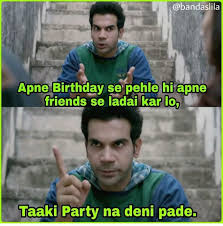
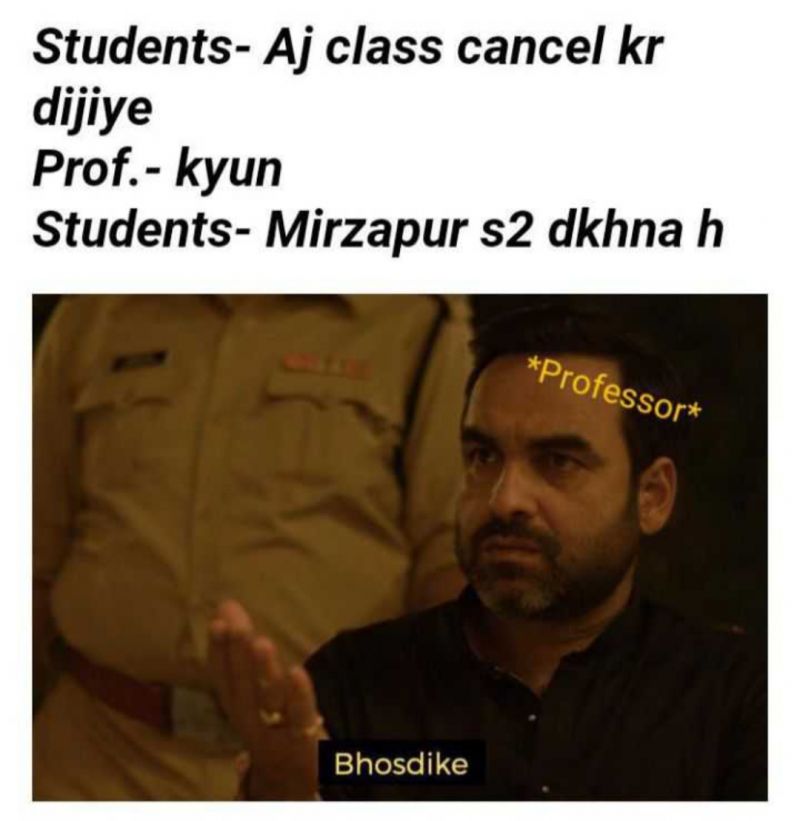
Analyzing memes on the internet has emerged as a crucial endeavor due to the impact this multi-modal form of content wields in shaping online discourse. Memes have become a powerful tool for expressing emotions and sentiments, possibly even spreading hate and misinformation, through humor and sarcasm. In this paper, we present the overview of the Memotion 3 shared task, as part of the DeFactify 2 workshop at AAAI-23. The task released an annotated dataset of Hindi-English code-mixed memes based on their Sentiment (Task A), Emotion (Task B), and Emotion intensity (Task C). Each of these is defined as an individual task and the participants are ranked separately for each task. Over 50 teams registered for the shared task and 5 made final submissions to the test set of the Memotion 3 dataset. CLIP, BERT modifications, ViT etc. were the most popular models among the participants along with approaches such as Student-Teacher model, Fusion, and Ensembling. The best final F1 score for Task A is 34.41, Task B is 79.77 and Task C is 59.82.
Motivation & Objective
- To develop and evaluate multimodal models for sentiment and emotion analysis in Hindi-English (Hinglish) memes, a complex and culturally nuanced form of online communication.
- To address the challenge of detecting subtle emotions and sentiments in code-mixed, multimodal content where sarcasm, humor, and cultural context heavily influence interpretation.
- To provide a benchmark dataset and shared task to advance research in automated meme understanding, especially for low-resource language pairs like Hindi-English.
- To identify the limitations of current models in handling sarcasm, humor, and offensive content in code-mixed memes, highlighting gaps in existing NLP and vision systems.
Proposed method
- The task released a 10,000-sample dataset of Hinglish memes annotated for sentiment (Task A), emotion (Task B), and emotion intensity (Task C), with each task evaluated separately.
- Participants employed multimodal architectures combining pre-trained vision encoders (e.g., ViT, CLIP) and text encoders (e.g., BERT, RoBERTa) to process image-text pairs.
- Common techniques included model ensembling, knowledge distillation (Student-Teacher), and late fusion of visual and textual representations to improve prediction robustness.
- The best-performing systems used fine-tuned CLIP and BERT-based models with task-specific head layers, often incorporating positional embedding or loss function modifications for code-mixing.
- Evaluation was conducted via F1 scores on a held-out test set, with results ranked independently per task to ensure fair comparison across sentiment, emotion, and intensity prediction.
- Misclassified examples were analyzed to identify persistent failure modes, particularly in sarcasm and humor detection, with a focus on code-mixed linguistic patterns.
Experimental results
Research questions
- RQ1How effective are current multimodal models in detecting sentiment in code-mixed Hinglish memes, especially when sarcasm and humor are involved?
- RQ2What are the most challenging emotion categories in Hinglish memes, and how do linguistic code-mixing and multimodal cues affect model performance?
- RQ3To what extent do existing pre-trained models like CLIP and BERT generalize to low-resource, code-mixed multimodal data in the context of emotion intensity prediction?
- RQ4Why do certain memes—particularly those involving humor or sarcasm—consistently misclassified by all participating models?
- RQ5Can unified baseline models be developed to improve performance across multiple emotion and sentiment tasks in code-mixed meme understanding?
Key findings
- The best F1 score for sentiment classification (Task A) was 34.41%, indicating significant room for improvement, especially given the complexity of sarcasm and code-mixing.
- Emotion classification (Task B) achieved the highest performance with an F1 score of 79.77%, with 'humor' and 'sarcasm' being the most difficult emotion classes to detect.
- Emotion intensity prediction (Task C) achieved a best F1 score of 59.82%, with 'Very Sarcastic' and 'Very Funny' being the most misclassified categories.
- Over 400 memes in Task C were misclassified by all teams, with a high proportion being code-mixed, indicating persistent challenges in modeling multimodal and linguistic complexity.
- Only two teams—NUAA-QMUL-AIIT and NYCU_TWO—outperformed the baseline across all three tasks, highlighting the difficulty of generalization in this multimodal, code-mixed setting.
- A large number of misclassified examples (121 for Task A, 231 for Task B, 421 for Task C) were code-mixed and related to humor or sarcasm, confirming these as key failure points for current models.
Read this paper
Open the full text in the Nubint reader and ask about any passage as you read.
Read this paper on NubintThis review was generated by AI from the original paper. Please check the paper before citing it.