
[Paper Review] Planck stars, White Holes, Remnants and Planck-mass quasi-particles. The quantum gravity phase in black holes' evolution and its manifestations
This paper proposes that black holes evolve into Planck-scale remnants via a quantum gravity phase involving a 'bounce' to a white hole, forming stable or quasi-stable Planck-mass quasi-particles. These remnants, arising from the non-perturbative dynamics of loop quantum gravity, could constitute dark matter and emit a steady, quantized radiation consistent with observational constraints, offering a solution to the black hole information paradox without new physics beyond general relativity and quantum gravity.
This is a review of some recent developments on quantum gravity aspects of black hole physics. In particular, we focus on a scenario leading to the prediction of the existence of a Planck-mass quasi-stable object, that could form a component of dark matter.
Motivation & Objective
- To explore the quantum gravity phase in black hole evolution beyond classical general relativity.
- To investigate the formation and stability of Planck-mass quasi-particles as potential dark matter constituents.
- To resolve the black hole information paradox through a non-dissipative, time-symmetric bounce mechanism.
- To assess the phenomenological viability of remnants via direct detection, cosmological implications, and emission spectra.
Proposed method
- Uses loop quantum gravity (LQG) techniques—canonical, covariant, and numerical—to model the non-perturbative interior of black holes.
- Applies the LQG transition amplitude to compute the probability of black-to-white hole transition, assuming time-reversal symmetry.
- Models the black hole lifetime and remnant stability using Hawking radiation and area quantization in LQG.
- Analyzes the emission of radiation from remnants as a quantized process, governed by unitarity and large photon number states.
- Estimates the diffuse radiation spectrum from a population of primordial black hole remnants using a single parameter $ x = \log_{10}(m/m_{\text{Pl}}) $.
- Integrates cosmological models (e.g., matter bounce) to assess compatibility with dark matter constraints.
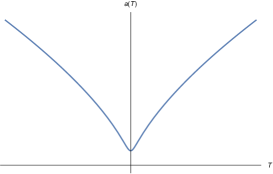
Experimental results
Research questions
- RQ1Can the black hole evolution be completed via a quantum gravity bounce to a white hole, avoiding singularities and resolving the information paradox?
- RQ2What is the lifetime and stability of Planck-scale remnants formed after black hole evaporation?
- RQ3How can the emission of radiation from such remnants be quantized and consistent with unitarity and area quantization in LQG?
- RQ4Can these remnants serve as a viable dark matter candidate without introducing new physics?
- RQ5What are the observable signatures of a diffuse radiation background from a population of such remnants?
Key findings
- The remnant mass is estimated as $ m \sim 14\sqrt{\gamma}\ \mu\text{g} $, with $ \gamma \sim 1 $, placing it near the Planck mass scale.
- A population of remnants formed from primordial black holes emits a steady radiation flux between times $ \tau_B \sim m^3 $ and $ \tau_B + \tau_W $, with a linear time evolution in emission density.
- The radiation emission is quantized: a single remnant decays via emission of a large number of low-energy photons, consistent with unitarity and area quantization.
- The frequency of emitted radiation is $ \nu \sim 10^{-2x+32}\ \text{Hz} $, with $ x \in [15,20] $, placing it in the range $ 10^4\ \text{Hz} \text{ to } 10^{14}\ \text{Hz} $.
- The remnant density is related to the observed radiation density via $ \rho_{\text{rem}} = \sinh^{-1}\left( \frac{1 - 10^{61} \cdot 10^{-3x}}{1 - 6 \cdot 10^{-x}} \right) \rho_{\text{rad}} $, enabling direct measurement of $ x $ from frequency.
- The scenario provides a natural, testable mechanism for dark matter without new fields or modified gravity, rooted in LQG and standard general relativity.
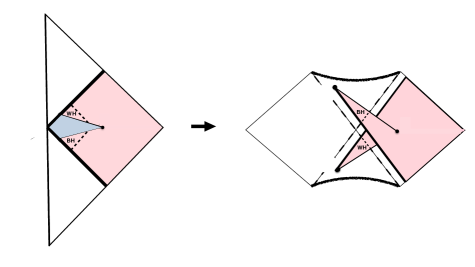
Read this paper
Open the full text in the Nubint reader and ask about any passage as you read.
Read this paper on NubintThis review was generated by AI from the original paper. Please check the paper before citing it.