
[Paper Review] Present and Future of AI in Renewable Energy Domain : A Comprehensive Survey
A comprehensive survey of how artificial intelligence is applied in renewable energy, including forecasting, smart grids, cyber security, and future research directions.
Artificial intelligence (AI) has become a crucial instrument for streamlining processes in various industries, including electrical power systems, as a result of recent digitalization. Algorithms for artificial intelligence are data-driven models that are based on statistical learning theory and are used as a tool to take use of the data that the power system and its users generate. Initially, we perform a thorough literature analysis of artificial intelligence (AI) applications related to renewable energy (RE). Next, we present a thorough analysis of renewable energy factories and assess their suitability, along with a list of the most widely used and appropriate AI algorithms. Nine AI-based strategies are identified here to assist Renewable Energy (RE) in contemporary power systems. This survey paper comprises an extensive review of the several AI techniques used for renewable energy as well as a methodical analysis of the literature for the study of various intelligent system application domains across different disciplines of renewable energy. This literature review identifies the performance and outcomes of nine different research methods by assessing them, and it aims to distill valuable insights into their strengths and limitations. This study also addressed three main topics: using AI technology for renewable power generation, utilizing AI for renewable energy forecasting, and optimizing energy systems. Additionally, it explored AI's superiority over conventional models in controllability, data handling, cyberattack prevention, smart grid implementation, robotics- AI's significance in shaping the future of the energy industry. Furthermore, this article outlines future directions in the integration of AI for renewable energy.
Motivation & Objective
- Survey the current AI applications in renewable energy (RE).
- Identify and analyze nine AI-based strategies for RE in modern power systems.
- Provide a framework assessing AI methods across forecasting, control, and smart grid domains.
- Highlight advantages of AI over traditional models and outline future research directions.
Proposed method
- Perform extensive literature analysis of AI in renewable energy applications.
- Identify nine AI-based strategies to support RE in power systems.
- Analyze and compare AI techniques (ML, DL) for forecasting and control.
- Present a survey framework covering goals, applications, challenges, and future paths.
- Discuss performance indicators and outcomes across studies (e.g., MAE, RMSE, accuracy).
- Illustrate representative AI architectures used for RE (e.g., AB-Net, CNN-LSTM).
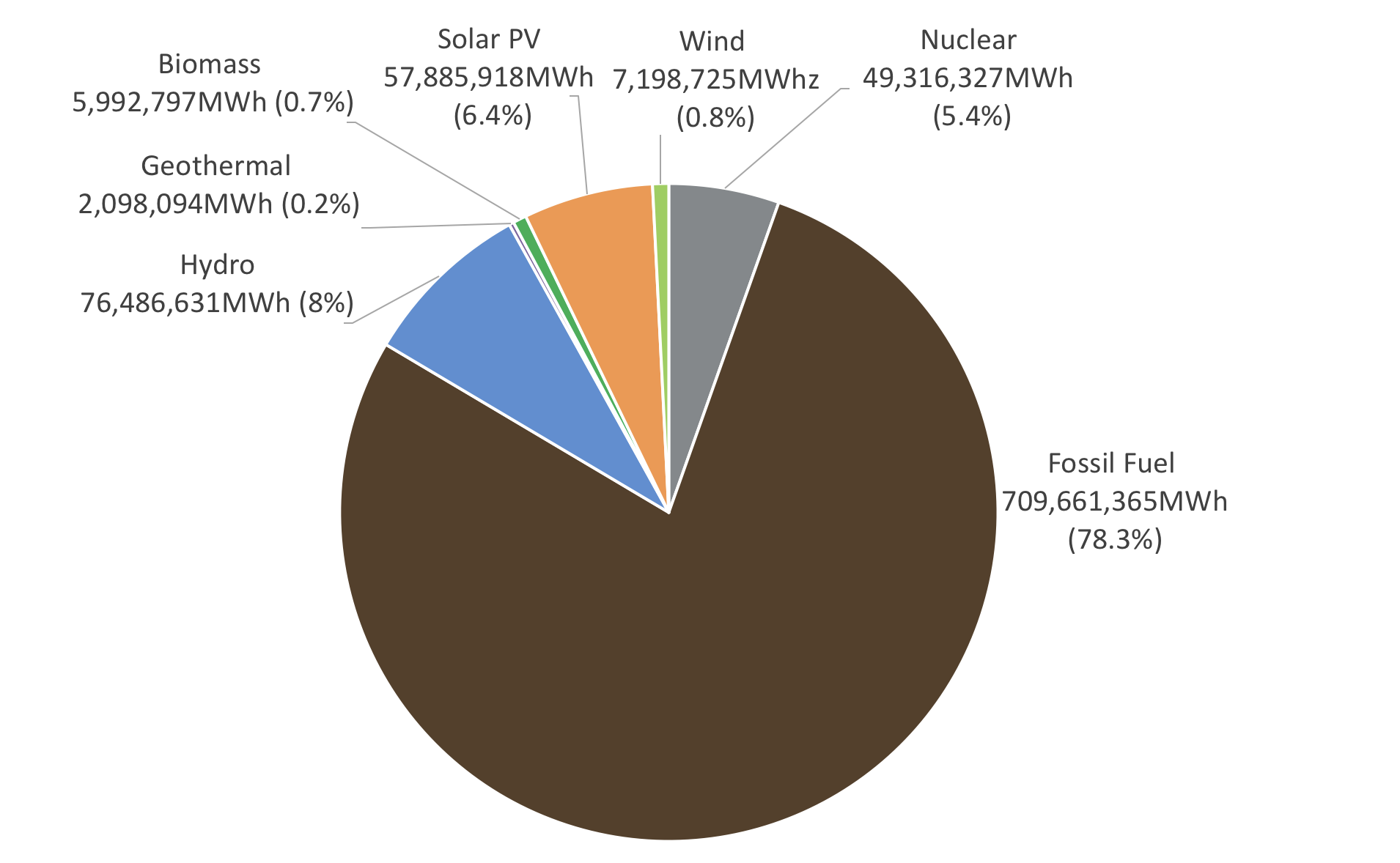
Experimental results
Research questions
- RQ1What AI techniques are currently applied to renewable energy generation, forecasting, and grid optimization?
- RQ2How do AI methods compare to conventional models in terms of accuracy, controllability, and robustness for RE applications?
- RQ3What are the main challenges and future directions for deploying AI in renewable energy systems?
Key findings
- AB-Net (autoencoder + BiLSTM) achieved superior MAE, MSE, and RMSE on solar and wind datasets compared to BiLSTM, CNN-BiLSTM, and encoder-decoder baselines.
- Solar radiation forecasting using ensemble feature selection with ML methods (SVR, XGBoost, CatBoost, VOA) showed improved accuracy, with VOA delivering faster training in both summer and winter datasets.
- Local wind power forecasting in Renewable Energy Communities improved accuracy by about 10% using ML and anomaly handling, with ENSEMBLE model performing best on E-Cloud data.
- CNN-LSTM model for transient stability detection achieved over 99% accuracy and outperformed CNN and convLSTM approaches in computation time.
- Building energy optimization using ANN and GA achieved about 35% reduction in energy usage; TDNN-based smart grid management improved revenue by 18.72% over non-forecast-informed control.
- The survey discusses significant challenges (data quality, cybersecurity, data privacy, infrastructure) and outlines future directions for AI adoption in smart energy systems.
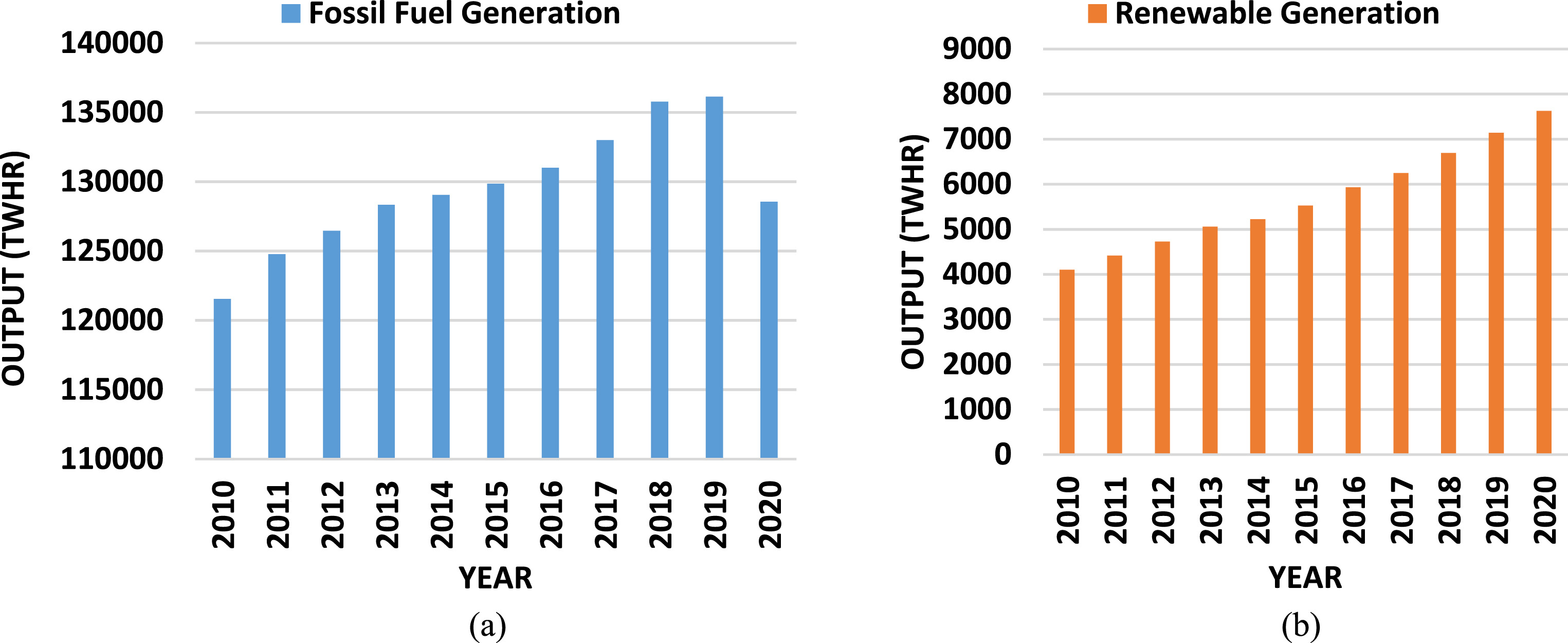
Read this paper
Open the full text in the Nubint reader and ask about any passage as you read.
Read this paper on NubintThis review was generated by AI from the original paper. Please check the paper before citing it.