
[Paper Review] Privacy Leakage on DNNs: A Survey of Model Inversion Attacks and Defenses
This paper provides a comprehensive survey of Model Inversion attacks and defenses for DNNs across vision, text, and graph modalities, and introduces an open-source toolbox for MI research.
Deep Neural Networks (DNNs) have revolutionized various domains with their exceptional performance across numerous applications. However, Model Inversion (MI) attacks, which disclose private information about the training dataset by abusing access to the trained models, have emerged as a formidable privacy threat. Given a trained network, these attacks enable adversaries to reconstruct high-fidelity data that closely aligns with the private training samples, posing significant privacy concerns. Despite the rapid advances in the field, we lack a comprehensive and systematic overview of existing MI attacks and defenses. To fill this gap, this paper thoroughly investigates this realm and presents a holistic survey. Firstly, our work briefly reviews early MI studies on traditional machine learning scenarios. We then elaborately analyze and compare numerous recent attacks and defenses on Deep Neural Networks (DNNs) across multiple modalities and learning tasks. By meticulously analyzing their distinctive features, we summarize and classify these methods into different categories and provide a novel taxonomy. Finally, this paper discusses promising research directions and presents potential solutions to open issues. To facilitate further study on MI attacks and defenses, we have implemented an open-source model inversion toolbox on GitHub (https://github.com/ffhibnese/Model-Inversion-Attack-ToolBox).
Motivation & Objective
- Motivate privacy concerns by reviewing how pre-trained models can leak training data.
- Systematically analyze MI attacks and defenses across computer vision, NLP, and graph learning.
- Compare white-box and black-box attack settings and identify modality-specific challenges.
- Summarize defense strategies and their trade-offs between privacy and model utility.
- Highlight open issues and propose directions for future research.
Proposed method
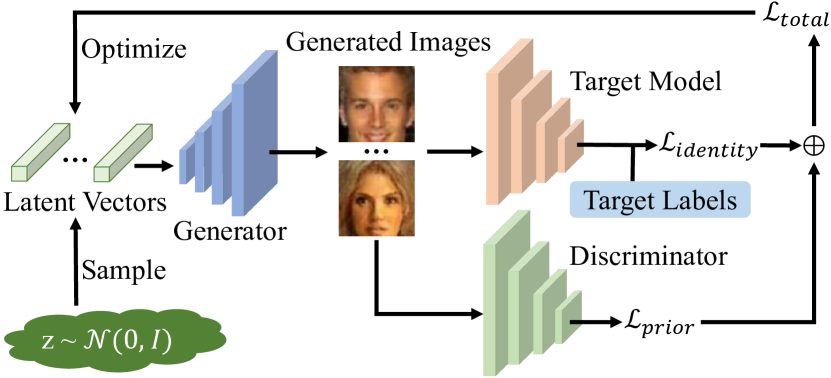
- Decompose MI attacks into generative-prior based and optimization-based schemes for images, including GAN- and diffusion-based priors.
- Categorize attack settings as white-box or black-box and describe objective functions and optimization regimes.
- Summarize defense mechanisms via model output processing and robust training to reduce information leakage.
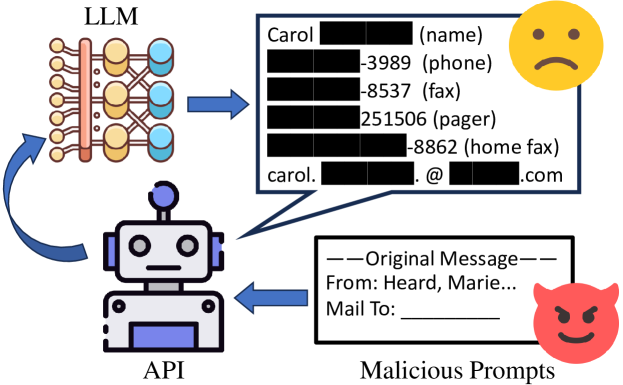
- Extend MI survey to NLP with embedding optimization, token search, and malicious prompt design paradigms.
- Discuss graph-MI attacks focusing on adjacency optimization and inverse mapping/relationship reasoning, with corresponding defenses.
Experimental results
Research questions
- RQ1What are the primary MI attack strategies across image, text, and graph data in DNNs?
- RQ2How do defenses mitigate MI risks, and what are their impact on model performance across modalities?
- RQ3What are the differences between white-box and black-box MI settings, and how do attackers adapt to each?
- RQ4What open challenges remain in safeguarding privacy against MI attacks in various data modalities?
Key findings
- MI attacks can reconstruct private training samples using generative priors (GANs, diffusion models) or direct optimization.
- White-box attacks rely on gradient-based optimization, while black-box attacks use surrogate models, gradient estimation, or search-based methods.
- Defenses mainly fall into output processing and robust training to reduce leakage and preserve task utility.
- MI research spans vision, NLP, and graphs, with modality-specific attack and defense techniques and trade-offs.
- An open-source toolbox is provided to facilitate replication and further study of MI attacks and defenses.
Read this paper
Open the full text in the Nubint reader and ask about any passage as you read.
Read this paper on NubintThis review was generated by AI from the original paper. Please check the paper before citing it.