
[Paper Review] Q-Learning for Stochastic Control under General Information Structures and Non-Markovian Environments
This paper establishes a general convergence theorem for Q-learning in non-Markovian, stochastic control environments under ergodicity and positivity conditions. It demonstrates that Q-learning converges to near-optimal solutions in continuous-space MDPs, quantized belief-MDPs with filter stability, finite-window POMDPs, and multi-agent systems, enabling learning under partial or no model knowledge.
As a primary contribution, we present a convergence theorem for stochastic iterations, and in particular, Q-learning iterates, under a general, possibly non-Markovian, stochastic environment. Our conditions for convergence involve an ergodicity and a positivity criterion. We provide a precise characterization on the limit of the iterates and conditions on the environment and initializations for convergence. As our second contribution, we discuss the implications and applications of this theorem to a variety of stochastic control problems with non-Markovian environments involving (i) quantized approximations of fully observed Markov Decision Processes (MDPs) with continuous spaces (where quantization break down the Markovian structure), (ii) quantized approximations of belief-MDP reduced partially observable MDPS (POMDPs) with weak Feller continuity and a mild version of filter stability (which requires the knowledge of the model by the controller), (iii) finite window approximations of POMDPs under a uniform controlled filter stability (which does not require the knowledge of the model), and (iv) for multi-agent models where convergence of learning dynamics to a new class of equilibria, subjective Q-learning equilibria, will be studied. In addition to the convergence theorem, some implications of the theorem above are new to the literature and others are interpreted as applications of the convergence theorem. Some open problems are noted.
Motivation & Objective
- To establish a general convergence theorem for Q-learning in stochastic control under non-Markovian and general information structures.
- To characterize the limit of Q-learning iterates under ergodicity and positivity conditions, even when the underlying process is not Markovian.
- To extend Q-learning applicability to continuous-space MDPs, partially observable MDPs (POMDPs), and multi-agent systems with limited or local information.
- To introduce and analyze a new class of equilibria—subjective Q-learning equilibria—in decentralized stochastic control settings.
- To identify conditions under which Q-learning achieves near-optimality in systems where the Markov property is broken by quantization or finite memory.
Proposed method
- Proposes a general convergence theorem for stochastic iterations (including Q-learning) under ergodicity and positivity conditions, applicable to non-Markovian environments.
- Applies the convergence theorem to fully observed MDPs with continuous spaces using weak continuity and ergodicity conditions for near-optimal performance.
- Analyzes belief-MDP approximations of POMDPs under weak Feller continuity and mild filter stability, enabling quantization-based learning with model knowledge.
- Considers finite window approximations of POMDPs under uniform controlled filter stability, allowing model-free learning with arbitrary initialization.
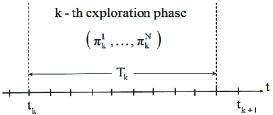
- Adapts the Q-learning algorithm to multi-agent systems via a two-timescale, satisficing-based learning scheme with policy updating and value function estimation.
- Uses a subjective Q-learning equilibrium framework where agents converge to a stable policy profile even without global information, relying on local exploration and value updates.
Experimental results
Research questions
- RQ1Under what general conditions does Q-learning converge in non-Markovian, stochastic control environments?
- RQ2How can Q-learning be applied to continuous-space MDPs when the Markov property is disrupted by quantization?
- RQ3What conditions ensure convergence to near-optimal policies in POMDPs under quantized belief representations and filter stability?
- RQ4Can Q-learning achieve near-optimality in POMDPs without model knowledge, using finite memory approximations?
- RQ5What is the nature and existence condition of subjective Q-learning equilibria in decentralized multi-agent systems?
Key findings
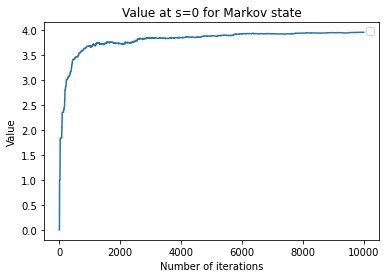
- Q-learning converges to a limit characterized by the ergodic and positivity conditions, even in non-Markovian environments.
- For continuous-space MDPs, Q-learning achieves near-optimality under weak continuity and ergodicity conditions.
- In belief-MDP approximations of POMDPs, Q-learning converges to near-optimal policies when the filter dynamics are weak Feller continuous and filter stability holds.
- Finite window approximations of POMDPs enable model-free Q-learning convergence under uniform controlled filter stability, without requiring model knowledge.
- In multi-agent systems, Q-learning dynamics converge to subjective Q-learning equilibria under satisficing and two-timescale learning, even with strictly local information.
- The existence of subjective Q-learning equilibria remains an open problem, though conditions for convergence are established via algorithmic design and stability analysis.
Read this paper
Open the full text in the Nubint reader and ask about any passage as you read.
Read this paper on NubintThis review was generated by AI from the original paper. Please check the paper before citing it.