
[Paper Review] Quasinormal Modes of Black holes in $f(Q)$ gravity
This study investigates quasinormal modes (QNMs) of static black holes in $f(Q)$ gravity using the Bernstein spectral method and validates results with the Padé-averaged 6th-order WKB method. It finds that scalar perturbations yield higher real frequencies and slower damping than electromagnetic perturbations, with both modes strongly dependent on the nonmetricity parameter $Q_0$, indicating distinct gravitational wave signatures in $f(Q)$ gravity compared to general relativity.
In this work, we have studied the quasinormal modes of a black hole in a model of the type $f(Q)=\underset{n}{\sum}a_{n}\left(Q-Q_{0} ight)^{n} $ in $f(Q)$ gravity by using a recently introduced method known as Bernstein spectral method and confirmed the validity of the method with the help of well known Padé averaged higher order WKB approximation method. Here we have considered scalar perturbation and electromagnetic perturbation in the black hole spacetime and obtained the corresponding quasinormal modes. We see that for a non-vanishing nonmetricity scalar $Q_0$, quasinormal frequencies in scalar perturbation are greater than those in electromagnetic perturbation scenarios. On the other hand, the damping rate of gravitational waves is higher for electromagnetic perturbation. To confirm the quasinormal mode behaviour, we have also investigated the time domain profiles for both types of perturbations.
Motivation & Objective
- To investigate quasinormal modes of black holes in $f(Q)$ gravity, a modified gravity theory based on nonmetricity scalar $Q$.
- To analyze the impact of the model parameter $Q_0$ on quasinormal modes for scalar and electromagnetic perturbations.
- To validate the newly applied Bernstein spectral method against the well-established Padé-averaged 6th-order WKB method.
- To examine time-domain profiles of perturbations to confirm the behavior of quasinormal modes.
- To compare the results with Schwarzschild black hole modes and assess the viability of $f(Q)$ gravity through gravitational wave signatures.
Proposed method
- The black hole solution is derived from the $f(Q) = ∑_n a_n(Q - Q_0)^n$ model, with $Q_0$ as a free parameter characterizing nonmetricity.
- Scalar and electromagnetic perturbations are introduced, and effective potentials are constructed in both normal and tortoise coordinates.
- The Bernstein spectral method is employed to compute quasinormal modes, leveraging spectral collocation for high accuracy in solving the wave equation.
- The results are cross-validated using the Padé-averaged 6th-order WKB approximation, a standard benchmark in QNM studies.
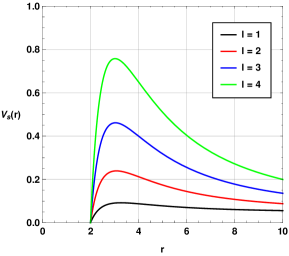
- Time-domain profiles are simulated for different $l$ and $Q_0$ values to analyze the decay behavior of perturbations.
- The analysis compares real and imaginary parts of QNMs (frequency and damping rate) across different perturbation types and model parameters.
Experimental results
Research questions
- RQ1How do quasinormal modes of black holes in $f(Q)$ gravity differ from those in general relativity, particularly for scalar and electromagnetic perturbations?
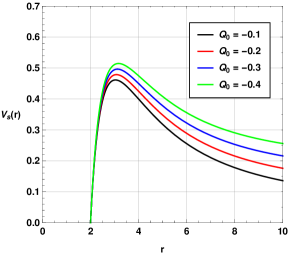
- RQ2What is the dependence of quasinormal mode frequencies and damping rates on the nonmetricity parameter $Q_0$?
- RQ3How does the Bernstein spectral method perform in computing QNMs in $f(Q)$ gravity, and how does it compare to the established WKB method?
- RQ4How do time-domain profiles of scalar and electromagnetic perturbations evolve, and what do they reveal about the decay dynamics?
- RQ5Can the differences in QNM behavior between scalar and electromagnetic perturbations in $f(Q)$ gravity serve as a discriminant for testing the theory against gravitational wave observations?
Key findings
- For non-zero $Q_0$, the real part of quasinormal frequencies in scalar perturbations is consistently higher than in electromagnetic perturbations.
- The damping rate (imaginary part) of gravitational waves is higher for electromagnetic perturbations than for scalar perturbations, especially at smaller $Q_0$ values.
- The time-domain profile for electromagnetic perturbations shows a faster decay rate compared to scalar perturbations, with the decay increasing more rapidly as $Q_0$ decreases.
- The effective potential for electromagnetic perturbations in tortoise coordinates explicitly depends on $Q_0$, while in normal coordinates it matches the Schwarzschild potential.
- The Bernstein spectral method yields results consistent with the Padé-averaged 6th-order WKB method, confirming its validity for QNM computation in $f(Q)$ gravity.
- The study reveals that black hole solutions in $f(Q)$ gravity produce quasinormal modes significantly different from those of the Schwarzschild black hole, especially for non-zero $Q_0$.
Read this paper
Open the full text in the Nubint reader and ask about any passage as you read.
Read this paper on NubintThis review was generated by AI from the original paper. Please check the paper before citing it.