
[Paper Review] Revisiting Link Prediction: A Data Perspective
This paper re-evaluates link prediction from a data-centric perspective, identifying three key factors—local structural, global structural, and feature proximity—whose interplay determines model performance. It reveals that Graph Neural Networks for Link Prediction (GNN4LP) underperform when link formation is driven by feature proximity due to an inherent incompatibility with local structural proximity, offering new design principles and benchmarking guidelines for improved model selection and development.
Link prediction, a fundamental task on graphs, has proven indispensable in various applications, e.g., friend recommendation, protein analysis, and drug interaction prediction. However, since datasets span a multitude of domains, they could have distinct underlying mechanisms of link formation. Evidence in existing literature underscores the absence of a universally best algorithm suitable for all datasets. In this paper, we endeavor to explore principles of link prediction across diverse datasets from a data-centric perspective. We recognize three fundamental factors critical to link prediction: local structural proximity, global structural proximity, and feature proximity. We then unearth relationships among those factors where (i) global structural proximity only shows effectiveness when local structural proximity is deficient. (ii) The incompatibility can be found between feature and structural proximity. Such incompatibility leads to GNNs for Link Prediction (GNN4LP) consistently underperforming on edges where the feature proximity factor dominates. Inspired by these new insights from a data perspective, we offer practical instruction for GNN4LP model design and guidelines for selecting appropriate benchmark datasets for more comprehensive evaluations.
Motivation & Objective
- To investigate why no single GNN4LP model universally outperforms others across diverse datasets.
- To identify the fundamental data factors influencing link prediction performance beyond model architecture.
- To analyze the relationships and potential incompatibilities among local, global, and feature proximity factors.
- To provide actionable guidelines for GNN4LP model design and benchmark dataset selection based on data characteristics.
- To challenge the assumption that deeper GNNs or complex architectures universally improve link prediction, emphasizing data-driven design principles.
Proposed method
- Identifies three core data factors: local structural proximity (e.g., common neighbors), global structural proximity (e.g., random walk-based measures), and feature proximity (e.g., node feature similarity).
- Employs a latent space model to theoretically justify the effectiveness of the identified data factors in link prediction.
- Analyzes the relationships among the three factors using the latent space model, revealing a fundamental incompatibility between feature proximity and local structural proximity.
- Conducts empirical evaluations across diverse datasets (OGB and Planetoid) using a standardized training and evaluation protocol with early stopping and fixed hyperparameter ranges.
- Compares a broad set of models including heuristic methods (CN, AA, RA), GNNs (GCN, GraphSAGE), and specialized GNN4LP models (SEAL, BUDDY, NCNC, NeoGNN) under consistent settings.
- Adjusts hyperparameters based on published optimal settings for fairness, particularly for computationally heavy models like SEAL and BUDDY.
Experimental results
Research questions
- RQ1How do local, global, and feature proximity factors collectively influence link prediction performance across diverse datasets?
- RQ2What is the relationship between global structural proximity and local structural proximity in determining model effectiveness?
- RQ3Why do GNN4LP models consistently underperform on edges dominated by feature proximity?
- RQ4To what extent is the incompatibility between feature proximity and local structural proximity a root cause of performance disparity across datasets?
- RQ5How can data-centric insights guide the design of more robust GNN4LP models and the selection of comprehensive benchmark datasets?
Key findings
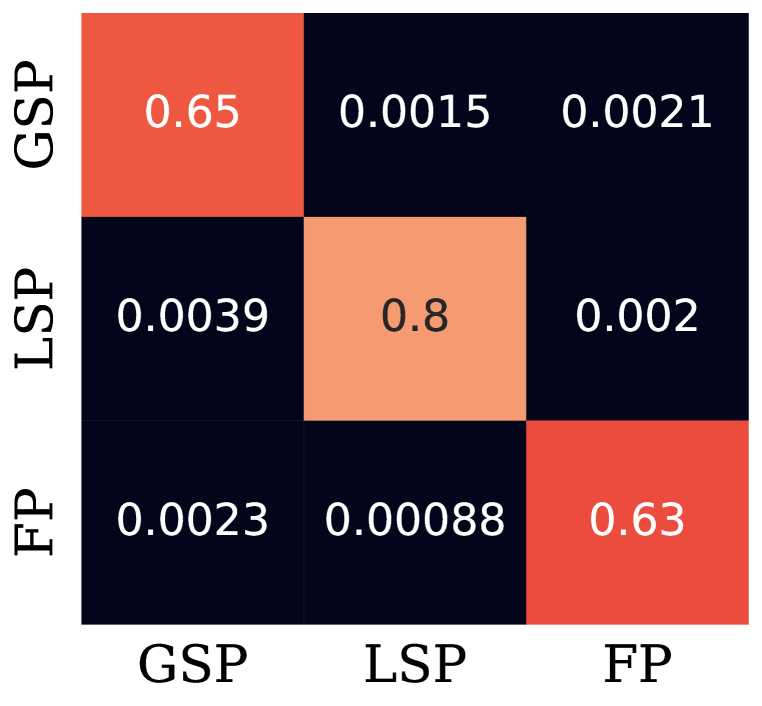
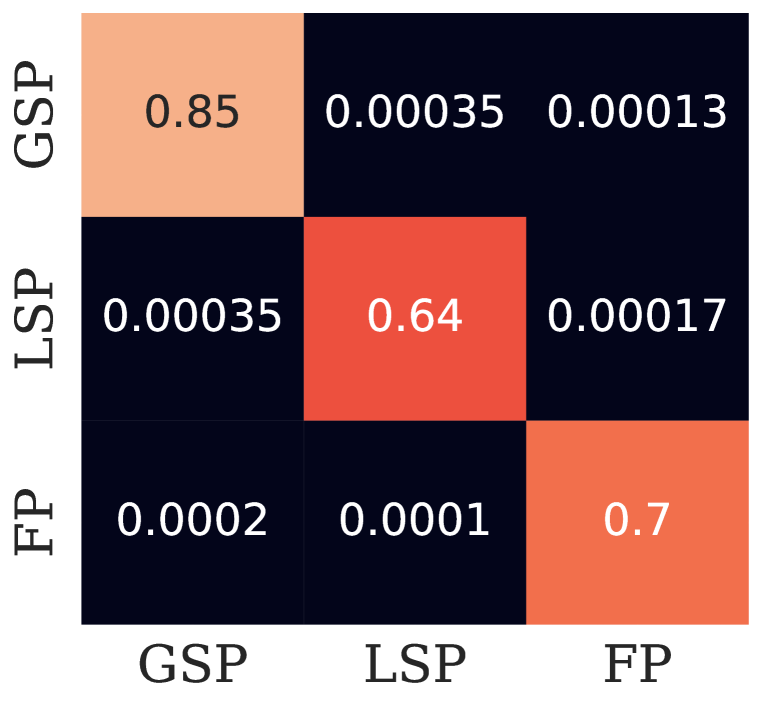
- Global structural proximity only improves performance when local structural proximity is insufficient, indicating a conditional dependency between the two factors.
- A fundamental incompatibility exists between feature proximity and local structural proximity: edges with high similarity in both features and local structure are rare, leading to GNN4LP models underperforming on feature-driven links.
- On the ogbl-ppa dataset, NCNC achieves 62.64 ± 0.79 Hits@100, significantly outperforming GCN (29.57 ± 2.90) and GraphSAGE (41.02 ± 1.94), indicating strong performance on feature-rich, high-common-neighbor edges.
- On ogbl-ddi, which lacks node features, NCNC achieves 70.23 ± 12.11 Hits@100, outperforming GCN (49.90 ± 7.23) and GraphSAGE (49.84 ± 15.56), highlighting the importance of structural patterns in featureless settings.
- The MLP baseline achieves 0.45 ± 0.04 Hits@100 on ogbl-ppa, indicating minimal predictive power from features alone, while NCNC leverages structural patterns effectively in this setting.
- No single model consistently dominates across all datasets, with GCN outperforming others on Cora and Citeseer, and NCNC excelling on ogbl-ppa and ogbl-ddi, underscoring the need for data-aware model selection.
Read this paper
Open the full text in the Nubint reader and ask about any passage as you read.
Read this paper on NubintThis review was generated by AI from the original paper. Please check the paper before citing it.