
[Paper Review] Scalar field dark matter with time-varying equation of state
This paper proposes a scalar field dark matter model with a time-varying equation of state by introducing a conformal coupling between dark matter and a quintessence-like dark energy field, where the coupling depends on the fast-oscillating dark matter field. The model yields a non-zero, increasingly negative equation of state for dark matter at late times, a non-vanishing sound speed, and non-adiabatic pressure, revealing new dynamical effects in the dark sector that could influence structure formation.
We propose a new model of scalar field dark matter interacting with dark energy. Adopting a fluid description of the dark matter field in the regime of rapid oscillations, we find that the equation of state for dark matter is non-zero and even becomes increasingly negative at late times during dark energy domination. Furthermore, the speed of sound of dark matter is non-vanishing at all length scales, and a non-adiabatic pressure contribution arises. The results indicate that there are still unexplored possible interactions within the dark sector that lead to novel background effects and can impact structure formation processes.
Motivation & Objective
- To explore novel interactions within the dark sector that go beyond the standard ΛCDM model.
- To investigate how a time-varying equation of state for scalar field dark matter emerges from coupling to dark energy.
- To examine the implications of such a model for background cosmology and structure formation.
- To assess the viability of conformal coupling between dark matter and dark energy fields in a fluid approximation during rapid oscillations.
Proposed method
- Adopt a fluid description of scalar field dark matter in the regime of rapid oscillations to derive effective hydrodynamic quantities.
- Model the interaction between dark matter and dark energy via a conformal coupling that depends on the dark matter field’s kinetic term.
- Use the effective field theory approach to derive equations of motion for both scalar fields under the assumption of slow-roll dark energy.
- Compute the energy-momentum tensor and conservation laws for both fields, including non-adiabatic contributions.
- Perform time-averaging of the dark matter field to extract effective fluid parameters such as equation of state and sound speed.
- Analyze the resulting effective dynamics in a flat Friedmann-Robertson-Walker universe, focusing on background evolution and perturbations.

Experimental results
Research questions
- RQ1How does a conformal coupling between scalar field dark matter and dark energy lead to a time-varying equation of state for dark matter?
- RQ2What are the implications of a non-vanishing sound speed and non-adiabatic pressure in scalar field dark matter under such a coupling?
- RQ3Can this model naturally yield a negative equation of state for dark matter during dark energy domination?
- RQ4How does the effective mass and oscillation amplitude of the dark matter field influence the background evolution?
- RQ5To what extent do these effects alter the standard picture of structure formation in the dark sector?
Key findings
- The equation of state for scalar field dark matter becomes non-zero and increasingly negative at late times during dark energy domination.
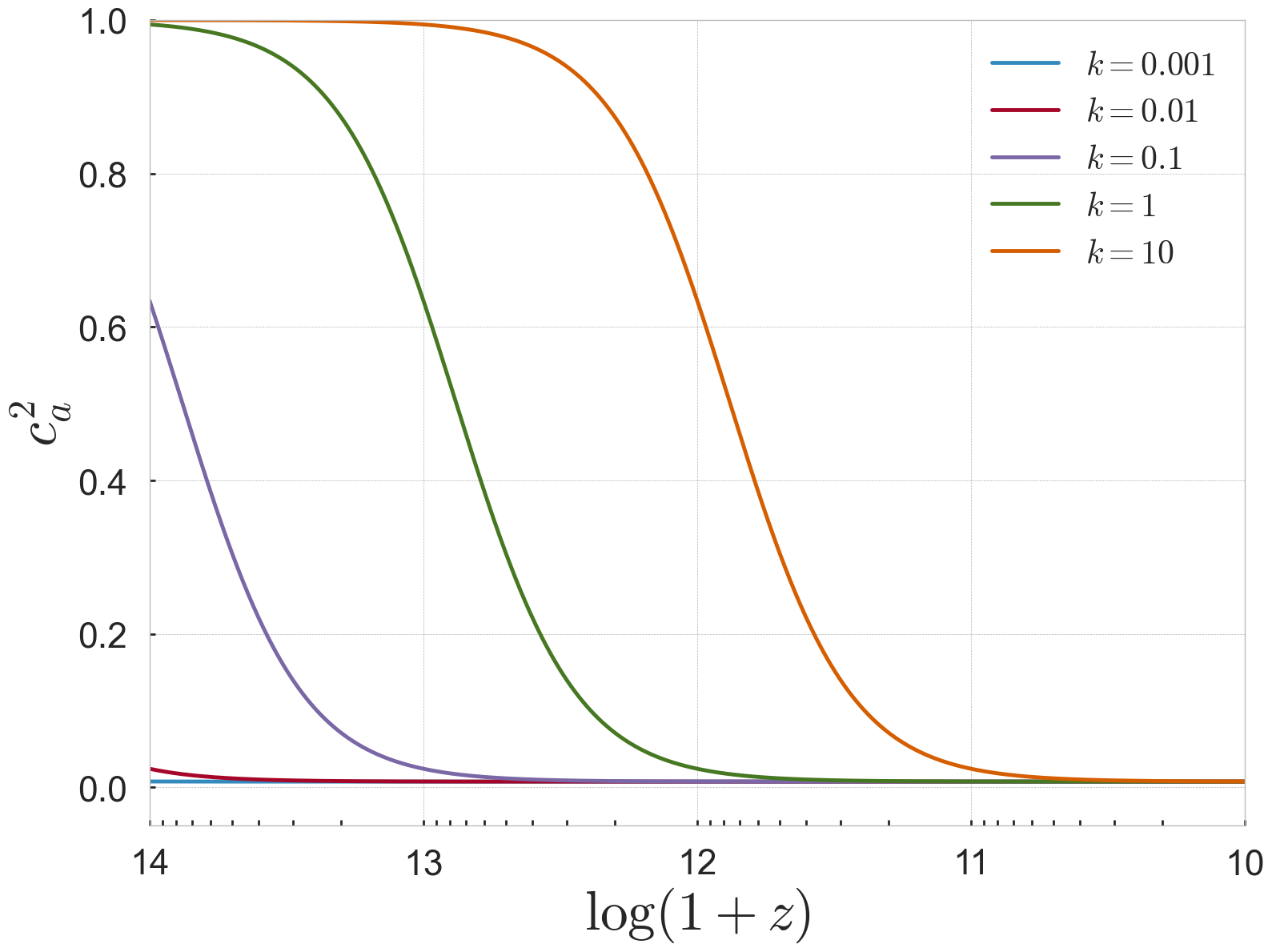
- The sound speed of dark matter remains non-vanishing at all length scales, indicating a non-adiabatic pressure contribution.
- Non-adiabatic pressure arises due to the time-varying coupling between dark matter and dark energy fields.
- The effective mass of the dark matter field is modified by the coupling, leading to a shift in oscillation amplitude and energy density.
- The time-averaged dynamics of the dark matter field leads to a modified effective equation of motion for the dark energy field, including a modified potential term.
- The model shows that interactions within the dark sector can produce novel background effects not captured by standard ΛCDM or minimal interacting dark energy models.
Read this paper
Open the full text in the Nubint reader and ask about any passage as you read.
Read this paper on NubintThis review was generated by AI from the original paper. Please check the paper before citing it.