
[論文レビュー] Superconductor-ferromagnet hybrids for non-reciprocal electronics and detectors
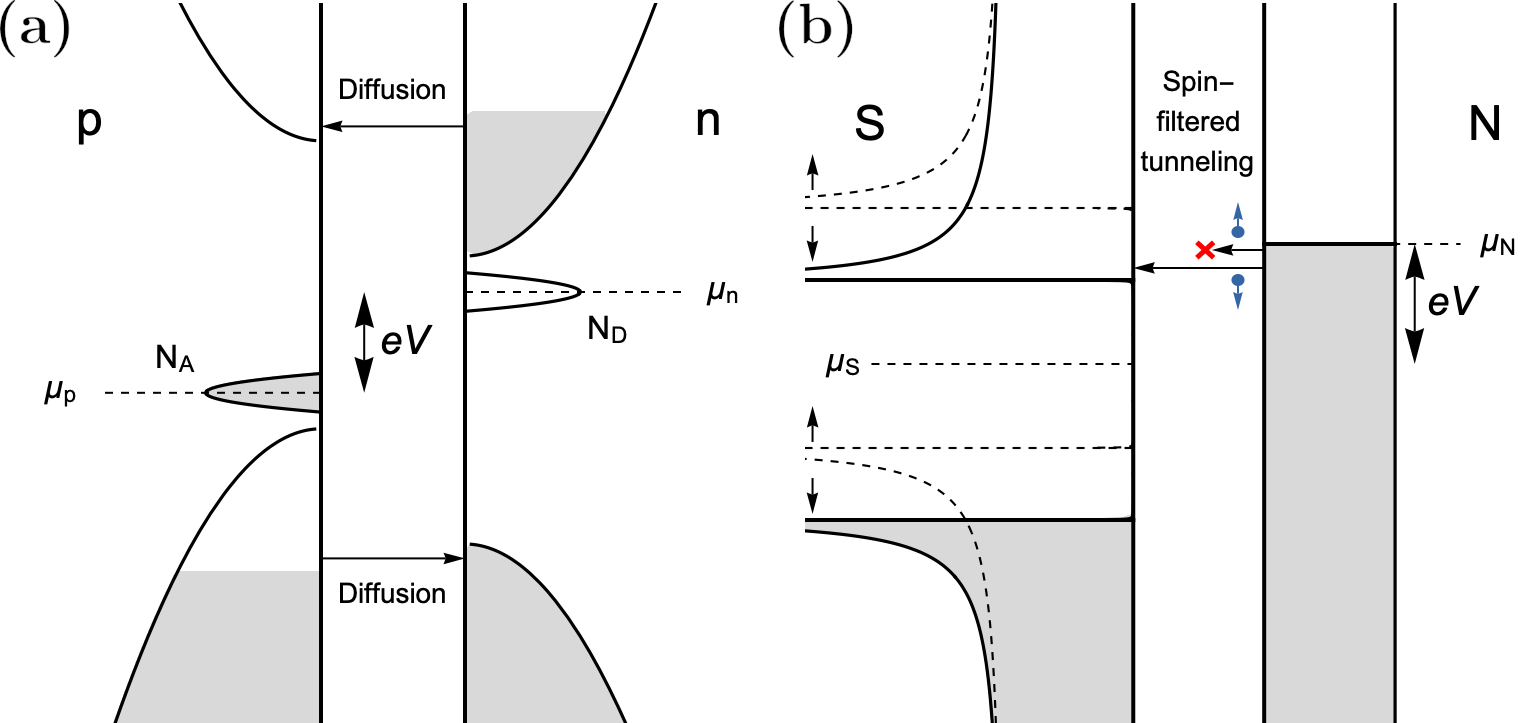
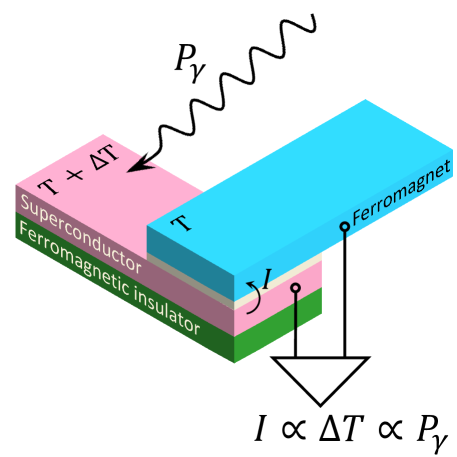
本稿では、特にAl/EuS/CuおよびEuS/Al/Coを基盤とする超伝導体-強磁性体ハイブリッド構造を提案し、X線およびテラヘルツ放射の自己バイアス型で非可逆的な検出器としての応用を示す。磁性近接効果とスピン選択的トンネル効果を活用することで、外部バイアスが不要な熱電力起電力を発生させ、高感度で冷却された環境下での放射線検出を可能にし、マルチプレクシング読み出しと非可逆的エレクトロニクスへの統合の可能性を有する。
# Data for the manuscript "Superconductor-ferromagnet hybrids for non-reciprocal electronics and detectors", submitted to Superconductor Science and Technology, arXiv:2302.12732. This archive contains the data for all plots of numerical data in the manuscript. ## Fig. 4 <br> Data of Fig. 4 in the WDX (Wolfram Data Exchange) format (unzip to extract the files). Contains critical exchange fields and critical thicknesses as functions of the temperature. Can be opened with Wolfram Mathematica with the command: Import[FileNameJoin[{NotebookDirectory[],"filename.wdx"}]] ## Fig. 5<br> Data of Fig. 5 in the WDX (Wolfram Data Exchange) format (unzip to extract the files). Contains theoretically calculated I(V) curves and the rectification coefficient R of N/FI/S junctions. Can be opened with Wolfram Mathematica with the command Import[FileNameJoin[{NotebookDirectory[],"filename.wdx"}]]. ## Fig. 7a<br> Data of Fig. 7a in the ascii format. Contains G in uS as a function of B in mT and V in mV. ## Fig. 7c<br> Data of Fig. 7c in the ascii format. Contains G in uS as a function of B in mT and V in mV. ## Fig. 7e<br> Data of Fig. 7e in the ascii format. Contains G in uS as a function of B in mT and V in mV. The plots 7b, d, and f are taken from the plots a, c and e as indicated in the caption of the figure. ## Fig. 8<br> Data of Fig. 8 in the ascii format. Contains G in uS as a function V in mV for several values of B in mT. ## Fig. 8 inset<br> Data of Fig. 8 inset in the ascii format. Contains G_0/G_N as a function of B in mT. ## Fig9a_b First raw Magnetic field values in T, first column voltage drop in V, <br> rest of the columns differential conductance in S ## Fig9b_FIT First raw Magnetic field values in T, first column voltage drop in V, <br> rest of the columns differential conductance in S ## Fig9c First raw Magnetic field values in T, first column voltage drop in V, <br> rest of the columns R (real number) ## Fig9c inset First raw Magnetic field values in T, odd columns voltage drop in V, <br> even columns injected current in A ## Fog9d Foist column magnetic field in T, second column conductance ration (real <br> number), sample name in the file name. ## Fig. 12<br> Data of Fig. 12 in the ascii format. Contains energy resolution as functions of temperature and tunnel resistance with current and voltage readout. ## Fig. 13<br> Data of Fig. 13 in the ascii format. Contains energy resolution as functions of (a) exchange field, (b) polarization, (c) dynes, and (d) absorber volume with different amplifier noises. ## Fig. 14<br> Data of Fig. 14 in the ascii format. Contains detector pulse current as functions of (a) temperature change (b) time with different detector parameters. <br> ## Fig. 17<br> Data of Fig. 17 in the ascii format. Contains dIdV curves as function of the voltage for different THz illumination frequency and polarization. ## Fig. 18<br> Data of Fig. 18 in the ascii format. Contains the current flowing throughout the junction as function time (arbitrary units) for ON and OFF illumination at 150 GHz for InPol and CrossPol polarization. ## Fig. 21<br> Data of Fig. 21c in the ascii format. Contains the magnitude of readout line S43 as frequency.<br> Data of Fig. 21d in the ascii format. Contains the magnitude of iKID line S21 as frequency.
研究の動機と目的
- 超伝導体-強磁性体ハイブリッド構造を用いて、非可逆的エレクトロニクス素子および自己バイアス型放射線検出器を開発すること。
- 磁性近接効果による電子-正孔対称性の破れにより、超伝導エレクトロニクスにおける内在的非可逆的素子の欠如を解消すること。
- 高いエネルギー分解能と低ノイズを実現する実用的で自己駆動型のX線およびテラヘルツ放射線検出器を実現すること。
- 平面型スーパーインダクタンスと3次元集中定数コンデンサを用いて、スケーラブルなセンサアレイへの効果的な読み出しを可能にする。
- S/FI二重層におけるスピン選択的輸送および熱電気効果の基礎的物理を探索し、新規な量子デバイスの実現に繋げること。
提案手法
- 特にAl/EuS/CuおよびEuS/Al/Coを用いた超伝導体-強磁性体絶縁体(S/FI)二重層を用い、電子-正孔対称性を破り、非可逆的輸送を誘導する。
- イン・サイトシャドウエバポレーションおよびバキュームを保ったプロセスを用いて、磁性近接効果を制御可能な高品質で大面積の接合を実現する。
- スペクトル解析とノイズ測定を用いて交換分裂およびトンネル特性を評価し、接合品質の最適化と準位状態の低減を図る。
- ナノ構造化された吸収体と接合部を有する平面型アンテナを設計し、THz検出効率の向上と熱的クロストークの低減を実現する。
- ナノワイヤベースの読み出しや3次元集中定数コンデンサを用いたマルチプレクシング技術を適用し、スケーラブルで高密度の検出器アレイを実現する。
- 磁性近接効果およびスピントロニクスの理論枠組みを用い、スピン選択的トンネル接合モデルを用いて熱電応答および非可逆的電流-電圧特性を分析する。
実験結果
リサーチクエスチョン
- RQ1磁性近接効果を用いて、超伝導体-強磁性体ヘテロ構造における非可逆的輸送をどのように設計できるか?
- RQ2どの材料とプロセス技術が、高感度検出器に最適なスピン選択的トンネル効果と最小限の準位状態を実現するか?
- RQ3X線およびテラヘルツ周波数の自己バイアス型でゼロバイアスの放射線検出器を実現可能であり、既存技術と同等以上のエネルギー分解能を達成できるか?
- RQ4信号対ノイズ比を損なわず、このような自己駆動型検出器のマルチプレクシング読み出しをどのように実現できるか?
- RQ5これらのハイブリッド系における熱電応答および非可逆性の根本的限界は何か?そして、それらを新規な量子デバイスの実現にどのように応用できるか?
主な発見
- Al/EuS/CuおよびEuS/Al/Coを基盤とする検出器は、磁性近接効果による超伝導体の状態密度のスピン分離により、強い非可逆的電流-電圧特性を示す。
- これらのデバイスは放射線吸収に伴い直接的に熱電起電力を発生させ、外部バイアス電流や電圧が不要な自己バイアス動作を実現する。
- ノイズ解析から、準位状態密度が低い(Γ ≲ 10⁻²Δ)接合が、特にX線検出において高いエネルギー分解能を実現するために不可欠であることが示された。
- X線エネルギー分解能は吸収体内のフォノン緩和時間によって制限されており、吸収体を浮上させることでフォノンの早期放出を低減でき、分解能の向上が期待できる。
- 平面型スーパーインダクタンスと3次元集中定数コンデンサは、効果的な検出器アレイのマルチプレクシングを可能にし、スケーラブルな冷却読み出しの可能性を秘めている。
- 理論的および実験的結果から、これらの系がコherentカロリトロニクス、熱的論理、スピン電流混合といった新規な現象を支持することが確認され、次世代量子エレクトロニクスへの道筋が開かれた。
より良い研究を、今すぐ始めましょう
論文の読解から最終レビューまで、研究時間を劇的に削減しましょう。
クレジットカード登録不要
このレビューはAIが作成し、人間の編集者が確認しました。