
[Paper Review] Systematic Biases in Estimating the Properties of Black Holes Due to Inaccurate Gravitational-Wave Models
This study identifies systematic biases in black hole parameter estimation from gravitational-wave signals due to inaccuracies in current waveform models, particularly for high-spin, asymmetric, and massive binaries. Using Bayesian inference and linear-signal approximations, it shows biases increase significantly with spin magnitude (6–8× higher for χ₁ > 0.5), detector sensitivity, and redshift, undermining precise measurements of H₀, sky localization, and mass distributions—critical for future precision gravitational-wave astronomy with next-gen detectors like Einstein Telescope and Cosmic Explorer.
Gravitational-wave (GW) observations of binary black-hole (BBH) coalescences are expected to address outstanding questions in astrophysics, cosmology, and fundamental physics. Realizing the full discovery potential of upcoming LIGO-Virgo-KAGRA (LVK) observing runs and new ground-based facilities hinges on accurate waveform models. Using linear-signal approximation methods and Bayesian analysis, we start to assess our readiness for what lies ahead using two state-of-the-art quasi-circular, spin-precessing models: exttt{SEOBNRv5PHM} and exttt{IMRPhenomXPHM}. We ascertain that current waveforms can accurately recover the distribution of masses in the LVK astrophysical population, but not spins. We find that systematic biases increase with detector-frame total mass, binary asymmetry, and spin-precession, with most such binaries incurring parameter biases, extending up to redshifts $\sim3$ in future detectors. Furthermore, we examine three ``golden'' events characterized by large mass ratios, significant spin magnitudes, and high precession, evaluating how systematic biases may affect their scientific outcomes. Our findings reveal that current waveforms fail to enable the unbiased measurement of the Hubble-Lemaître parameter from loud signals, even for current detectors. Moreover, highly asymmetric systems within the lower BH mass-gap exhibit biased measurements of the secondary-companion mass, which impacts the physics of both neutron stars and formation channels. Similarly, we deduce that the primary mass of massive binaries ($ > 60 M_\odot$) will also be biased, affecting supernova physics. Future progress in analytical calculations and numerical-relativity simulations, crucial for calibrating the models, must target regions of the parameter space with significant biases to develop more accurate models. Only then can precision GW astronomy fulfill the promise it holds.
Motivation & Objective
- To assess the impact of waveform model inaccuracies on the systematic bias in black hole parameter estimation for binary black hole (BBH) coalescences.
- To evaluate how biases in mass, spin, and effective spin parameters depend on binary properties such as spin magnitude, mass asymmetry, and precession.
- To determine the extent to which current and future gravitational-wave detectors (including LIGO-Virgo-KAGRA and next-gen facilities) are affected by these biases.
- To investigate the implications for key astrophysical and cosmological inferences, including Hubble-Lemaître parameter measurement and sky localization.
- To identify critical regions of parameter space—especially high-spin, asymmetric, and massive binaries—where improved waveform modeling is essential for unbiased inference.
Proposed method
- Employed linear-signal approximation methods to estimate systematic biases in posterior distributions of BBH parameters.
- Applied Bayesian inference to compare two state-of-the-art waveform models: SEOBNRv5PHM and IMRPhenomXPHM, under varying signal-to-noise ratio (SNR) and detector network configurations.
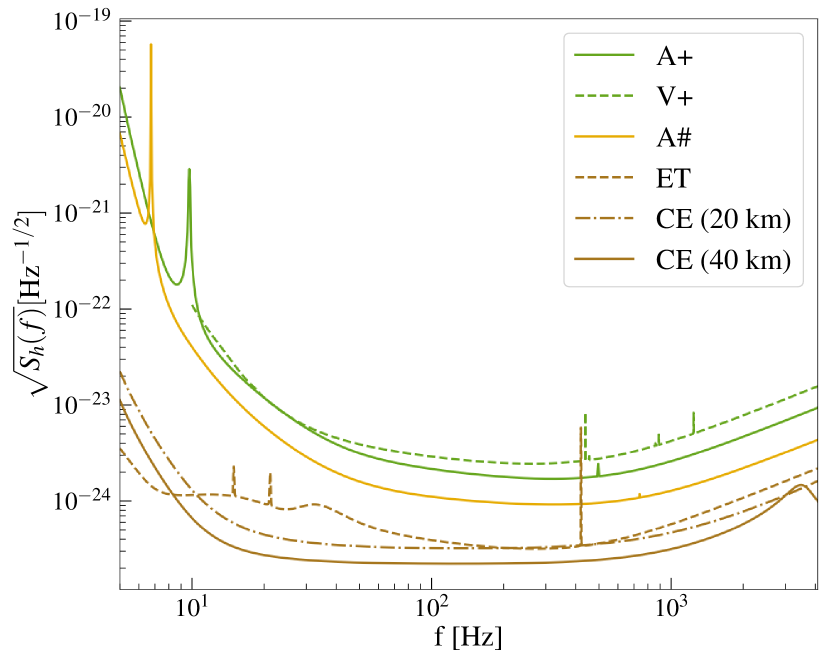
- Used a population of 50,000 simulated BBH signals across different detector networks (O5, A#, XG) to assess bias dependence on detector sensitivity and minimum frequency.
- Quantified bias using the ratio |δϑ/Δϑ|, where δϑ is the systematic bias and Δϑ is the statistical error, to identify when biases dominate over uncertainties.
- Mapped bias horizons—maximum distances at which systematic biases exceed statistical errors—for key parameters like primary spin (χ₁) across detector networks.
- Analyzed 'golden' events with mass ratios ~6–10, high spin (0.6–0.9), and strong precession to evaluate impact on cosmological and astrophysical inference.

Experimental results
Research questions
- RQ1How do systematic biases in black hole parameter estimation scale with primary black hole spin magnitude, particularly above and below χ₁ = 0.5?
- RQ2To what extent do waveform model inaccuracies compromise the unbiased measurement of cosmological parameters like the Hubble-Lemaître parameter (H₀)?
- RQ3How do detector sensitivity and low-frequency cutoff affect the bias-to-uncertainty ratio for key parameters such as chirp mass and effective spin?
- RQ4What is the impact of binary asymmetry, spin precession, and total mass on systematic biases in gravitational-wave parameter estimation?
- RQ5Which regions of the BBH parameter space—especially high-mass, high-spin, or mass-gap systems—exhibit the most severe biases, and why are they critical for future science?
Key findings
- Systematic biases in black hole spin estimation increase by approximately 6 to 8 times when the primary black hole spin magnitude exceeds 0.5 compared to when it is below 0.5.
- Current waveform models can accurately recover the mass distribution of the LVK astrophysical population but fail to accurately recover the spin distribution, introducing significant systematic errors.
- Systematic biases grow with detector-frame total mass, binary mass asymmetry, and spin precession, affecting a majority of binaries even up to redshifts of ∼3 in next-generation (XG) detectors.
- For 'golden' events with high mass ratios (~6–10), high spins (0.6–0.9), and strong precession, systematic biases prevent unbiased measurement of the Hubble-Lemaître parameter and sky localization, even in current detector networks.
- Massive binaries with primary masses >60 M⊙ and systems within the lower black hole mass gap exhibit biased secondary companion mass measurements, which affects supernova physics and formation channel interpretations.
- The bias horizon for the primary spin χ₁ exceeds 25 Gpc (z ≈ 3) for the Einstein Telescope and Cosmic Explorer networks, indicating that systematic biases remain significant for a large fraction of observable stellar-origin BBHs.
Read this paper
Open the full text in the Nubint reader and ask about any passage as you read.
Read this paper on NubintThis review was generated by AI from the original paper. Please check the paper before citing it.