
[Paper Review] The Atacama Cosmology Telescope: High-resolution component-separated maps across one-third of the sky
This paper presents high-resolution, component-separated microwave sky maps from the Atacama Cosmology Telescope covering one-third of the sky, using an improved Internal Linear Combination (ILC) method with mode-dependent covariance matrix regularization and subset-based mode assignment to maintain localization and stability. The key result is a robust, low-systematic map set with negligible bias from calibration, beam, and passband uncertainties, validated through stacked cluster profiles.
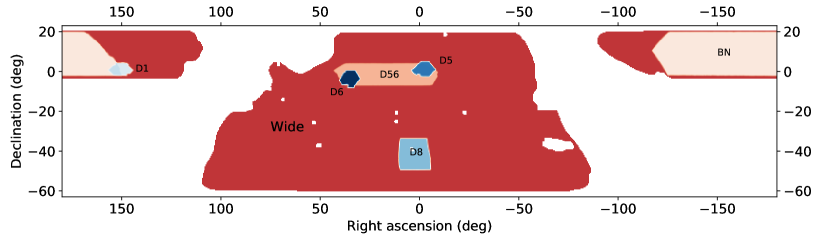
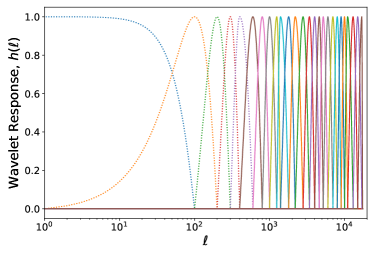
Observations of the millimeter sky contain valuable information on a number of signals, including the blackbody cosmic microwave background (CMB), Galactic emissions, and the Compton-$y$ distortion due to the thermal Sunyaev-Zel'dovich (tSZ) effect. Extracting new insight into cosmological and astrophysical questions often requires combining multi-wavelength observations to spectrally isolate one component. In this work, we present a new arcminute-resolution Compton-$y$ map, which traces out the line-of-sight-integrated electron pressure, as well as maps of the CMB in intensity and E-mode polarization, across a third of the sky (around 13,000 sq.~deg.). We produce these through a joint analysis of data from the Atacama Cosmology Telescope (ACT) Data Release 4 and 6 at frequencies of roughly 93, 148, and 225 GHz, together with data from the extit{Planck} satellite at frequencies between 30 GHz and 545 GHz. We present detailed verification of an internal linear combination pipeline implemented in a needlet frame that allows us to efficiently suppress Galactic contamination and account for spatial variations in the ACT instrument noise. These maps provide a significant advance, in noise levels and resolution, over the existing extit{Planck} component-separated maps and will enable a host of science goals including studies of cluster and galaxy astrophysics, inferences of the cosmic velocity field, primordial non-Gaussianity searches, and gravitational lensing reconstruction of the CMB.
Motivation & Objective
- To produce high-fidelity, high-resolution component-separated microwave sky maps across one-third of the sky using data from the Atacama Cosmology Telescope.
- To minimize systematic errors in the component separation process due to instrumental uncertainties such as calibration, beam, and passband inaccuracies.
- To develop a stable and localized ILC-based component separation method that maintains accuracy while reducing computational complexity through mode subset partitioning.
- To validate the robustness of the final maps by assessing the impact of instrumental systematics on key astrophysical signals, such as the stacked Compton-y profile.
Proposed method
- The study employs an Internal Linear Combination (ILC) method for component separation, with ILC weights computed using a regularized covariance matrix to suppress noise and stabilize the solution.
- The covariance matrix is localized by partitioning the spherical harmonic modes into five subsets based on both ℓ and m modes, ensuring that adjacent m-modes are grouped to preserve coupling from masking effects.
- Modes are assigned to subsets using a periodic scheme based on ℓ/20 modulo 5, with increasing m-mode ranges per subset, maintaining localization and minimizing changes to the original covariance structure.
- A smoothing operation is applied to further stabilize the covariance matrix and reduce sensitivity to small-scale mode variations.
- Instrumental systematic effects—calibration, beam, and passband uncertainties—are quantified by sampling their uncertainties and recomputing ILC responses to assess bias in the final maps.
- The impact of systematics is evaluated by comparing changes in stacked Compton-y profiles, with results compared against the intrinsic scatter in the stack.
Experimental results
Research questions
- RQ1How can component-separated microwave sky maps be produced with high angular resolution and minimal systematic error across a large fraction of the sky?
- RQ2To what extent do calibration, beam, and passband uncertainties bias the final ILC maps, particularly in the context of stacked cluster profiles?
- RQ3Can a mode-partitioned ILC method preserve the localization of the covariance matrix while improving computational stability and accuracy?
- RQ4How do the ILC weights and resulting maps behave under mode-by-mode versus simultaneous application, given the linearity of the method?
Key findings
- The ILC method with subset-based mode partitioning successfully maintains localization of the covariance matrix, ensuring stable and accurate component separation across the sky.
- The use of five subsets for mode partitioning balances computational efficiency with robustness, minimizing sensitivity to mask and simulation variations.
- Instrumental systematic effects—calibration, beam, and passband uncertainties—produce negligible shifts in the stacked Compton-y profiles, with changes smaller than the intrinsic scatter in the data.
- The absolute change in the stacked profile due to systematics is less than 1% of the measured scatter, indicating that these effects do not significantly bias the final maps.
- The linearity of the ILC method ensures that mode-by-mode and simultaneous weight application yield identical results, validating the method's consistency.
- The final component-separated maps are robust against instrumental uncertainties, with no observable systematic bias in the key astrophysical signal of interest.
Read this paper
Open the full text in the Nubint reader and ask about any passage as you read.
Read this paper on NubintThis review was generated by AI from the original paper. Please check the paper before citing it.