
[Paper Review] The Invasion of Ukraine Viewed through TikTok: A Dataset
This paper introduces a large-scale, open-source dataset of 9,500 TikTok videos and 4.4 million comments related to the 2022 Russian invasion of Ukraine, collected via hashtags and keywords. It reveals complex linguistic and social dynamics at macro and meso levels, while exposing critical limitations in adapting Twitter-based bot detection tools to TikTok, where verified status and account age are poor predictors of bot activity due to platform-specific behavioral differences.
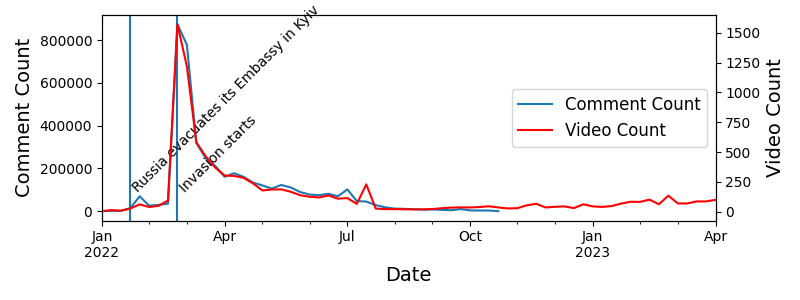
We present a dataset of video descriptions, comments, and user statistics, from the social media platform TikTok, centred around the invasion of Ukraine in 2022, an event that launched TikTok into the geopolitical arena. User activity on the platform around the invasion exposed myriad political behaviours and dynamics previously unexplored on this platform. To this end, we provide a mass-scale language and interaction dataset for further research into these processes. In this paper we conduct an initial investigation of language and social interaction dynamics, alongside an evaluation of bot detection on the platform. We have open-sourced the dataset and the library used to collect it to the public.
Motivation & Objective
- To investigate how TikTok shapes public discourse around geopolitical events, particularly the 2022 invasion of Ukraine.
- To address the lack of large-scale, public datasets for TikTok, especially for political and social dynamics.
- To evaluate the transferability of existing Twitter-based bot detection methods to TikTok’s unique platform architecture.
- To enable future research on disinformation, polarization, and narrative formation on short-form video platforms.
Proposed method
- Collected TikTok videos and associated comments using a custom web scraper, PyTok, developed for public release.
- Identified content using keywords and hashtags related to the invasion of Ukraine.
- Conducted macro-level analysis of language use and multilingual patterns across the dataset.
- Performed meso-level semantic clustering to uncover real-world perspectives and narrative structures.
- Evaluated the performance of a gradient-boosted decision tree classifier trained on Twitter bot features against TikTok data.
- Released the dataset, PyTok scraper, and analysis scripts with user withdrawal functionality to ensure ethical compliance.
Experimental results
Research questions
- RQ1How do language use and multilingualism reflect geopolitical perspectives on TikTok during the Ukraine war?
- RQ2What social interaction patterns emerge in TikTok comment sections related to the conflict?
- RQ3To what extent can existing Twitter-based bot detection systems be applied to TikTok?
- RQ4How do platform-specific features like verified status and account age influence bot classification on TikTok compared to Twitter?
- RQ5What are the implications of these findings for designing ethical, representative, and platform-aware social media research methods?
Key findings
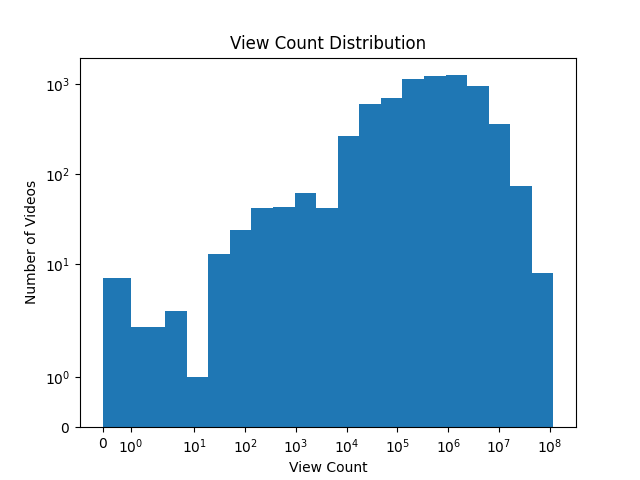
- The dataset contains 9,500 videos and 4.4 million comments from approximately 2.6 million users, spanning multiple languages and perspectives.
- A significant portion of the dataset reflects non-English content, indicating TikTok’s role as a multilingual platform for global discourse on the war.
- Existing Twitter-based bot detection models misclassify 99.8% of TikTok accounts as bots, indicating poor transferability across platforms.
- Verified status, following count, and account age were top features in bot classification, but their predictive power differs significantly on TikTok compared to Twitter.
- The results highlight fundamental differences in user behavior and platform mechanics between TikTok and Twitter, undermining assumptions from previous social media research.
- The study underscores the urgent need for platform-specific bot detection and data collection methods in emerging social media ecosystems.
Read this paper
Open the full text in the Nubint reader and ask about any passage as you read.
Read this paper on NubintThis review was generated by AI from the original paper. Please check the paper before citing it.