
[Paper Review] The James Webb Space Telescope Mission: Optical Telescope Element Design, Development, and Performance
This paper details the design, development, and on-orbit performance of the James Webb Space Telescope's Optical Telescope Element (OTE), highlighting its technological advancements, rigorous testing, and successful deployment. The OTE exceeds design requirements, achieving exceptional wavefront stability and sensitivity, enabling transformative science observations.
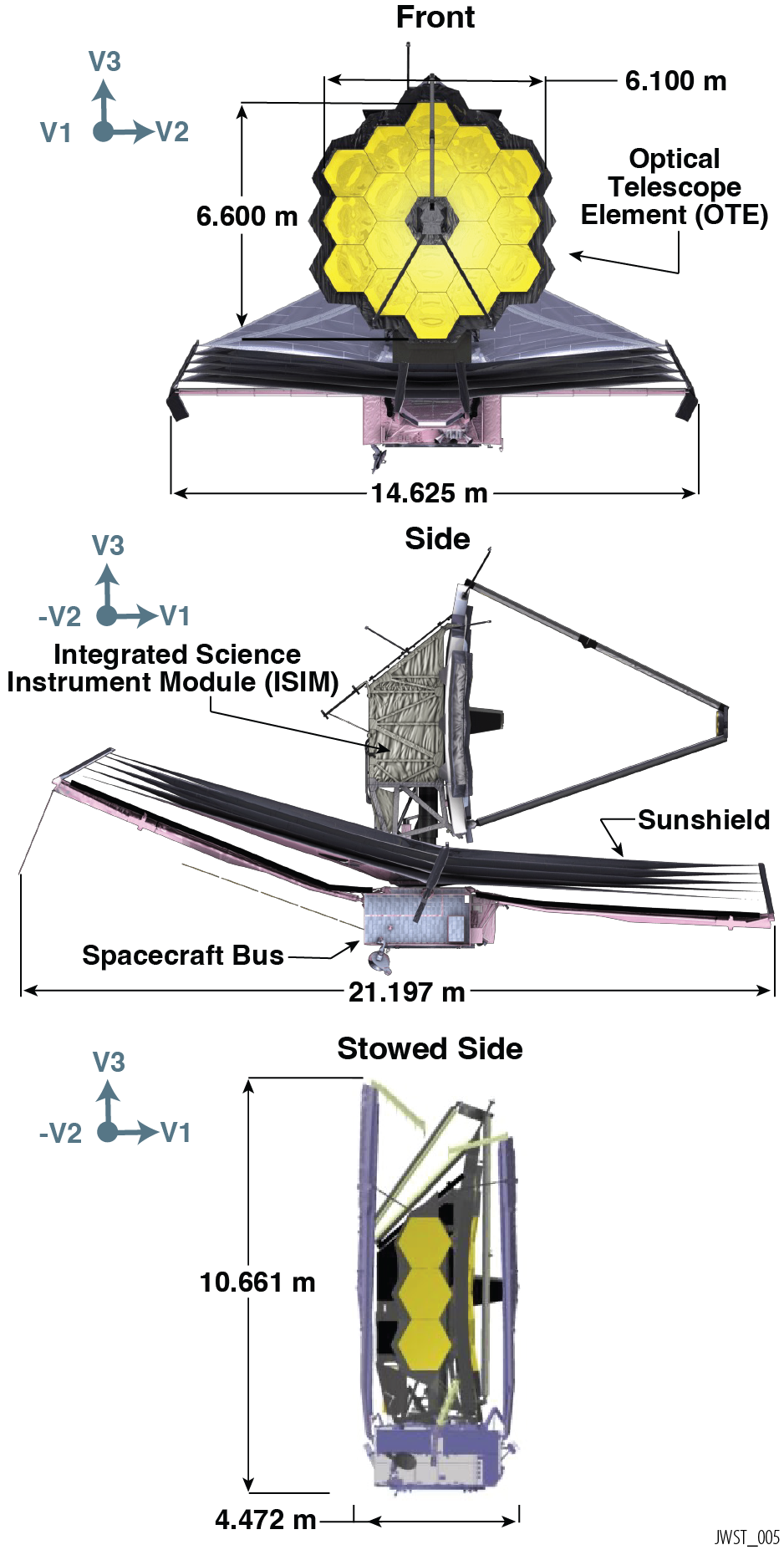
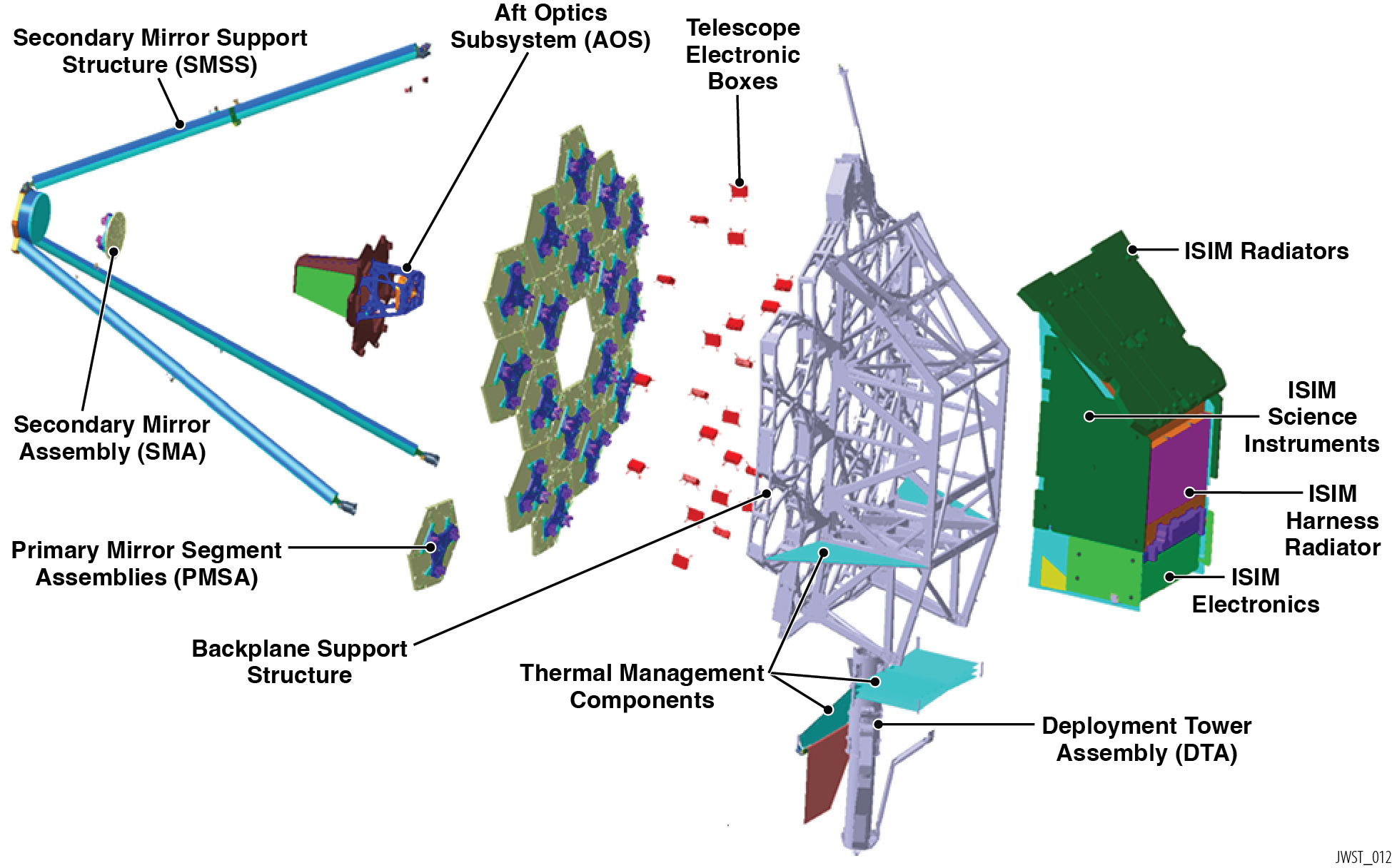
The James Webb Space Telescope (JWST) is a large, infrared space telescope that has recently started its science program which will enable breakthroughs in astrophysics and planetary science. Notably, JWST will provide the very first observations of the earliest luminous objects in the Universe and start a new era of exoplanet atmospheric characterization. This transformative science is enabled by a 6.6 m telescope that is passively cooled with a 5-layer sunshield. The primary mirror is comprised of 18 controllable, low areal density hexagonal segments, that were aligned and phased relative to each other in orbit using innovative image-based wavefront sensing and control algorithms. This revolutionary telescope took more than two decades to develop with a widely distributed team across engineering disciplines. We present an overview of the telescope requirements, architecture, development, superb on-orbit performance, and lessons learned. JWST successfully demonstrates a segmented aperture space telescope and establishes a path to building even larger space telescopes.
Motivation & Objective
- To document the end-to-end design, integration, and testing of the JWST Optical Telescope Element (OTE) to ensure mission success.
- To address challenges in optical modeling, stray light, and micrometeoroid impact risks during system development.
- To validate the OTE’s performance against stringent wavefront and stability requirements for deep-space infrared astronomy.
- To identify lessons learned from on-orbit anomalies, such as rogue path stray light, to improve future large-aperture space telescopes.
- To demonstrate the successful integration of advanced technologies, including deployable sunshields and cryogenic optics, in flight
Proposed method
- Employed a distributed development model led by NASA Goddard Space Flight Center with major contributions from Northrop Grumman, Ball Aerospace, L3Harris, and the Space Telescope Science Institute.
- Conducted extensive ground testing of the OTE, including thermal vacuum and cryogenic optical testing, to validate performance under flight conditions.
- Used independent optical and optomechanical models for the telescope and science instruments, with interface verification to ensure compatibility.
- Implemented detailed stray light modeling to predict and mitigate optical path contamination, later refined using in-flight data.
- Applied statistical and mechanical models to assess micrometeoroid impact risks and developed operational constraints to reduce exposure.
- Performed post-launch analysis of stray light phenomena by correlating observed effects with updated optical and structural models
Experimental results
Research questions
- RQ1How was the Optical Telescope Element of JWST designed and tested to meet stringent wavefront and stability requirements in a cryogenic, space environment?
- RQ2What caused unexpected stray light in flight, and how was it traced back to structural features and grazing-angle scattering?
- RQ3To what extent did micrometeoroid impacts affect the OTE’s performance, and how were operational constraints implemented to mitigate risk?
- RQ4Why did initial optical models fail to predict rogue path stray light, and what modeling improvements are needed for future missions?
- RQ5How did system-level integration challenges, particularly across optical and mechanical interfaces, affect performance and risk?
Key findings
- The JWST OTE achieved wavefront error performance significantly better than required, enabling higher sensitivity and stability than originally planned.
- In-flight stray light was traced to grazing-angle scattering from instrument pick-off mirror housings and internal structures, not predicted by initial models.
- The rogue path stray light phenomenon was localized to a small subset of the sky, allowing mitigation through careful target scheduling.
- Micrometeoroid impact modeling revealed uncertainties in damage prediction due to lack of high-velocity, cryogenic test data, prompting field-of-regard restrictions.
- Post-flight analysis confirmed that full system modeling must include detailed optomechanical structures, not just optical prescriptions, to prevent unexpected stray light.
- The OTE’s performance exceeds design objectives, demonstrating the success of advanced technologies such as deployable sunshields and cryogenic mirror segments
Read this paper
Open the full text in the Nubint reader and ask about any passage as you read.
Read this paper on NubintThis review was generated by AI from the original paper. Please check the paper before citing it.