
[論文レビュー] The Participatory Turn in AI Design: Theoretical Foundations and the Current State of Practice
この論文は参加型AIを評価する枠組みを構築し、現在の実践は大筋で助言的であり、利害関係者はしばしばUIへの入力に限定される一方で、中核設計決定には関与しないという緊張を浮き彫りにし、権限付与と実践的制約の間の対立を強調している。
Despite the growing consensus that stakeholders affected by AI systems should participate in their design, enormous variation and implicit disagreements exist among current approaches. For researchers and practitioners who are interested in taking a participatory approach to AI design and development, it remains challenging to assess the extent to which any participatory approach grants substantive agency to stakeholders. This article thus aims to ground what we dub the "participatory turn" in AI design by synthesizing existing theoretical literature on participation and through empirical investigation and critique of its current practices. Specifically, we derive a conceptual framework through synthesis of literature across technology design, political theory, and the social sciences that researchers and practitioners can leverage to evaluate approaches to participation in AI design. Additionally, we articulate empirical findings concerning the current state of participatory practice in AI design based on an analysis of recently published research and semi-structured interviews with 12 AI researchers and practitioners. We use these empirical findings to understand the current state of participatory practice and subsequently provide guidance to better align participatory goals and methods in a way that accounts for practical constraints.
研究の動機と目的
- 技術設計、政治理論、社会科学を横断して参加の理論を統合し、参加型AIの評価枠組みを創出する。
- 80件の論文コーパスを分析し、研究者/実務家への12のインタビューを実施して、参加型AIの現状を実証的に把握する。
- 参加型AI実践における動機、課題、緊張を特定する。
- AI設計における参加的目標と手法の整合性を高めるための実証的根拠に基づく機会を提供する。
提案手法
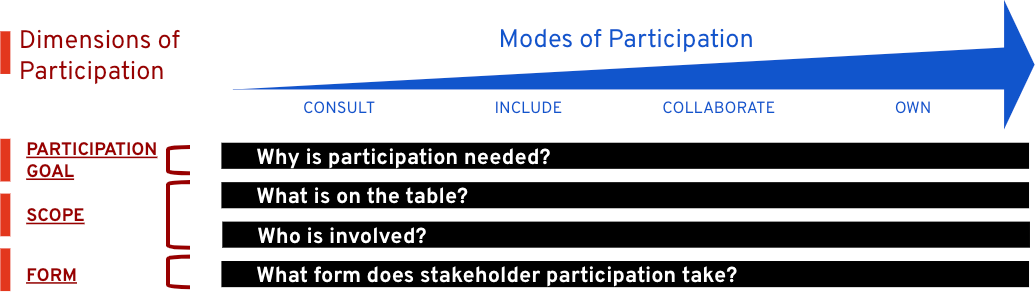
- 9つの参加伝統にわたる文献を統合して、Participationのパラメータ枠組みを導出する。
- 参加型手法を用いると主張する80件のAI研究コーパスを、枠組みの次元と参加のモードに照らしてコード化する。
- コーパス論文の著者12名を対象に半構造化インタビューを実施し、動機、課題、志向を三角測量する。
- アフィニティ・ダイアグラムと主題分析を用いて、現在の実践と緊張に関する知見を導出する。
実験結果
リサーチクエスチョン
- RQ1AI設計における参加の実現をどのように信頼性高く評価し、利害関係者に実際どのような主体性を与えるのかという概念的枠組みは何か。
- RQ2現在の参加型AI実践は、利害関係者をどの程度権限づけるのか、それとも協議ニーズに応えるだけなのか。
- RQ3参加型AI実装を形作る主な緊張と制約は何か、そして実践はどのように改善できるか。
- RQ4AI設計における参加的目標と手法をより良く整合させるための実証的機会は何か。
主な発見
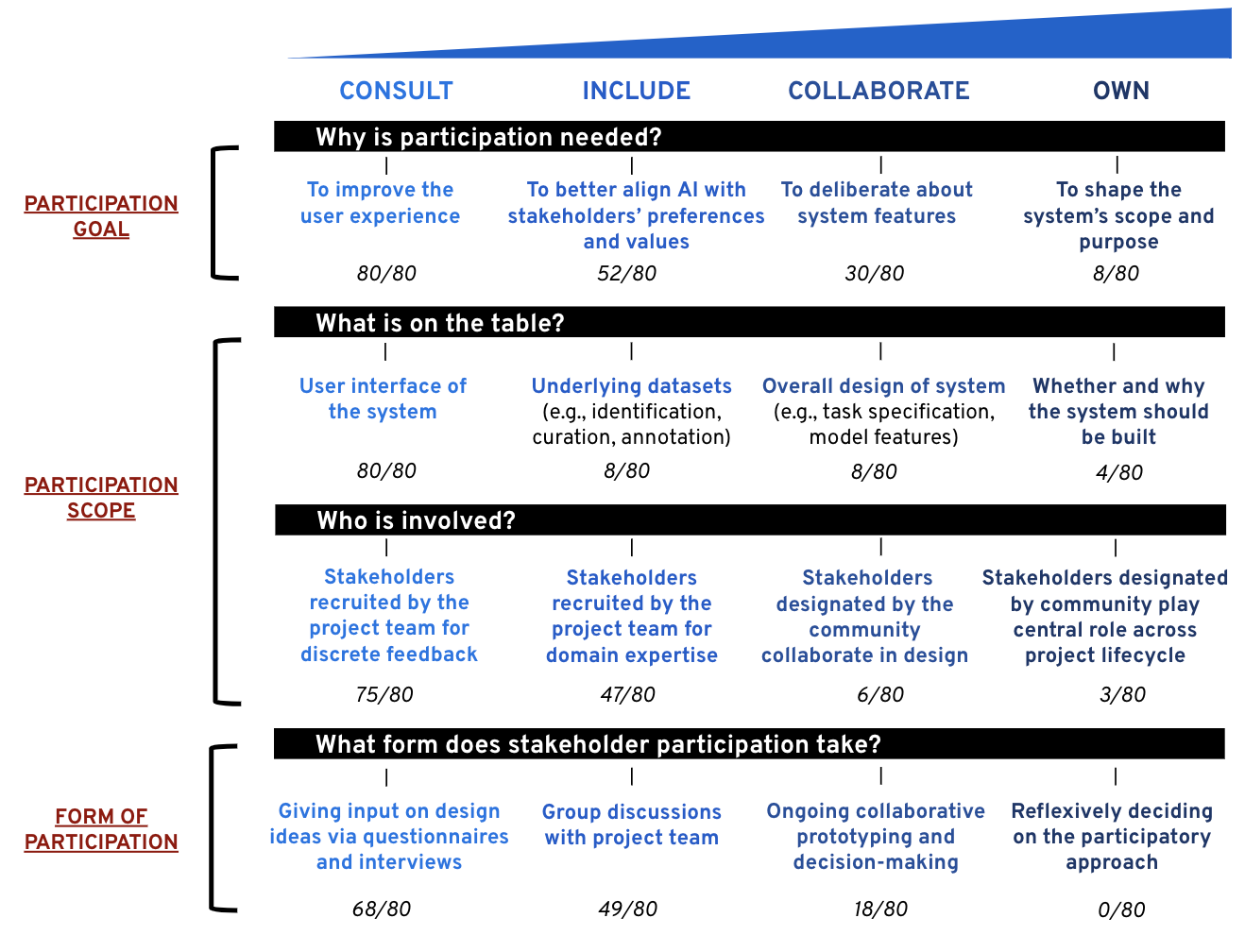
- ほとんどの参加型AIプロジェクト(80/80)はユーザー体験の向上を目指し、52/80は利害関係者の嗜好と価値観との整合性を追求している。
- 小さな割合(8/80、10%)は利害関係者をシステムの範囲と目的の形成に関与させている。
- 参加は主に助言的であり、コアモデル設計への参加よりもUIに焦点を当てた関与である。
- 直接的な参加が限られる場合、実務家は代理(人間またはアルゴリズミック)を用いて利害関係者の入力を代表させる。
- 権限付与の志向と資源や期間といった実践的制約との間に緊張が生じる。
- 本研究はAI設計における利害関係者の主体性を高めるために参加の文脈を再構成する道筋を特定する。
より良い研究を、今すぐ始めましょう
論文設計から論文執筆まで、研究時間を劇的に削減しましょう。
クレジットカード登録不要
このレビューはAIが作成し、人間の編集者が確認しました。