
[論文レビュー] The split majoron model confronts the NANOGrav signal and cosmological tensions
論文は分割マジョンモデルをNANOGravの重力波背景の源として再評価し、低スケールの初期の一時相転移とSMBHBsがデータに適合し得ることを示す一方で、追加放射とデuterium制約に対処し、宇宙論的緊張を緩和する可能性がある。
In the light of the evidence of a gravitational wave background from the NANOGrav 15yr data set, we reconsider the split majoron model as a new physics extension of the standard model able to generate a needed contribution to solve the current tension between the data and the standard interpretation in terms of inspiraling supermassive black hole massive binaries. In the split majoron model the seesaw right-handed neutrinos acquire Majorana masses from spontaneous symmetry breaking of global $U(1)_{B-L}$ in a strong first order phase transition of a complex scalar field occurring above the electroweak scale. The final vacuum expectation value couples to a second complex scalar field undergoing a low scale phase transition occurring after neutrino decoupling. Such a coupling enhances the strength of this second low scale first order phase transition and can generate a sizeable primordial gravitational wave background contributing to the NANOGrav 15yr signal. Some amount of extra-radiation is generated after neutron-to-proton ration freeze-out but prior to nucleosynthesis. This can be either made compatible with current upper bound from primordial deuterium measurements or even be used to solve a potential deuterium problem. Moreover, the free streaming length of light neutrinos can be suppressed by their interactions with the resulting majoron background and this mildly ameliorates existing cosmological tensions. Thus cosmological observations nicely provide independent motivations for the model.
研究の動機と目的
- 15年間データセットを踏まえて、NANOGrav GW信号の源として分割マジョンモデルを再評価する。
- 追加放射量(Delta Neff)およびBBN/CMB観測からの宇宙論的制約を分析する。
- GWスペクトルに影響を与える高スケールおよび低スケール相転換を示す。
- ニュートリノ–マジョン相互作用が宇宙論的緊張(例:Hubble緊張)を緩和できるかを検討する。
提案手法
- 自発的U(1)対称性 Breakingを伴う二重スカラー系(phi, phi')と右-handedニュートリノのフレームワークを構築する。
- 相対論的自由度g_rhoとg_s、ダークセクター温度比r_DおよびDelta Neffの進化を計算する。
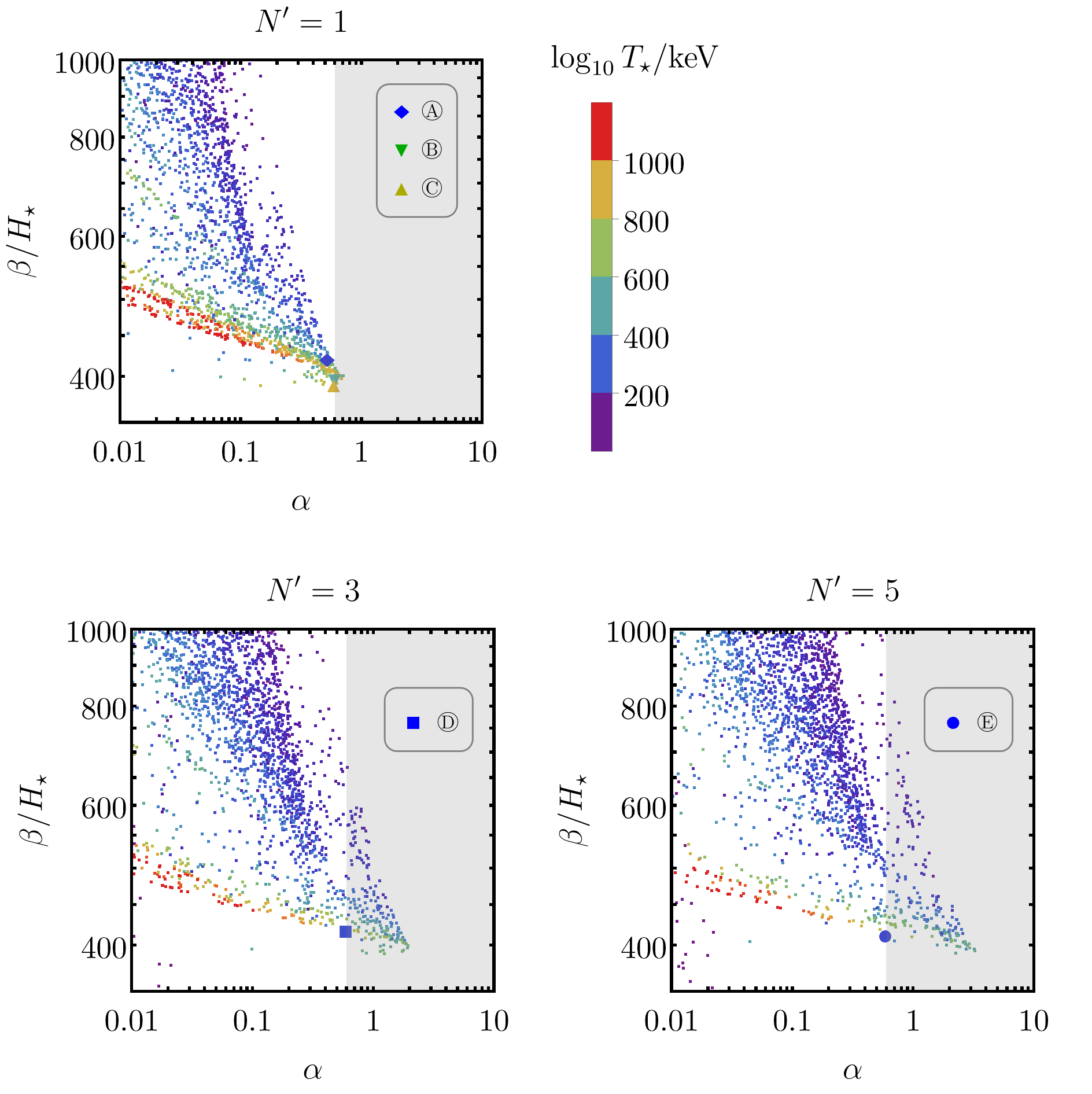
- 有限温度有効ポテンシャルを用いて低スケール相転換をモデル化し、GW生成のためのalphaおよびbeta/H_*パラメータを導出する。
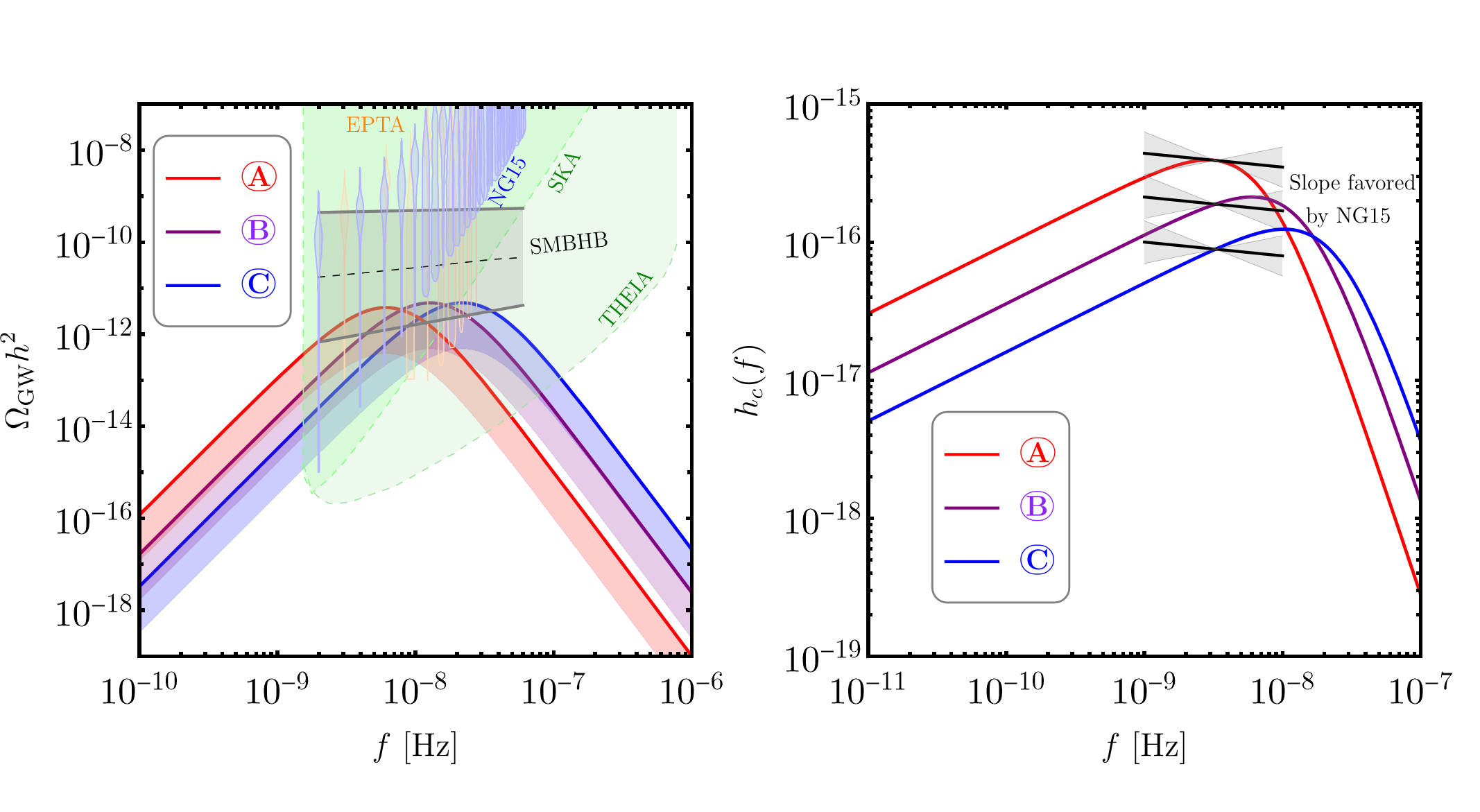
- ジョー=ユゲ detonationと減衰因子を用いて音響波支配のGWスペクトルを予測し、NANOGrav 15年結果と比較する。
- BBN重水素測定およびニュートリノデカップリングからの宇宙論的制約を取り込み、有効なパラメータ空間を delineate する。
実験結果
リサーチクエスチョン
- RQ1分割マジョンモデルはBBN/CMB制約に違反することなく、NANOGrav 15年信号を説明できる十分な振幅のGW背景を生成できるか?
- RQ2NANOGravデータに適合する相転換パラメータ(alpha, beta/H_*, v_w)およびダークセクター寄与の許容範囲はどこか?
- RQ3Delta Neffの追加的なダーク放射とその温度進化は原始元素量およびCMB測定との適合性にどう影響するか?
- RQ4ニュートリノ–マジョン相互作用はニュートリノの自由飛跡を変化させてHubble緊張のような宇宙論的緊張を緩和できるか?
- RQ5ダークセクター自由度を増やすことはデューテリウム制約とGW信号の整合性を高める助けになるか?
主な発見
- 低スケールの一時相転換とSMBHB基線を組み合わせることで、NANOGrav 15年信号への適合が改善される。
- モデルはダークセクター内容に応じてDelta Neffのオーダー0.3–0.5程度の追加放射を予測し、BBNとCMBの制約と整合するか、あるいはわずかに有利になる可能性がある。
- ダークセクター自由度を増やすことで有効なDelta Neffを低減させ、デューテリウム制約とモデルの整合性を高められる可能性がある。
- ニュートリノ–マジョン相互作用はニュートリノの自由飛跡を抑制し、Hubble緊張のような既存の宇宙論的緊張を緩和する可能性がある。
- GWスペクトルは低スケール相転換の有限温度有効ポテンシャルを用いて計算され、alpha_nuDおよびbeta/H_*に対する定量的依存性を持ち、有限音響波寿命の抑制因子を含む。
より良い研究を、今すぐ始めましょう
論文設計から論文執筆まで、研究時間を劇的に削減しましょう。
クレジットカード登録不要
このレビューはAIが作成し、人間の編集者が確認しました。