
[Paper Review] TrackNet: A Deep Learning Network for Tracking High-speed and Tiny Objects in Sports Applications
TrackNet is a deep learning-based heatmap network that tracks high-speed, tiny sports objects like tennis and badminton balls in broadcast videos using multiple consecutive frames. It achieves 98.5% F1-score on tennis tracking and 68.7% F1-score on badminton tracking, outperforming conventional image processing methods by a large margin through trajectory-aware feature learning and deconvolutional upsampling for precise localization.
Ball trajectory data are one of the most fundamental and useful information in the evaluation of players' performance and analysis of game strategies. Although vision-based object tracking techniques have been developed to analyze sport competition videos, it is still challenging to recognize and position a high-speed and tiny ball accurately. In this paper, we develop a deep learning network, called TrackNet, to track the tennis ball from broadcast videos in which the ball images are small, blurry, and sometimes with afterimage tracks or even invisible. The proposed heatmap-based deep learning network is trained to not only recognize the ball image from a single frame but also learn flying patterns from consecutive frames. TrackNet takes images with a size of $640 imes360$ to generate a detection heatmap from either a single frame or several consecutive frames to position the ball and can achieve high precision even on public domain videos. The network is evaluated on the video of the men's singles final at the 2017 Summer Universiade, which is available on YouTube. The precision, recall, and F1-measure of TrackNet reach $99.7\%$, $97.3\%$, and $98.5\%$, respectively. To prevent overfitting, 9 additional videos are partially labeled together with a subset from the previous dataset to implement 10-fold cross-validation, and the precision, recall, and F1-measure are $95.3\%$, $75.7\%$, and $84.3\%$, respectively. A conventional image processing algorithm is also implemented to compare with TrackNet. Our experiments indicate that TrackNet outperforms conventional method by a big margin and achieves exceptional ball tracking performance. The dataset and demo video are available at https://nol.cs.nctu.edu.tw/ndo3je6av9/.
Motivation & Objective
- To address the challenge of tracking high-speed, tiny, and blurry sports balls in low-resolution broadcast videos.
- To improve tracking accuracy beyond conventional image processing by leveraging deep learning with temporal context from consecutive frames.
- To develop a scalable, low-cost solution for ball trajectory data collection in amateur and professional sports applications.
- To evaluate the model's performance on real-world tennis and badminton videos with varying object speeds and visual qualities.
- To explore transfer learning feasibility between similar sports (tennis vs. badminton) and identify performance limitations due to speed and visual differences.
Proposed method
- TrackNet uses a VGG-16 backbone to extract features from input images, processing either single frames or multiple consecutive frames.
- The network employs a fully convolutional network (FCN) architecture with deconvolutional layers to upsample feature maps and generate a heatmap for object localization.
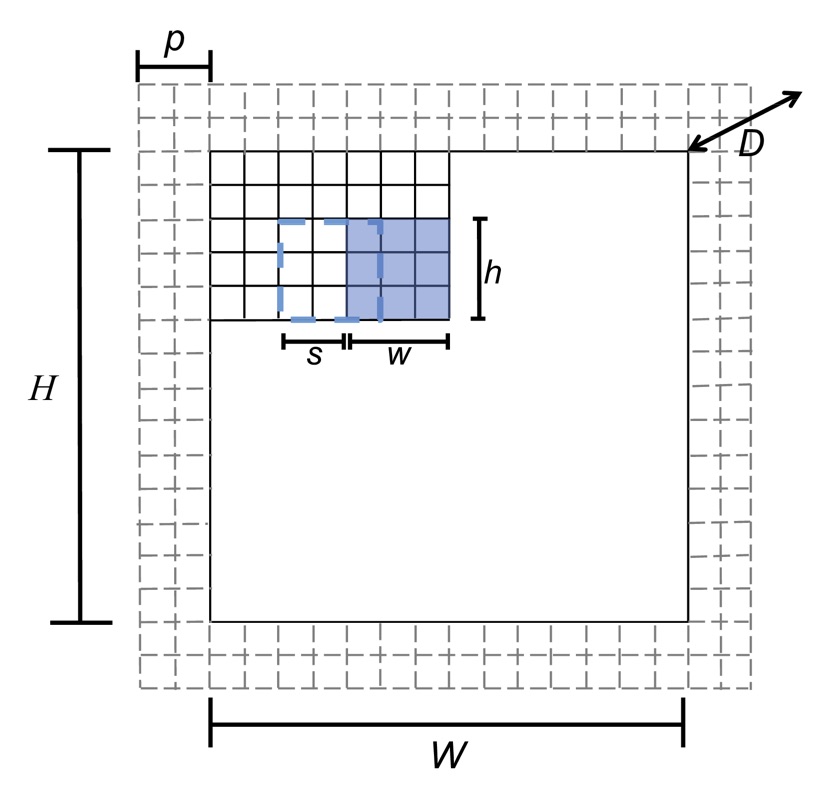
- Input frames are resized to 640×360 pixels and fed into the network to predict a heatmap where peak locations correspond to ball positions.
- The model is trained end-to-end using a heatmap regression loss to minimize the distance between predicted and ground-truth ball coordinates.
- For temporal modeling, multiple consecutive frames are used as input to learn motion patterns and improve robustness against blur and occlusion.
- Transfer learning is applied by fine-tuning the tennis-trained model on badminton data to assess cross-sport generalization.
Experimental results
Research questions
- RQ1Can a deep learning model effectively track high-speed, tiny, and blurry sports balls in standard broadcast videos without requiring high-frame-rate or high-resolution footage?
- RQ2How does using multiple consecutive frames improve tracking performance compared to single-frame inference in terms of precision, recall, and F1-score?
- RQ3To what extent can a model trained on tennis data generalize to badminton tracking, given differences in ball speed, size, and trajectory dynamics?
- RQ4What are the performance limitations of the model when applied to extremely fast-moving objects like badminton, and what factors contribute to high false negative rates?
- RQ5Can a heatmap-based deep learning approach outperform traditional rule-based image processing techniques in complex, real-world sports video environments?
Key findings
- TrackNet achieves a precision of 99.7%, recall of 97.3%, and F1-measure of 98.5% on the tennis video dataset using single-frame input with 10-fold cross-validation.
- When evaluated on a more challenging, partially labeled dataset with 10-fold cross-validation, TrackNet maintains a precision of 95.3%, recall of 75.7%, and F1-measure of 84.3%.
- The model trained on tennis data (TrackNet-Tennis) performs poorly on badminton, achieving only 35.2% F1-measure due to high false negative rates, indicating poor generalization.
- A model fine-tuned on badminton data (TrackNet-Badminton) achieves 85.0% precision, 57.7% recall, and 68.7% F1-measure, showing that domain-specific training improves performance significantly.
- The performance gap between tennis and badminton tracking is attributed to badminton’s higher average speed (417 km/h vs. 253 km/h) and greater speed variability, which degrade visual quality and model generalization.
- TrackNet outperforms conventional image processing algorithms by a large margin, demonstrating the superiority of deep learning with temporal context for tracking fast-moving, small objects.
Read this paper
Open the full text in the Nubint reader and ask about any passage as you read.
Read this paper on NubintThis review was generated by AI from the original paper. Please check the paper before citing it.