
[Paper Review] Transforming Software Development with Generative AI: Empirical Insights on Collaboration and Workflow
This paper investigates how generative AI (GenAI) transforms software development workflows and team collaboration through empirical interviews with 13 developers, data scientists, and designers. It finds that GenAI boosts individual productivity and motivation by automating repetitive tasks, but risks disrupting team learning loops and reducing peer collaboration—though 'pair prompt engineering' emerges as a new collaborative practice.
Generative AI (GenAI) has fundamentally changed how knowledge workers, such as software developers, solve tasks and collaborate to build software products. Introducing innovative tools like ChatGPT and Copilot has created new opportunities to assist and augment software developers across various problems. We conducted an empirical study involving interviews with 13 data scientists, managers, developers, designers, and frontend developers to investigate the usage of GenAI. Our study reveals that ChatGPT signifies a paradigm shift in the workflow of software developers. The technology empowers developers by enabling them to work more efficiently, speed up the learning process, and increase motivation by reducing tedious and repetitive tasks. Moreover, our results indicate a change in teamwork collaboration due to software engineers using GenAI for help instead of asking co-workers which impacts the learning loop in agile teams.
Motivation & Objective
- To understand how generative AI tools like ChatGPT and Copilot are reshaping software development workflows and daily practices.
- To examine the effects of GenAI on team collaboration, particularly the shift from peer consultation to AI-assisted problem solving.
- To assess the implications of GenAI adoption on team learning loops, knowledge sharing, and long-term team performance in agile environments.
- To explore the balance between individual productivity gains and potential declines in collective team dynamics and job satisfaction.
Proposed method
- Conducted semi-structured interviews with 13 professionals across roles including developers, data scientists, designers, and managers in software teams.
- Focused on real-world usage patterns of GenAI tools such as ChatGPT and GitHub Copilot in daily development tasks.
- Analyzed shifts in workflow, collaboration dynamics, and work satisfaction, particularly regarding task automation and reduced peer interaction.
- Identified emergent collaborative practices like 'pair prompt engineering' as a substitute for traditional pair programming.
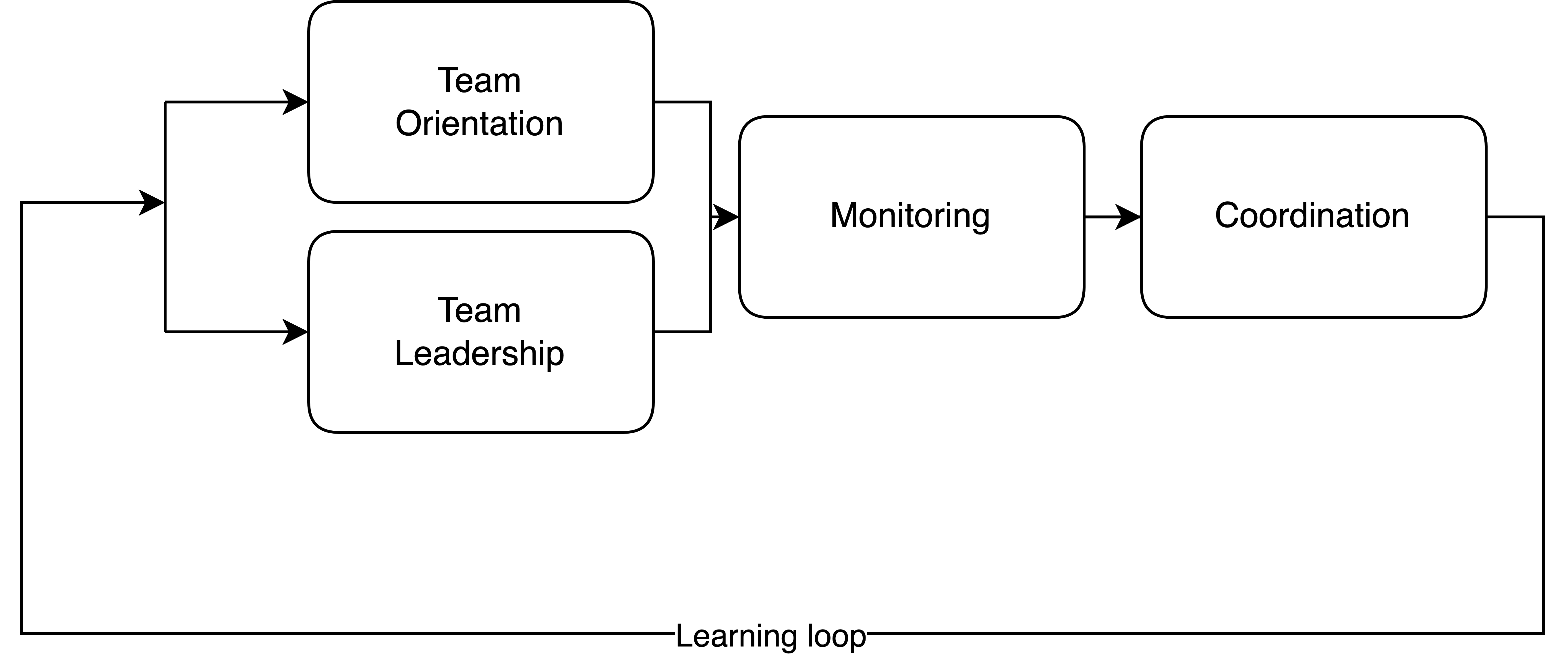
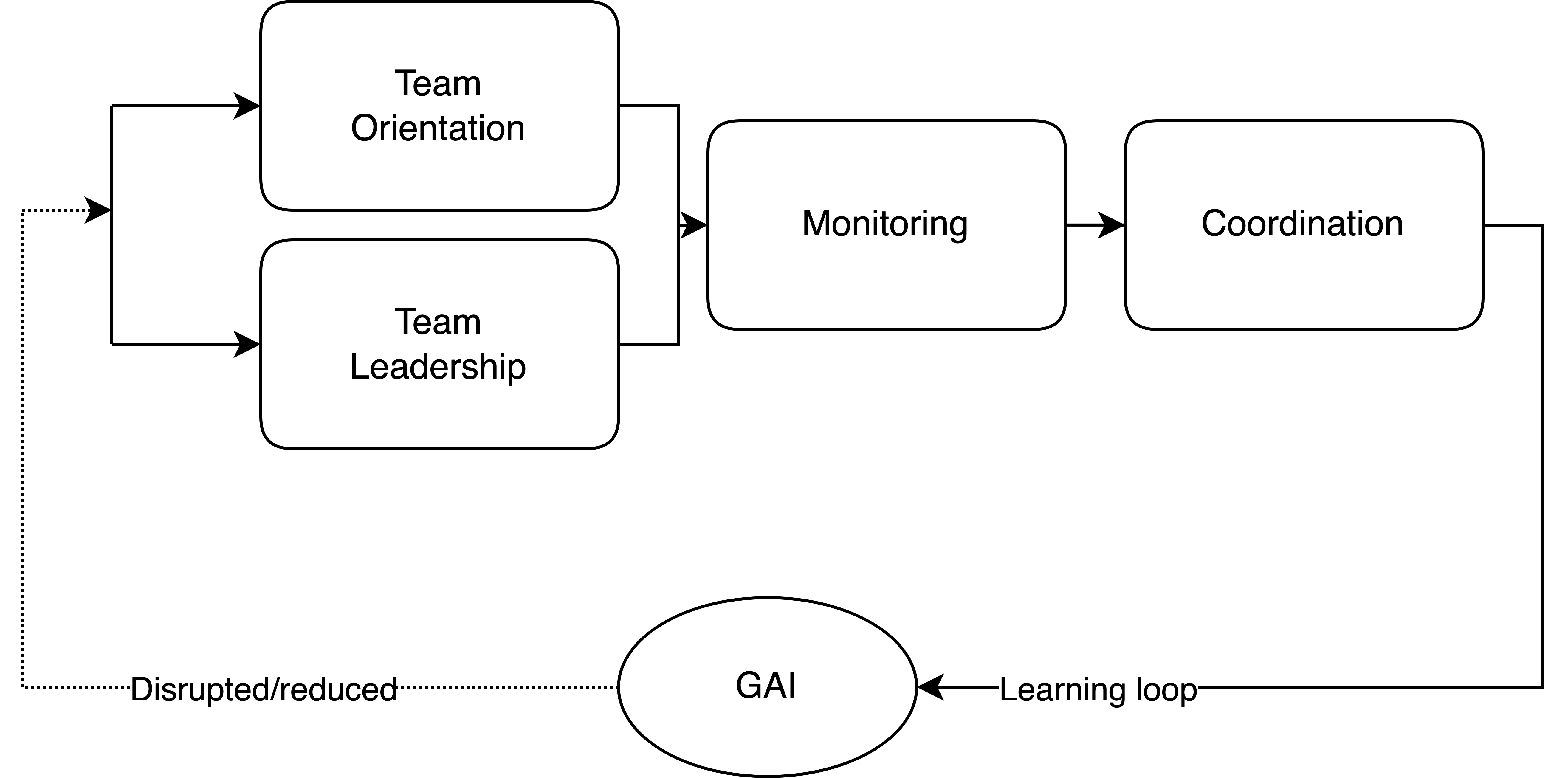
- Mapped changes in team learning loops using conceptual models to assess the impact of AI on knowledge sharing and team cohesion.
- Used qualitative thematic analysis to extract insights on productivity, motivation, and team dynamics.
Experimental results
Research questions
- RQ1How has the integration of generative AI tools altered the daily workflows and task execution patterns of software developers?
- RQ2In what ways does the use of GenAI affect collaboration and knowledge sharing within agile software development teams?
- RQ3What are the perceived impacts of GenAI on individual productivity, motivation, and work satisfaction?
- RQ4How does the shift from human-to-AI consultation affect team learning loops and long-term team performance?
- RQ5What new collaborative practices, such as 'pair prompt engineering', have emerged in response to GenAI adoption?
Key findings
- GenAI significantly reduces the time spent on repetitive coding tasks, enabling developers to focus on higher-level design and problem-solving.
- Developers report increased motivation and perceived productivity due to reduced burden from mundane tasks, aligning with Meyer et al.’s framework of 'good workdays'.
- There is a measurable shift from consulting teammates to consulting GenAI for help, which risks weakening team-based learning and knowledge sharing.
- The traditional team learning loop—where team members learn from each other through collaboration—is disrupted or reduced when AI substitutes peer interaction.
- Despite reduced peer interaction, new collaborative patterns such as 'pair prompt engineering' have emerged, enabling knowledge sharing and collective problem-solving with AI.
- The adoption of GenAI may lead to an isomorphic team structure, where individuals focus on isolated modules, potentially undermining team cohesion and shared ownership.
Read this paper
Open the full text in the Nubint reader and ask about any passage as you read.
Read this paper on NubintThis review was generated by AI from the original paper. Please check the paper before citing it.