
[Paper Review] Why Linguistics Will Thrive in the 21st Century: A Reply to Piantadosi (2023)
The paper critiques Piantadosi's claim that language models refute Chomsky by arguing that (1) unconstrained learning from small data is infeasible under core learning-theoretic limits, (2) LLMs are not scientific theories of language, and (3) multiple realizability means AI mimicry does not equate to human cognition; generative linguistics remains indispensable.
We present a critical assessment of Piantadosi's (2023) claim that "Modern language models refute Chomsky's approach to language," focusing on four main points. First, despite the impressive performance and utility of large language models (LLMs), humans achieve their capacity for language after exposure to several orders of magnitude less data. The fact that young children become competent, fluent speakers of their native languages with relatively little exposure to them is the central mystery of language learning to which Chomsky initially drew attention, and LLMs currently show little promise of solving this mystery. Second, what can the artificial reveal about the natural? Put simply, the implications of LLMs for our understanding of the cognitive structures and mechanisms underlying language and its acquisition are like the implications of airplanes for understanding how birds fly. Third, LLMs cannot constitute scientific theories of language for several reasons, not least of which is that scientific theories must provide interpretable explanations, not just predictions. This leads to our final point: to even determine whether the linguistic and cognitive capabilities of LLMs rival those of humans requires explicating what humans' capacities actually are. In other words, it requires a separate theory of language and cognition; generative linguistics provides precisely such a theory. As such, we conclude that generative linguistics as a scientific discipline will remain indispensable throughout the 21st century and beyond.
Motivation & Objective
- Assess whether modern language models refute native-language learning constraints and Chomsky's view.
- Argue that unconstrained learning from small data is infeasible given computational learning theory results.
- Evaluate the claim that LLMs can be scientific theories of language and cognition.
- Highlight why human linguistic capacity requires a separate theory of language and cognition.
- Argue for the continued indispensability of generative linguistics in the 21st century.
Proposed method
- Critically analyze Piantadosi (2023) claims about LLMs and language learning.
- Draw on computational learning theory (CLT) to illustrate trade-offs between concept families, data presentations, and computational resources.
- Explain how empirical results from LLMs are affected by biases and potential shortcuts in evaluation data.
- Use examples of test sets (e.g., BLiMP) to illustrate how performance may reflect shortcuts rather than true grammar knowledge.
- Discuss multiple realizability to distinguish superficial behavioral similarity from underlying cognitive mechanisms.
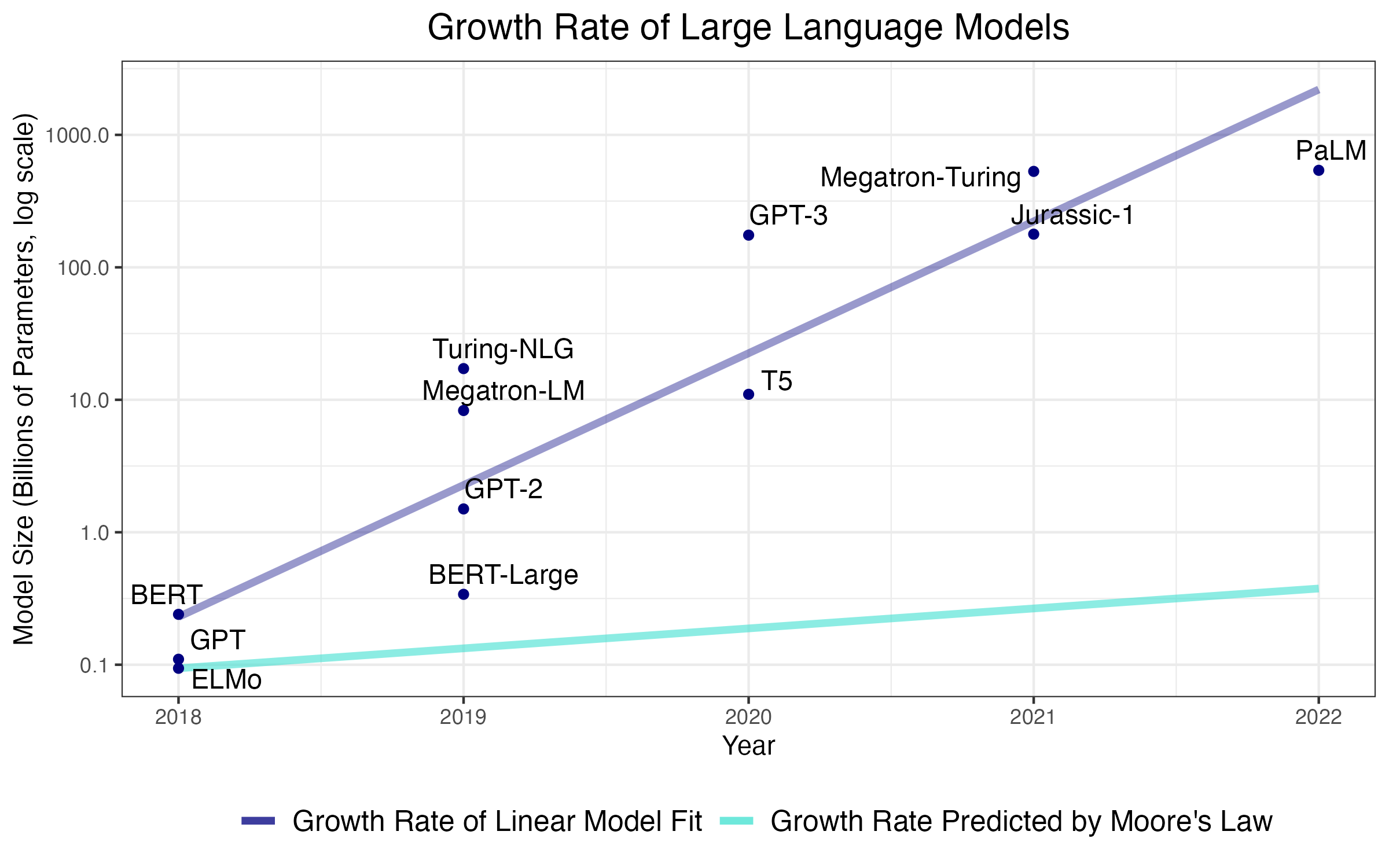
Experimental results
Research questions
- RQ1Do LLMs demonstrate unconstrained learning from data sizes comparable to human exposure?
- RQ2Are LLMs reliable scientific theories of language and cognition, or do they merely predict outputs?
- RQ3Can a separate theory of language and cognition (e.g., generative linguistics) provide interpretable explanations beyond predictions?
- RQ4What evidence is needed to claim that LLMs encode human-like linguistic knowledge rather than exploiting shortcuts?
- RQ5How should we interpret “small data” learning claims in light of computational learning theory?
Key findings
- Unconstrained learning from plausible human-like data sizes is unlikely under fundamental computational laws of learning.
- Large language models rely on non-trivial architectural priors and massive data, challenging the idea they learn like humans from small data.
- Evaluation benchmarks for syntax often permit shortcuts that do not reveal true grammatical knowledge, questioning conclusions about human-like linguistics in LLMs.
- Multiple realizability shows that identical performance does not imply identical underlying mechanisms between AI and human cognition.
- Demonstrates that a separate theory of language and cognition is necessary to interpret AI capabilities, supporting the continued role of generative linguistics.
Read this paper
Open the full text in the Nubint reader and ask about any passage as you read.
Read this paper on NubintThis review was generated by AI from the original paper. Please check the paper before citing it.