
[论文解读] Classification of symmetry-enriched topological quantum spin liquids
本文提出了一套全面的框架,用于分类二维中的对称性丰富化拓扑量子自旋液体(SETQSL),涵盖任意全局对称性——包括晶格、内部、反幺正及任意子置换对称性——适用于所有拓扑序,包括阿贝尔与非阿贝尔情形。该方法利用异常指标和李布-施温格-马蒂斯型异常,区分具有相同对称群但不同晶格实现的SETQSL,成功识别出此前难以触及的相态,如“超越部分子”$ζ_2$ SETQSL。
We present a systematic framework to classify symmetry-enriched topological quantum spin liquids in two spatial dimensions. This framework can deal with all topological quantum spin liquids, which may be either Abelian or non-Abelian, chiral or non-chiral. It can systematically treat a general symmetry, which may include both lattice symmetry and internal symmetry, may contain anti-unitary symmetry, and may permute anyons. The framework applies to all types of lattices, and can systematically distinguish different lattice systems with the same symmetry group using their Lieb-Schultz-Mattis anomalies. We apply this framework to classify $U(1)_{2N}$ chiral states and non-Abelian Ising$^{(ν)}$ states enriched by a $p6 imes SO(3)$ or $p4 imes SO(3)$ symmetry, and $\mathbb{Z}_N$ topological orders and $U(1)_{2N} imes U(1)_{-2N}$ topological orders enriched by a $p6m imes SO(3) imes\mathbb{Z}_2^T$, $p4m imes SO(3) imes\mathbb{Z}_2^T$, $p6m imes\mathbb{Z}_2^T$ or $p4m imes\mathbb{Z}_2^T$ symmetry, where $p6$, $p4$, $p6m$ and $p4m$ are lattice symmetries, while $SO(3)$ and $\mathbb{Z}_2^T$ are spin rotation and time reversal symmetries, respectively. In particular, we identify symmetry-enriched topological quantum spin liquids that are not easily captured by the usual parton-mean-field approach, including examples with the familiar $\mathbb{Z}_2$ topological order.
研究动机与目标
- 开发一种系统化的框架,用于分类二维空间中的对称性丰富化拓扑量子自旋液体(SETQSL)。
- 解决自旋-费米子平均场方法的局限性,特别是针对非阿贝尔及更高-$N$ 任意子拓扑序的情形。
- 整合通用对称群,包括空间群(如 $p6$, $p4m$)、内部对称性($SO(3)$)以及时间反演($\mathbb{Z}_2^T$),包括反幺正与任意子置换对称性。
- 利用李布-舒尔茨-马蒂斯异常区分具有相同全局对称群但不同晶格结构的系统。
- 识别并分类此前难以触及的SETQSL相态,如“超越部分子”$ζ_2$ 拓扑序。
提出的方法
- 采用对拓扑序、全局对称性及其异常(包括晶体异常)的通用表征。
- 应用晶体等价性原理,关联具有相同空间群的不同晶格系统中的异常。
- 利用来自群上同调与对称分数化类的异常指标,检测并分类SET相。
- 使用李布-舒尔茨-马蒂斯(LSM)异常,区分具有相同全局对称性但不同晶格实现的SETQSL。
- 为不同对称群下各种拓扑序构建显式的对称分数化模式与任意子置换规则。
- 将该框架应用于分类在 $p6\times SO(3)$、$p4\times SO(3)$、$p6m\times SO(3)\times\mathbb{Z}_2^T$ 与 $p4m\times \mathbb{Z}_2^T$ 对称性下的 $U(1)_{2N}$、伊辛($\nu$)、$\mathbb{Z}_N$ 与 $U(1)_{2N} \times U(1)_{-2N}$ 拓扑序。
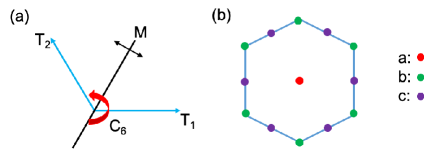
实验结果
研究问题
- RQ1当同时存在晶格对称性与内部对称性——尤其是反幺正与任意子置换对称性时,如何对对称性丰富化拓扑量子自旋液体进行系统分类?
- RQ2李布-舒尔茨-马蒂斯异常在区分具有相同全局对称群但不同晶格结构的SETQSL中起到何种作用?
- RQ3该框架能否分类通过标准部分子平均场方法无法触及的SETQSL,如非阿贝尔或更高-$N$ 任意子序?
- RQ4在 $p4m\times \mathbb{Z}_2^T$ 对称性下,$\mathbb{Z}_2$ 拓扑序的显著对称分数化类与任意子置换模式为何?
- RQ5异常指标与群上同调数据如何决定 $U(1)_{2N}$ 与 $U(1)_{2N}\times U(1)_{-2N}$ 拓扑序的可能SET相?
主要发现
- 该框架成功分类了在 $p6\times SO(3)$ 与 $p4\times SO(3)$ 对称性下的 $U(1)_{2N}$ 手征自旋液体与非阿贝尔伊辛($\nu$)态,包括涉及任意子置换的情形。
- 在 $p4m\times \mathbb{Z}_2^T$ 对称性下,识别出 $\mathbb{Z}_2$ 拓扑序的53种不同对称分数化类,包括此前难以触及的“超越部分子”相态。
- 该方法通过李布-舒尔茨-马蒂斯异常区分具有相同全局对称群但不同晶格结构的系统,解决了SET分类中的歧义。
- 对于 $U(1)_{2N}\times U(1)_{-2N}$ 拓扑序,该框架揭示了在 $p6m\times SO(3)\times\mathbb{Z}_2^T$ 与 $p4m\times \mathbb{Z}_2^T$ 对称性下新的SET相。
- 分析表明,$\mathbb{Z}_N$ 拓扑序在 $N\geq 3$ 时可借助此基于异常的方法系统分类,克服了部分子方法的局限性。
- 该框架检测并分类了时间反演对称性置换任意子的SET相,如在 $p4m\times \mathbb{Z}_2^T$ 系统中,使用来自 $\mathbb{Z}_2$ 上同调的异常指标。
更好的研究,从现在开始
从阅读论文到最终审阅,大幅缩短您的研究时间。
无需绑定信用卡
本解读由 AI 生成,并经人工编辑审核。