
[论文解读] Clay metaBrick-based motif to enhance thermal and acoustic insulation
本文提出了一种陶土元砖,其空心芯部设有开槽并集成赫姆霍兹共振腔,可同时提升热绝缘与声学绝缘性能。通过有限元模拟与实验验证,该元砖在声传输损失方面最高可降低20 dB,热阻提高8%,相较于普通陶土砖,尽管因结构改造导致抗压强度较原砖降低33%,但其抗压强度仍高于建筑标准要求。
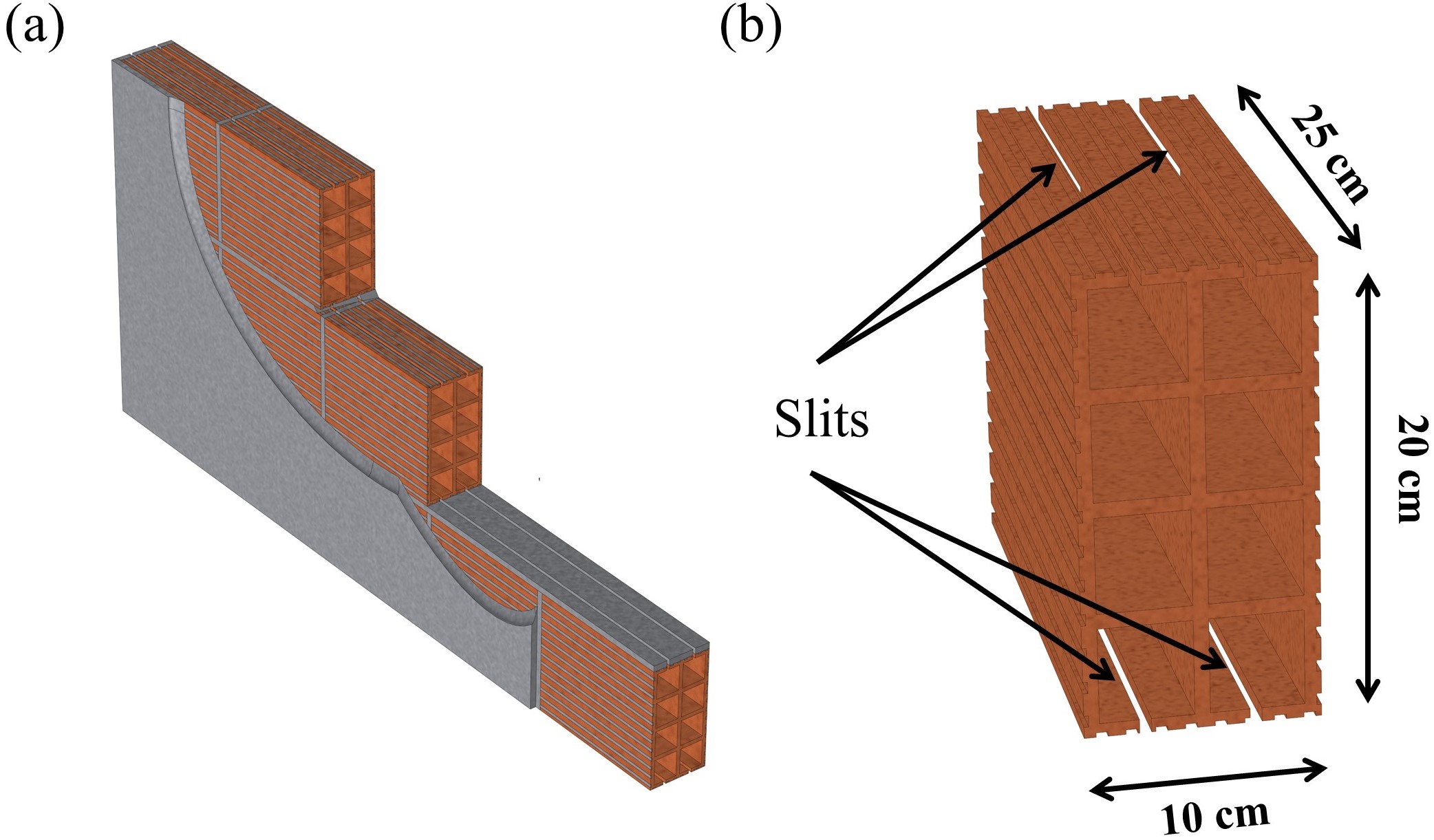
Acoustic metamaterials have gained popularity as promising materials for enhancing noise reduction. Here, we explore the use of metamaterials, based on Helmholtz resonators (HRs), to enhance the performance of standard clay hollow brick. By incorporating HRs in the upper and lower hollows, we transform the standard brick into metaBrick, which is essentially designed based on metamaterial principles. We evaluate the acoustic and thermal performance of walls constructed with clay metaBricks, focusing on sound transmission loss and heat resistance. Both the finite element method and experimental analysis were employed to highlight the performance of metaBricks compared to standard clay bricks. Results show that metaBricks significantly enhance acoustic and thermal insulation, achieving an attenuation of $20$ \si{dB} across a broad frequency range from $500$ to $2500$ \si{Hz} and an $8$\% increase in thermal resistance. However, compressive strength is reduced by $33$\%, though it remains above the standard requirements for building materials. These findings indicate that metaBrick is a promising building material, offering improved sound and thermal insulation.
研究动机与目标
- 应对气候变化与城市噪声污染加剧背景下,对节能与降噪建筑材料日益增长的需求。
- 克服普通空心陶土砖在同时提供高效热绝缘与声学绝缘方面的局限性。
- 开发一种基于超材料的多功能砖体设计,利用赫姆霍兹共振腔控制声波与热传导。
- 通过全尺寸墙体的数值模拟与物理实验,验证元砖的性能表现。
- 通过与建筑行业标准对比测试抗压强度,确保其在承重应用中的结构可行性。
提出的方法
- 设计一种陶土元砖,在空心芯的顶部和底部设置缝隙,形成赫姆霍兹共振腔,以实现声波与热能的共振衰减。
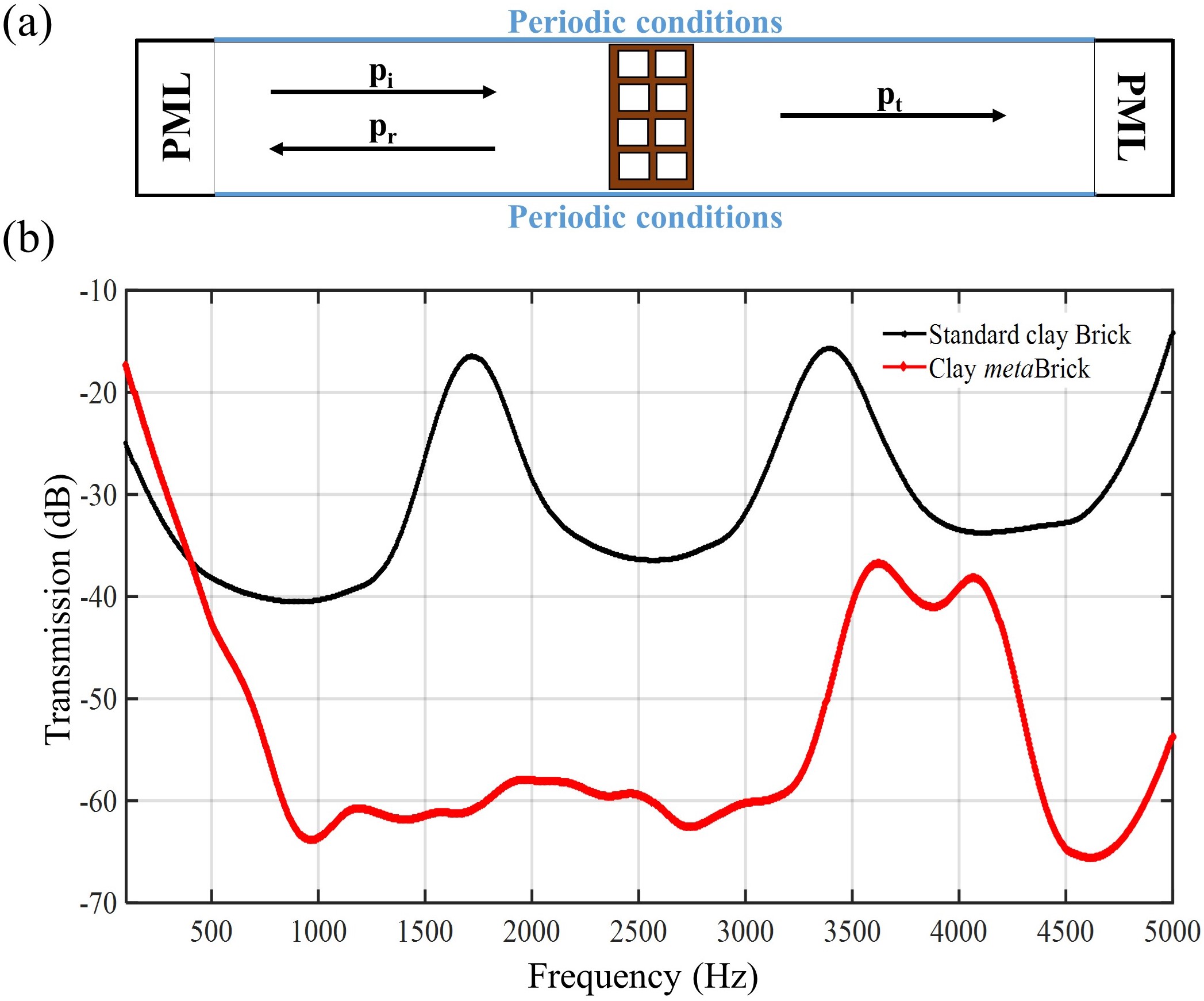
- 采用有限元法(FEM)对元砖的声传输损失与热阻进行数值模拟与分析。
- 使用元砖构建全尺寸墙体,并对声传输、热阻与机械压缩性能进行实验测量。
- 从声学、热学与机械性能三个方面,对比元砖墙体与普通空心陶土砖墙体的性能表现。
- 对元砖与普通砖各四个样品进行抗压强度测试,以测量并比较其抗压强度(单位:MPa)。
- 将超材料概念应用于传统陶土砖,实现其向兼具增强绝缘性能且不牺牲结构完整性的多功能建筑构件的转变。
实验结果
研究问题
- RQ1在陶土砖中集成赫姆霍兹共振腔是否能显著提升其声学与热绝缘性能?
- RQ2与普通空心陶土砖相比,元砖在声传输损失与热阻方面表现如何?
- RQ3结构改造(开槽)对元砖抗压强度的影响程度如何,相较于普通砖?
- RQ4声学与热性能的数值预测是否能在全尺寸墙体配置中通过实验得到验证?
- RQ5元砖的抗压强度是否足以满足实际承重建筑应用的需求?
主要发现
- 元砖在200 Hz至3.5 kHz频率范围内,声传输损失最高可达20 dB,显著优于普通陶土砖。
- 与普通砖墙体相比,元砖墙体的热阻提高了8%,表明其具有更优的隔热性能。
- 元砖的平均抗压强度为12.75 MPa,尽管较普通砖的19.37 MPa降低了33%,但仍超过建筑行业最低标准7.5 MPa。
- 数值模拟与实验结果高度一致,验证了有限元建模方法在预测元砖性能方面的准确性。
- 缝隙的存在使抗压强度降低约7 MPa,但剩余强度仍适用于结构应用。
- 元砖设计展示了一条实现多功能建筑建材的可行路径,可同时满足可持续建筑中对热绝缘与声学绝缘的双重需求。
更好的研究,从现在开始
从阅读论文到最终审阅,大幅缩短您的研究时间。
无需绑定信用卡
本解读由 AI 生成,并经人工编辑审核。