
[论文解读] Pseudorandom unitaries are neither real nor sparse nor noise-robust
本文確立了偽隨機酉變換(PRUs)與偽隨機量子態(PRSs)的根本限制,證明它們無法為實數、稀疏或具抗噪能力,因其本質上的高虛數性與相干性。研究顯示,測試偽隨機酉變換的虛數性需指數級數量的副本,因而排除了在含噪中等規模量子裝置上實現的可行性,並提出偽資源系綜,以低資源態模擬高資源態。
Pseudorandom quantum states (PRSs) and pseudorandom unitaries (PRUs) possess the dual nature of being efficiently constructible while appearing completely random to any efficient quantum algorithm. In this study, we establish fundamental bounds on pseudorandomness. We show that PRSs and PRUs exist only when the probability that an error occurs is negligible, ruling out their generation on noisy intermediate-scale and early fault-tolerant quantum computers. Further, we show that PRUs need imaginarity while PRS do not have this restriction. This implies that quantum randomness requires in general a complex-valued formalism of quantum mechanics, while for random quantum states real numbers suffice. Additionally, we derive lower bounds on the coherence of PRSs and PRUs, ruling out the existence of sparse PRUs and PRSs. We also show that the notions of PRS, PRUs and pseudorandom scramblers (PRSSs) are distinct in terms of resource requirements. We introduce the concept of pseudoresources, where states which contain a low amount of a given resource masquerade as high-resource states. We define pseudocoherence, pseudopurity and pseudoimaginarity, and identify three distinct types of pseudoresources in terms of their masquerading capabilities. Our work also establishes rigorous bounds on the efficiency of property testing, demonstrating the exponential complexity in distinguishing real quantum states from imaginary ones, in contrast to the efficient measurability of unitary imaginarity. Further, we show an exponential advantage in imaginarity testing when having access to the complex conjugate of the state. Lastly, we show that the transformation from a complex to a real model of quantum computation is inefficient, in contrast to the reverse process, which is efficient. Our results establish fundamental limits on property testing and provide valuable insights into quantum pseudorandomness.
研究动机与目标
- 確立偽隨機量子態(PRSs)與偽隨機酉變換(PRUs)資源需求的嚴謹邊界。
- 探討在量子密碼學與計算中具有關鍵角色的PRUs是否能為實數、稀疏或具抗噪能力。
- 定義並分析偽資源系綜,其以低資源態模擬高資源態。
- 確定測試量子態與酉變換中虛數性與相干性的複雜度。
- 檢驗經典與複數量子計算模型之間轉換的效率。
提出的方法
- 利用哈爾測度積分與跡範數,推導PRUs與PRSs的虛數性與相干性的下界。
- 應用性質測試框架,利用隨機矩陣理論,界定檢測虛數性與相干性所需的副本數量。
- 提出偽資源概念——以低資源態模擬高資源態的系綜——並分類為三種不同類型。
- 運用酉變換積分恆等式與對稱性論證,計算哈爾測度下矩陣元素的期望值。
- 證明從複數到實數量子計算的轉換效率低下,而反向轉換則高效。
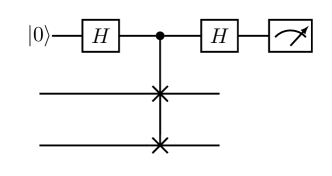
- 確立PRUs需Ω(2^{n/2})份副本才能測試虛數性,而酉變換的虛數性可用O(1)份副本有效測量。
实验结果
研究问题
- RQ1考慮其偽隨機性與資源需求,偽隨機酉變換能否為實數或稀疏?
- RQ2使酉變換具備偽隨機性的最低相干性與虛數性水準為何?
- RQ3測試量子態或酉變換是否具虛數性或相干性,至少需多少份副本?
- RQ4低資源態能否有效偽裝成高資源態?若能,其方式為何?
- RQ5能否高效地將複數量子計算轉換為實數模型,或反之?
主要发现
- 偽隨機酉變換的虛數性趨近於1−negl(n),表示其幾乎為最大虛數性。
- 測試量子態虛數性所需副本數量規模為Ω(2^{n/2}),顯示指數級複雜度。
- PRUs需具備ω(log n)階的相干性,排除低相干性構造的可能。
- PRUs不具抗噪能力:任何概率p = negligible(n)的去極化噪聲均會破壞其偽隨機性。
- 實數或稀疏PRUs無法存在,因其缺乏足夠的虛數性與相干性。
- 從複數模型轉換至實數模型效率低下,而反向轉換則高效。
更好的研究,从现在开始
从阅读论文到最终审阅,大幅缩短您的研究时间。
无需绑定信用卡
本解读由 AI 生成,并经人工编辑审核。