
[论文解读] Similarity-Based Parameter Transferability in the Quantum Approximate Optimization Algorithm
本文提出了一种基于相似性的框架,通过利用子图结构和图的奇偶性,预测并实现最优QAOA参数在不同MaxCut问题实例间的可转移性。结果表明,对小图(例如N=6)优化得到的参数可被转移至大图(最大至N=256),仅造成约1–2%的近似比损失,显著加速了QAOA优化过程,并减少了对变分参数搜索的依赖。
The quantum approximate optimization algorithm (QAOA) is one of the most promising candidates for achieving quantum advantage through quantum-enhanced combinatorial optimization. A near-optimal solution to the combinatorial optimization problem is achieved by preparing a quantum state through the optimization of quantum circuit parameters. Optimal QAOA parameter concentration effects for special MaxCut problem instances have been observed, but a rigorous study of the subject is still lacking. In this work we show clustering of optimal QAOA parameters around specific values; consequently, successful transferability of parameters between different QAOA instances can be explained and predicted based on local properties of the graphs, including the type of subgraphs (lightcones) from which graphs are composed as well as the overall degree of nodes in the graph (parity). We apply this approach to several instances of random graphs with a varying number of nodes as well as parity and show that one can use optimal donor graph QAOA parameters as near-optimal parameters for larger acceptor graphs with comparable approximation ratios. This work presents a pathway to identifying classes of combinatorial optimization instances for which variational quantum algorithms such as QAOA can be substantially accelerated.
研究动机与目标
- 解决QAOA在大规模组合优化中变分参数优化带来的计算瓶颈问题。
- 识别在何种条件下,一个图的最优QAOA参数可被有效重用于另一个图。
- 基于局部图属性(如子图构成和节点度奇偶性)建立参数可转移性的预测框架。
- 通过从小型、经典可解实例中转移参数,减少在大型量子设备上耗时的参数优化需求。
- 通过最小化变分优化步骤,加速近场量子硬件上的QAOA部署。
提出的方法
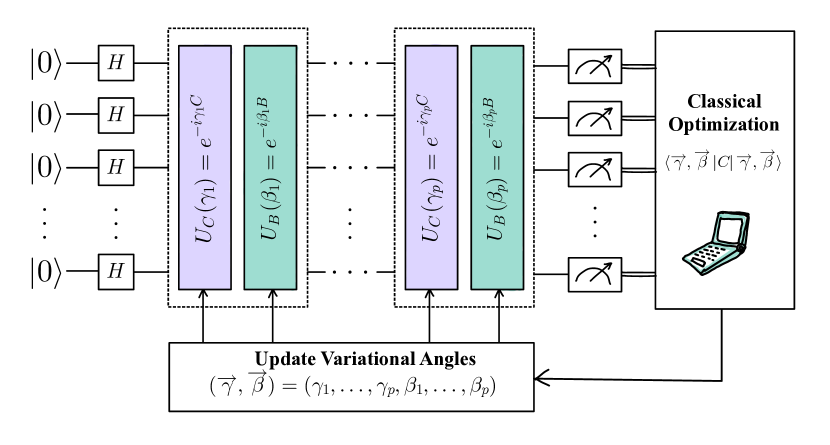
- 作者使用QAOA电路深度p=1,通过分析捐赠图与接收图之间的子图级相似性,聚焦于定义子图的局部图结构(光锥)。
- 利用QTensor张量网络模拟器计算子图的QAOA能量,实现在最多1,000个节点的图上快速评估。
- 通过将捐赠图上优化参数的QAOA能量与经典最优解进行比较,以近似比作为可转移性的评估指标。
- 图奇偶性——由节点整体度奇偶性定义——被用作全局相似性度量,以预测捐赠-接收图对之间的可转移性。
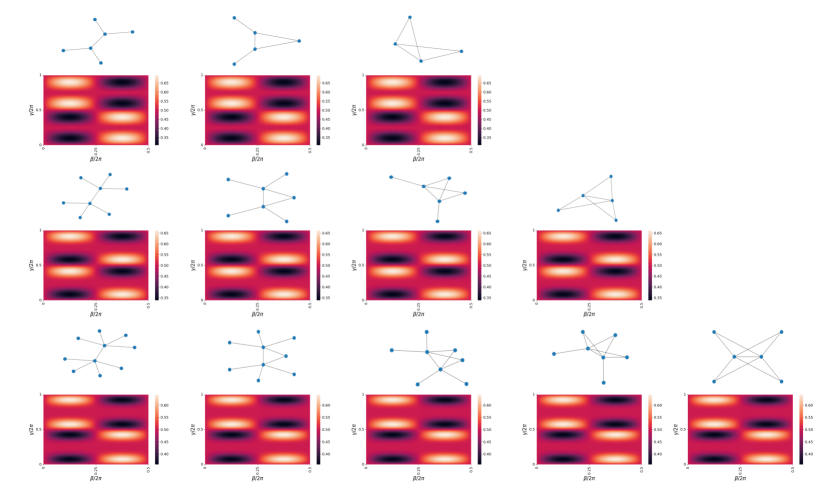
- 构建了最大节点连通度d_max=6的子图可转移性图,实现参数重用的系统性预测。
- 该方法在不同规模的随机图(6至256个节点)上进行了验证,参数重用测试覆盖了偶奇偶性和奇奇偶性图类。
实验结果
研究问题
- RQ1能否将小图上优化得到的最优QAOA参数转移至大图,且近似比损失极小?
- RQ2子图级相似性,特别是光锥结构的相似性,在多大程度上可预测QAOA实例间的参数可转移性?
- RQ3图奇偶性(由节点度的奇偶性定义)在多大程度上决定了捐赠图与接收图之间参数转移的成功?
- RQ4是否可以在不需在大图上进行完整优化的前提下预测参数可转移性,从而加速QAOA执行?
- RQ5尽管子图复杂度随QAOA电路深度增加(p > 1),该方法在更高深度下是否仍保持有效性?
主要发现
- 从6个节点的随机图中优化得到的最优QAOA参数,在转移至64、128和256个节点的随机图时,近似比与最优解仅相差1–2%。
- 在偶正则与奇正则子图之间,参数可转移性表现一致良好;但偶正则与奇正则配对之间则表现出较差的可转移性。
- 子图相似性与奇偶性相似性被发现具有强相关性,二者共同作用可实现对可转移性的准确预测。
- QTensor张量网络模拟器使在p=1时对大规模图(N~1,000)实现快速能量评估成为可能,使子图级分析在计算上可行。
- 即使捐赠图远小于接收图,参数可转移性依然稳健,无需将捐赠图规模扩大。
- 该方法显著减少了在大图上进行变分优化的需求,甚至在有利情况下可完全省去优化步骤。
更好的研究,从现在开始
从阅读论文到最终审阅,大幅缩短您的研究时间。
无需绑定信用卡
本解读由 AI 生成,并经人工编辑审核。