
[论文解读] Stability of local tip pool sizes
本文提出一个连续时间随机模型,用于分析在异构且随机的网络延迟条件下,基于DAG的分布式账本中本地tip池大小的稳定性。证明了tip池大小是遍历的,并收敛到一个平稳分布,且池大小的定量边界取决于延迟分布和节点活跃度速率。
In distributed ledger technologies (DLTs) with a directed acyclic graph (DAG) data structure, a block-issuing node can decide where to append new blocks and, consequently, how the DAG grows. This DAG data structure is typically decomposed into two pools of blocks, dependent on whether another block already references them. The unreferenced blocks are called the tips. Due to network delay, nodes can perceive the set of tips differently, giving rise to local tip pools. We present a new mathematical model to analyse the stability of the different local perceptions of the tip pools and allow heterogeneous and random network delay in the underlying peer-to-peer communication layer. Under natural assumptions, we prove that the number of tips is ergodic, converges to a stationary distribution, and provide quantitative bounds on the tip pool sizes. We conclude our study with agent-based simulations to illustrate the convergence of the tip pool sizes and the pool sizes' dependence on the communication delay and degree of centralization.
研究动机与目标
- 在现实的网络延迟条件下,对基于DAG的分布式账本中本地tip池的演化进行建模。
- 通过引入异构且随机的通信延迟,弥补先前研究的空白,与以往采用确定性延迟的模型形成对比。
- 在连续时间框架下,建立本地tip池大小的理论稳定性特性——特别是平稳性与遍历性。
- 量化延迟分布与节点活跃度异质性对tip池大小动态的影响。
- 为推导实际基于DAG的系统中期望tip池大小与收敛速度的边界提供理论基础。
提出的方法
- 将区块创建与传播建模为具有泊松到达和随机网络延迟的连续时间、空间分布的随机过程。
- 基于区块引用引入再生结构,以分析长期行为,并证明tip池大小的平稳性与遍历性。
- 使用带标记点过程表示区块创建与传播,其中标记编码节点身份、引用集与传输延迟。
- 应用随机耦合与负漂移分析,推导在一般延迟分布下tip池大小的集中边界。
- 通过代理模型仿真验证理论结果,仿真中采用不同的延迟分布(随机与恒定)和节点速率异质性(齐夫分布)。
- 利用再生理论与指数矩边界,提出tip池大小波动的大偏差与极值结果的理论扩展。
实验结果
研究问题
- RQ1异构且随机的网络延迟如何影响基于DAG的分布式账本中本地tip池的稳定性和大小?
- RQ2在何种条件下,节点本地池中的tip数量会收敛到平稳分布?
- RQ3节点活跃度速率异质性(例如齐夫分布速率)对本地tip池大小变化有何影响?
- RQ4与恒定延迟相比,消息延迟的随机性在tip池大小稳定性方面有何差异?
- RQ5能否从该模型中推导出期望tip池大小与收敛速度的定量边界?
主要发现
- 在温和且自然的假设下,节点本地池中的tip数量是遍历的,并收敛到平稳分布。
- 该模型证明了tip池大小的渐近负漂移,意味着其围绕一个稳定均值发生集中。
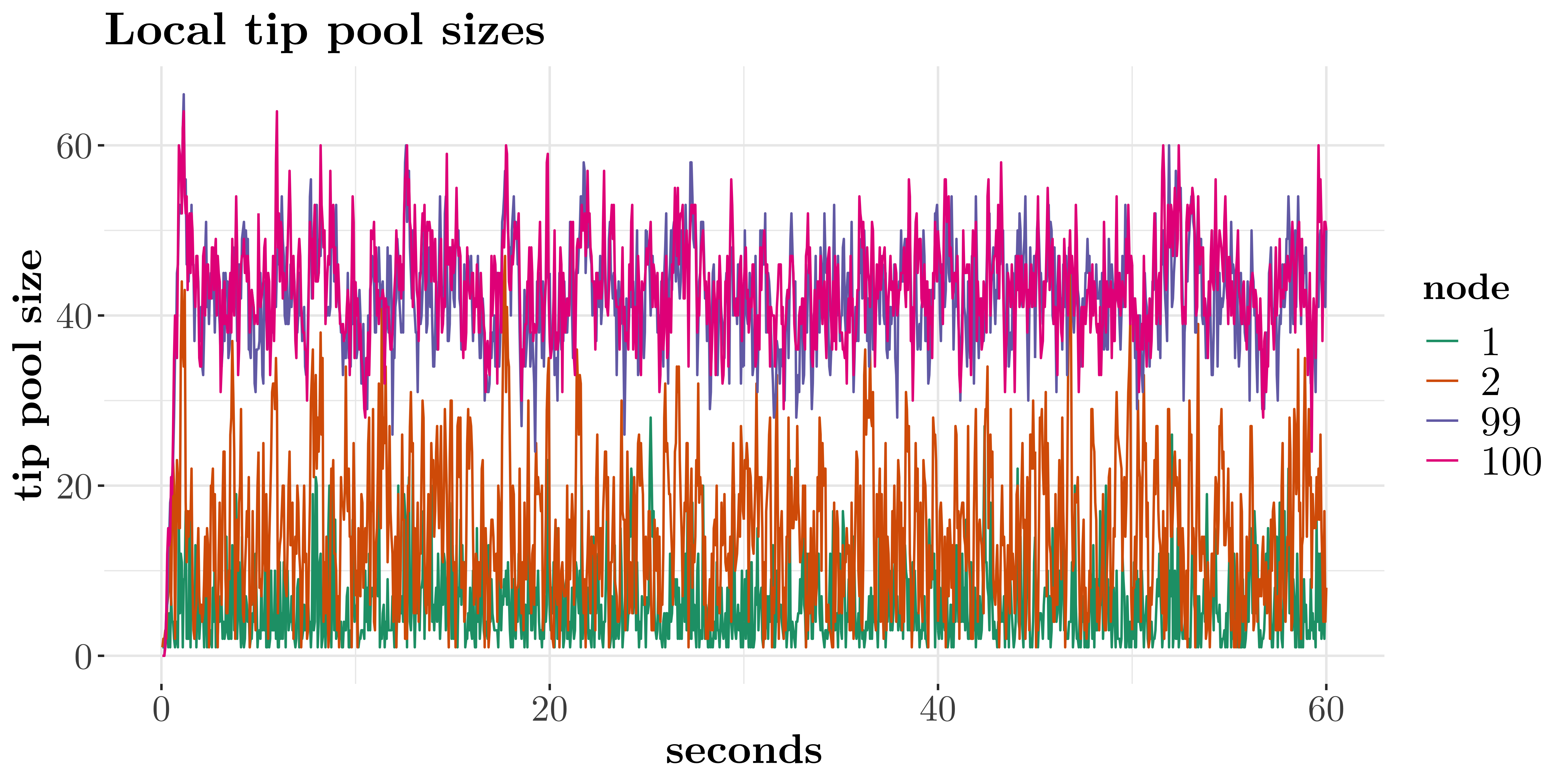
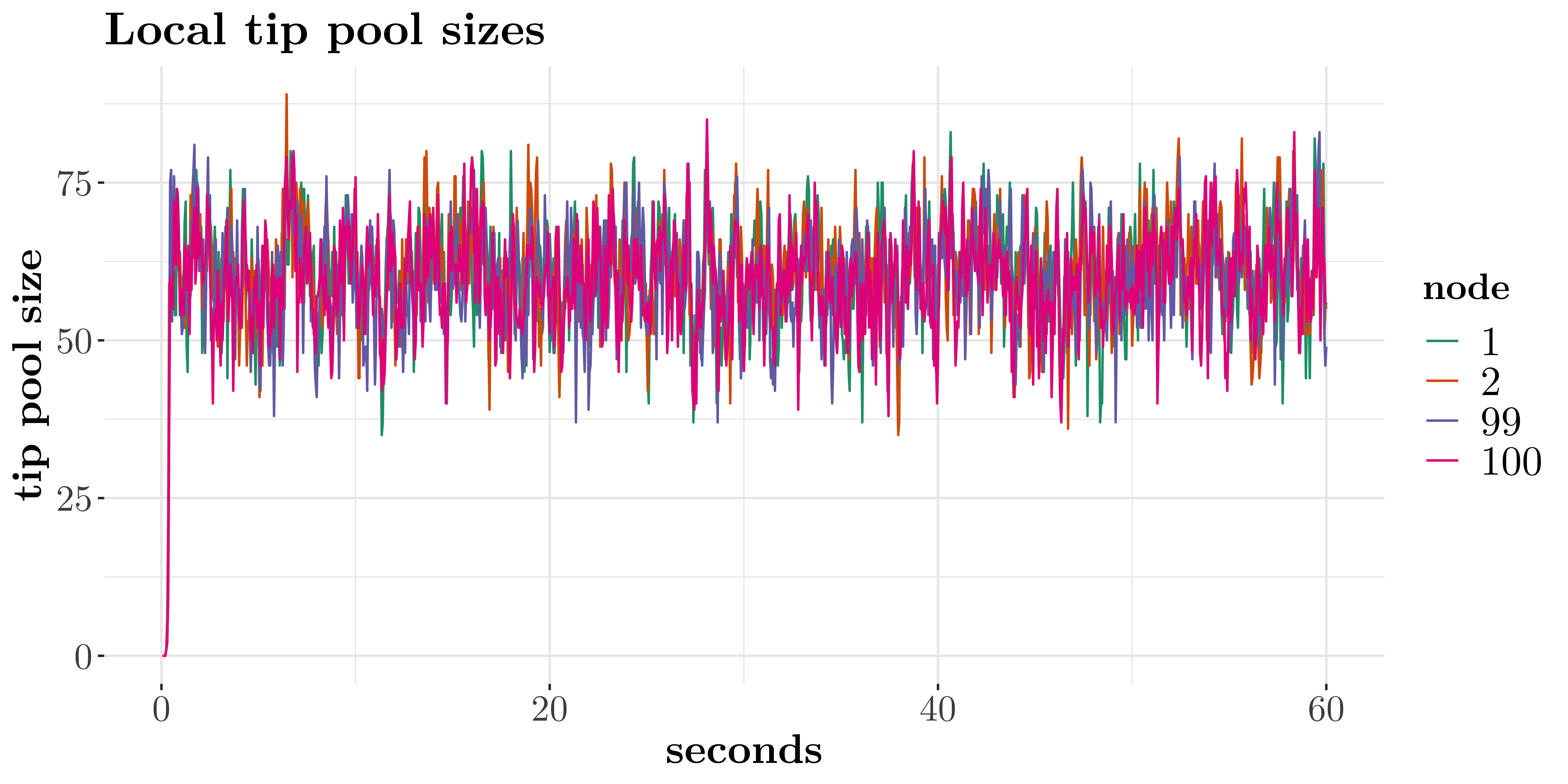
- 即使平均延迟相同,随机网络延迟也导致比恒定延迟更小且更稳定的tip池。
- 异质的节点活跃度速率(例如齐夫分布)导致本地tip池大小差异更大,且通常更小。
- 仿真结果证实了快速收敛到平稳状态,tip池大小强烈依赖于延迟分布与节点速率异质性。
- 再生结构使得理论可扩展至tip池大小波动的大偏差原理与极值理论。
更好的研究,从现在开始
从阅读论文到最终审阅,大幅缩短您的研究时间。
无需绑定信用卡
本解读由 AI 生成,并经人工编辑审核。