
[论文解读] Towards Effective GenAI Multi-Agent Collaboration: Design and Evaluation for Enterprise Applications
本文提出了一种基于大语言模型驱动的代理的分层多代理协作框架,用于企业应用,通过结构化的任务委派和优化的通信实现协调式问题求解。在软件开发和抵押贷款处理等复杂领域,该框架实现了90%的目标成功率,其中通过负载引用机制使代码任务性能提升23%,通信开销减少27%。
AI agents powered by large language models (LLMs) have shown strong capabilities in problem solving. Through combining many intelligent agents, multi-agent collaboration has emerged as a promising approach to tackle complex, multi-faceted problems that exceed the capabilities of single AI agents. However, designing the collaboration protocols and evaluating the effectiveness of these systems remains a significant challenge, especially for enterprise applications. This report addresses these challenges by presenting a comprehensive evaluation of coordination and routing capabilities in a novel multi-agent collaboration framework. We evaluate two key operational modes: (1) a coordination mode enabling complex task completion through parallel communication and payload referencing, and (2) a routing mode for efficient message forwarding between agents. We benchmark on a set of handcrafted scenarios from three enterprise domains, which are publicly released with the report. For coordination capabilities, we demonstrate the effectiveness of inter-agent communication and payload referencing mechanisms, achieving end-to-end goal success rates of 90%. Our analysis yields several key findings: multi-agent collaboration enhances goal success rates by up to 70% compared to single-agent approaches in our benchmarks; payload referencing improves performance on code-intensive tasks by 23%; latency can be substantially reduced with a routing mechanism that selectively bypasses agent orchestration. These findings offer valuable guidance for enterprise deployments of multi-agent systems and advance the development of scalable, efficient multi-agent collaboration frameworks.
研究动机与目标
- 解决在企业环境中设计高效多代理协作协议的挑战。
- 提升在单个代理难以应对的复杂多维度问题中的目标成功率。
- 评估协调与路由机制在效率、可扩展性及现实适用性方面的表现。
- 构建一个包含手工设计的企业场景的基准测试框架,以实现对多代理系统的可靠评估。
- 优化代理间通信,降低延迟与开销,特别是在代码密集型工作负载中。
提出的方法
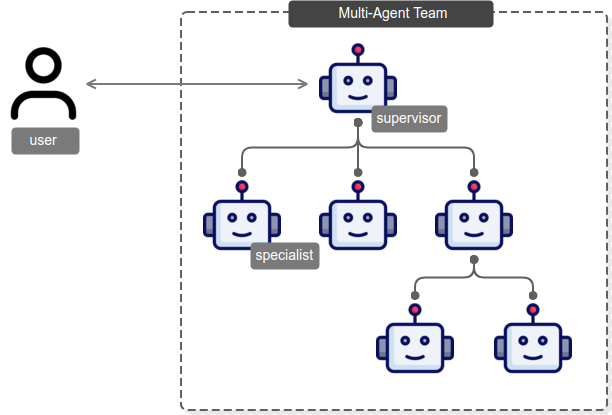
- 提出一种分层代理架构,由中央协调代理负责任务规划、委派与协调。
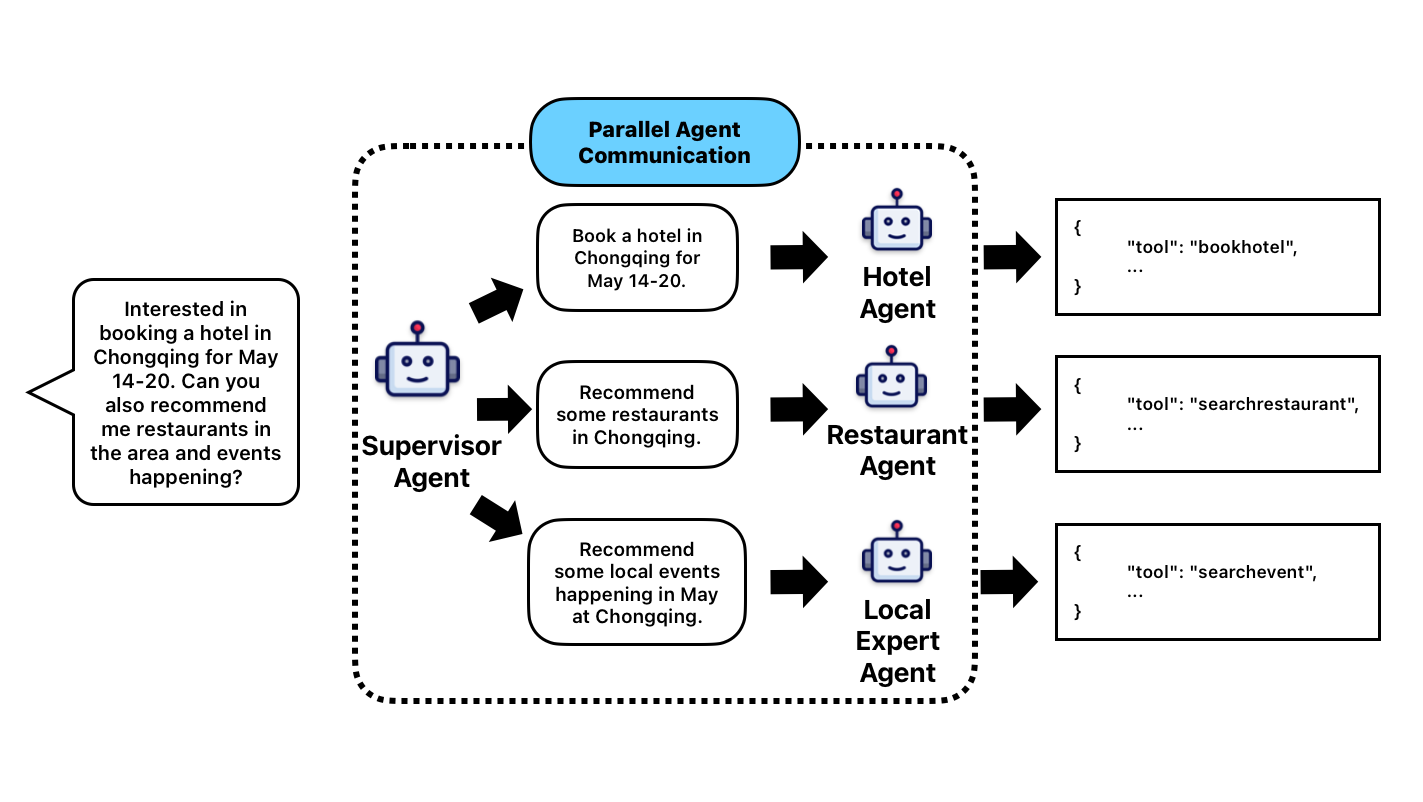
- 采用一种协调模式,支持代理间并行通信与负载引用,以共享大型内容块(如代码片段)。
- 引入一种路由模式,通过选择性跳过编排流程来减少延迟,避免不必要的代理跳转。
- 采用基于断言的基准测试方法,结合自动化的LLM评估,以衡量目标达成率与一致性。
- 在三个企业领域(旅行、抵押贷款、软件开发)中,均使用Claude 3.5 Sonnet(20241022)模型作为协调代理与专业代理。
- 发布一个公开的基准数据集,包含手工设计的场景,以支持可复现性与进一步研究。
实验结果
研究问题
- RQ1如何通过分层多代理协作框架有效协调专业化代理,以解决复杂的企业问题?
- RQ2在代码密集型任务中,通信机制(尤其是负载引用)对性能与效率有何影响?
- RQ3在多样化的企业领域中,多代理协作与单代理方法相比,目标成功率有何差异?
- RQ4在不牺牲可靠性的前提下,路由优化能在多大程度上降低多代理协调中的延迟?
- RQ5与人工判断相比,自动化的LLM评估框架在衡量目标达成率方面的有效性如何?
主要发现
- 与单代理方法相比,多代理协作在基准测试场景中使目标成功率最高提升了70%。
- 负载引用机制使代码密集型任务的目标成功率提升23%,并使每轮通信的平均开销降低27%。
- 在使用Claude 3.5 Sonnet模型时,该系统在所有评估的企业领域中实现了90%的整体目标成功率。
- 一种选择性跳过代理编排的路由机制显著降低了延迟,尤其在复杂工作流中表现突出。
- 自动化的LLM评估框架与人工标注的成功率高度一致(经人工判断验证),实现了可扩展且可靠的基准测试。
- 该框架在软件开发领域表现出色,而单代理方法在该领域中的目标成功率最高下降了37%。
更好的研究,从现在开始
从阅读论文到最终审阅,大幅缩短您的研究时间。
无需绑定信用卡
本解读由 AI 生成,并经人工编辑审核。