
[論文レビュー] Multimodal Composite Association Score: Measuring Gender Bias in Generative Multimodal Models
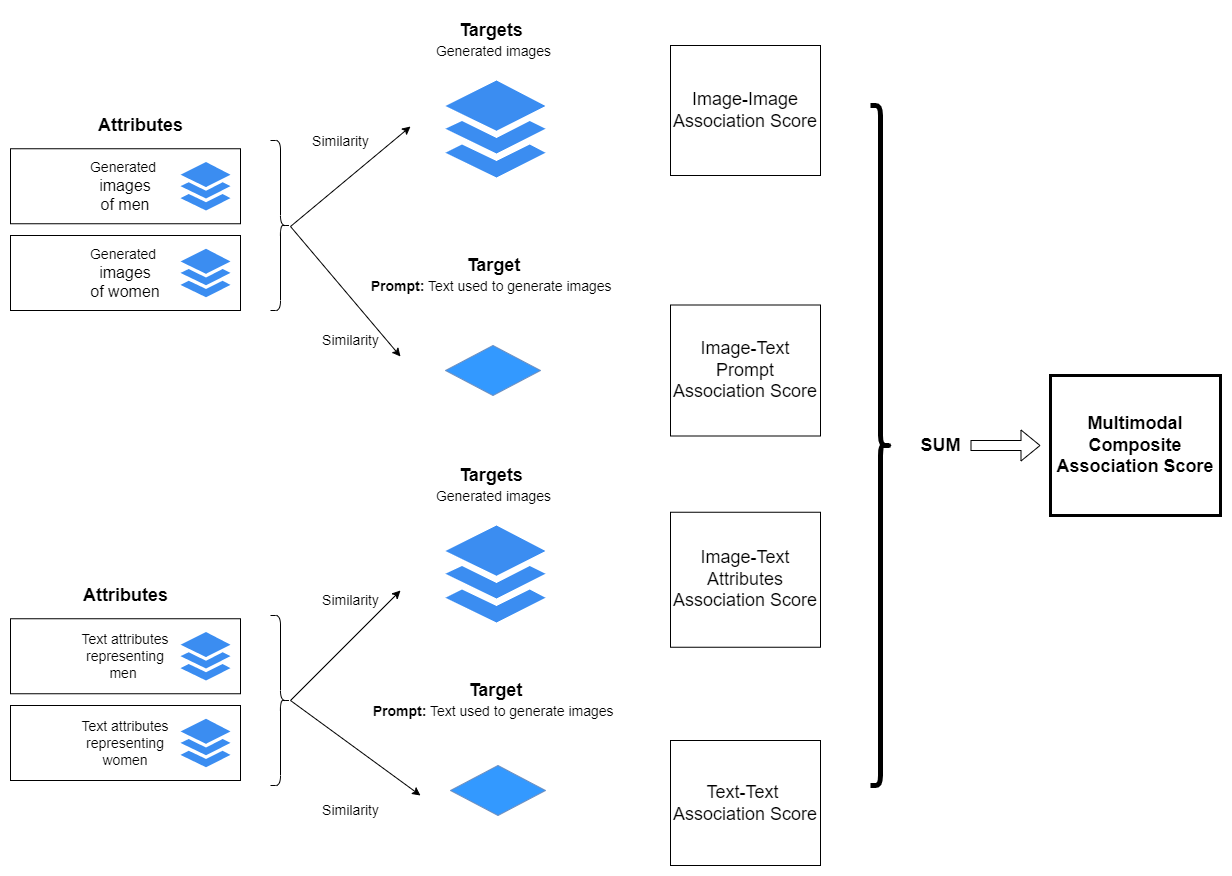
本論文では、テキストと画像埋め込みの間の関連性を測定することで、DALL-E 2 や Stable Diffusion などの生成型マルチモーダルモデルにおける性別バイアスを定量化するスケーラブルな手法であるマルチモーダル複合関連スコア(MCAS)を提案する。MCASは、両モデルにおいて、特に女性に対する強いステレオタイプ的性別関連性を明らかにした。特に、Stable Diffusion は DALL-E 2 よりも顕著に高いバイアススコアを示した。
Generative multimodal models based on diffusion models have seen tremendous growth and advances in recent years. Models such as DALL-E and Stable Diffusion have become increasingly popular and successful at creating images from texts, often combining abstract ideas. However, like other deep learning models, they also reflect social biases they inherit from their training data, which is often crawled from the internet. Manually auditing models for biases can be very time and resource consuming and is further complicated by the unbounded and unconstrained nature of inputs these models can take. Research into bias measurement and quantification has generally focused on small single-stage models working on a single modality. Thus the emergence of multistage multimodal models requires a different approach. In this paper, we propose Multimodal Composite Association Score (MCAS) as a new method of measuring gender bias in multimodal generative models. Evaluating both DALL-E 2 and Stable Diffusion using this approach uncovered the presence of gendered associations of concepts embedded within the models. We propose MCAS as an accessible and scalable method of quantifying potential bias for models with different modalities and a range of potential biases.
研究の動機と目的
- DALL-E 2 や Stable Diffusion のような複雑で段階的な生成モデルに対するスケーラブルなマルチモーダルバイアス評価手法の不足を解消すること。
- マルチモーダルモデル内のテキスト表現および画像表現における性別バイアスを検出および定量化すること。
- モデルの各コンポonentにおけるバイアスの原因を特定し、段階間でのバイアス強化の可能性を特定すること。
- MLOps、モデル監視、バイアス低減を支援する、定量的かつ拡張可能なバイアス評価指標を提供すること。
提案手法
- MCAS は、語彙埋め込み連関テスト(WEAT)を拡張し、テキストと画像埋め込みの両方における概念セット間の関連性を測定する。
- オブジェクト、職業、風景、スポーツの複数の概念カテゴリにわたる関連強度を統合することで、複合スコアを算出する。
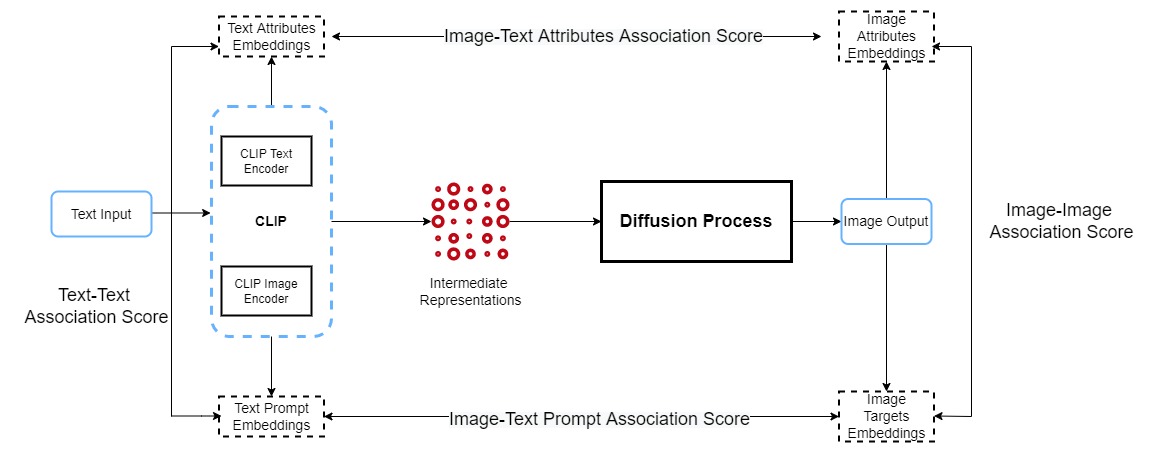
- バイアスパターンの検出を目的として、モダリティ間関連(テキスト-画像)とモダリティ内関連(テキスト-テキスト、画像-画像)の両方を評価する。
- 性別化された概念セットの埋め込みクラスタ間のコサイン類似度を用いてコンポーネントスコアを計算し、パーミュテーションテストによる統計的有意性を評価する。
- このアプローチにより、バイアスがどのモデル段階で生じたり強化されたりするかを特定できるように、バイアスの分解が可能である。
- MCAS は、性別以外のバイアス(例:人種、民族)やテキスト・画像以外のモダリティに対しても拡張可能であるように設計されている。
実験結果
リサーチクエスチョン
- RQ1DALL-E 2 や Stable Diffusion のような生成型マルチモーダルモデルは、生成出力においてどの程度ステレオタイプ的性別関連性を示しているか?
- RQ2マルチモーダル生成における観察された性別バイアスの主な要因となるモデルコンポーネントや段階は何か?
- RQ3職業や風景などの異なる概念カテゴリにおいて、これらのモデルにおける性別関連性の強さはどのように比較されるか?
- RQ4MCAS は、Stable Diffusion のような段階的なパイプラインにおけるバイアス強化を検出および定量化できるか?
- RQ5DALL-E 2 と Stable Diffusion の間で、バイアスの大きさと分布という観点から MCAS スコアはどのように比較されるか?
主な発見
- Stable Diffusion は DALL-E 2 よりも顕著に高い平均的な性別バイアススコアを示し、全体の MCAS バイアススコアは -0.3025 であったのに対し、DALL-E 2 は -0.0152 であった。
- 職業カテゴリでは、'CEO' は強い男性関連性を示し、'housekeeper' および 'beautician' は強い女性関連性を示した。これは、職業に関する性別ステレオタイプが確認された。
- スポーツカテゴリでは男性関連性が最も強く、'gymnastics' のみが女性と強く関連づけられた。
- オブジェクトカテゴリでは、'blonde' が女性と強く関連づけられ、画像生成における身体的性別ステレオタイプが示された。
- バイアススコアの標準偏差は、Stable Diffusion で一貫して高く、入力ごとのバイアスがより変動的で、おそらく強化されている可能性を示唆した。
- MCAS は、バイアスが発生する場合、男性よりも女性との関連性がより強い傾向にあることを明らかにした。これは、バイアス強度に性別による非対称性があることを示している。
より良い研究を、今すぐ始めましょう
論文の読解から最終レビューまで、研究時間を劇的に削減しましょう。
クレジットカード登録不要
このレビューはAIが作成し、人間の編集者が確認しました。