
[論文レビュー] The vertical structure of T Tauri accretion disks II. Physical conditions in the disk
本稿では、垂直放射平衡を平面平行近似で取り扱った薄い円盤近似を用いて、T テウリ星の降着円盤内の物理的状態を自己無矛盾に計算する解析的モデルを提示する。粘性散逸と星からの照射による複数の加熱源を組み込み、温度、圧力、密度の解析的公式を導出することで、正確なスペクトルエネルギー分布(SED)および干渉測定観測量を得ることができ、主な結果として円盤のふくらみ(flaring)によりSEDが平坦化され、内側円盤構造に対する物理的制約が向上することを示している。
We present a self-consistent analytical model for the computation of the physical conditions in a steady quasi-Keplerian accretion disk. The method, based on the thin disk approximation, considers the disk as concentric cylinders in which we treat the vertical transfer as in a plane-parallel medium. The formalism generalizes a work by Hubeny (1990), linking the disk temperature distribution to the local energy dissipation and leads to analytical formulae for the temperature distribution which help to understand the behaviour of the radiation propagated inside the disks. One of the main features of our new model is that it can take into account many heating sources. We apply the method first to two sources: viscous dissipation and stellar irradiation. We show that other heating sources like horizontal transfer or irradiation from the ambiant medium can also be taken into account. Using the analytical formulation in the case of a modified Shakura & Sunyaev radial distribution that allow the accretion rate to be partly self-similar in the inner region, and, for an alpha and beta prescription of the viscosity, we obtain two-dimensional maps of the temperature, pressure and density in the close environment of low mass young stars. We use these maps to derive the observational properties of the disks such as spectral energy distributions, high resolution spatial images or visibilities in order to underline their different behaviours under different input models.
研究の動機と目的
- 複数の加熱源を考慮したT テウリ星降着円盤の垂直構造を物理的に自己無矛盾にモデル化すること。
- 平面平行幾何における放射平衡を用いて、円盤内の温度、圧力、密度分布の解析的表現を導出すること。
- SED、高分解能画像、干渉測定可視度といった観測データの解釈を、恣意的なべき乗則仮定の代わりに物理的に根拠のあるモデルで改善すること。
- 磁気場や粘性輸送を将来的に組み込むための、エネルギー源をモジュラー形式で扱う基礎を築くこと。
提案手法
- 薄い円盤近似を用い、垂直放射平衡を平面平行媒質としてモデル化し、Hubeny (1990) の形式を拡張する。
- 局所的なエネルギー散逸と放射出力の関係を結びつけることで、Eddington近似を用いて垂直温度プロファイルの解析的公式を導出する。
- エネルギー分额を全散逸に正規化した重み付き和を用いて、複数の加熱源(例:粘性散逸、星からの照射)を統合する。
- 自己相似的降着を内側円盤領域で可能にする修正されたShakura & Sunyaevの径方向粘性プロファイルを適用し、αおよびβの粘性規定を用いる。
- 導出した物理マップから、スペクトルエネルギー分布(SED)、空間的画像、干渉測定可視度といった観測量を計算する。
- 各エネルギー源を独立して取り扱う形式を採用することで、将来的に磁気場や非局所的エネルギー輸送を組み込むことが可能になる。
実験結果
リサーチクエスチョン
- RQ1粘性散逸と星からの照射という複数の加熱源を組み込むことで、T テウリ星円盤の垂直温度構造はどのように変化するか?
- RQ2径方向の温度勾配と尺度高さの変化によって引き起こされる円盤のふくらみ(flaring)は、標準的な薄い円盤モデルと比較して、スペクトルエネルギー分布(SED)をどの程度平坦化するか?
- RQ3放射平衡とエネルギー収支に基づいて、円盤内での温度、圧力、密度の解析的公式を一貫して導出できるか?その結果、観測データとの直接比較が可能になるか?
- RQ4異なる粘性規定(αおよびβ)は、円盤の径方向および垂直構造、およびその観測的特徴にどのように影響を与えるか?
- RQ5このモデルは、モンテカルロ散乱コードを用いて円周星円盤の偏光マップを予測するための物理的に根拠のある初期条件として機能できるか?
主な発見
- 本モデルは、径方向の温度勾配と大半の半径における星からの照射増加に起因する円盤のふくらみを考慮することで、T テウリ星で予想より平坦なSEDをうまく再現している。
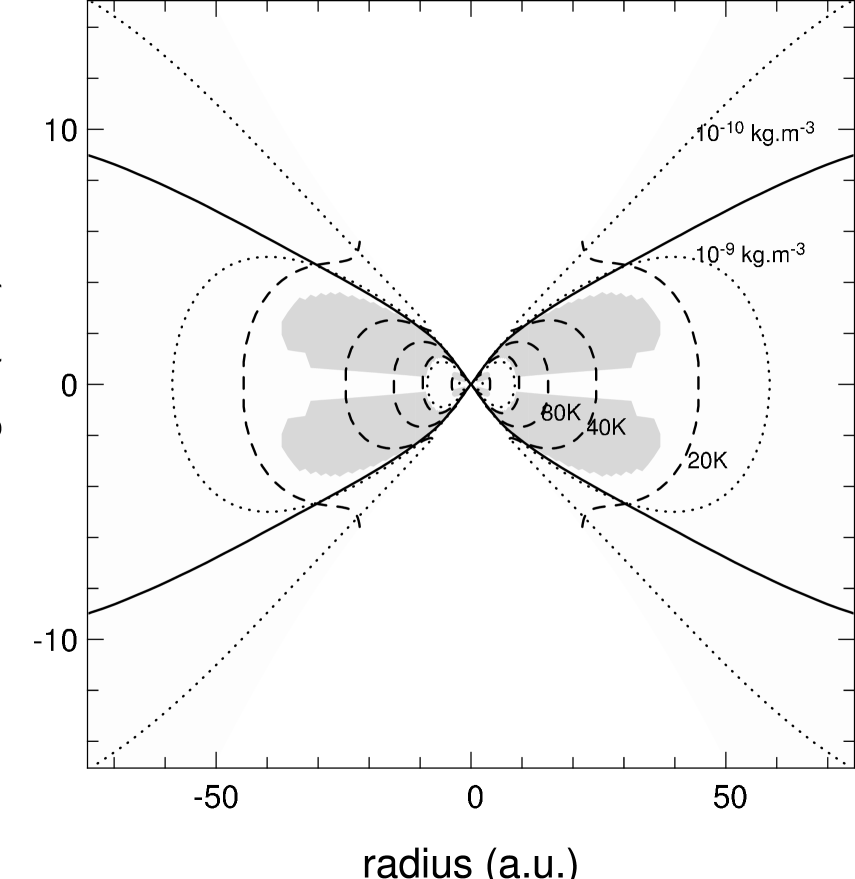
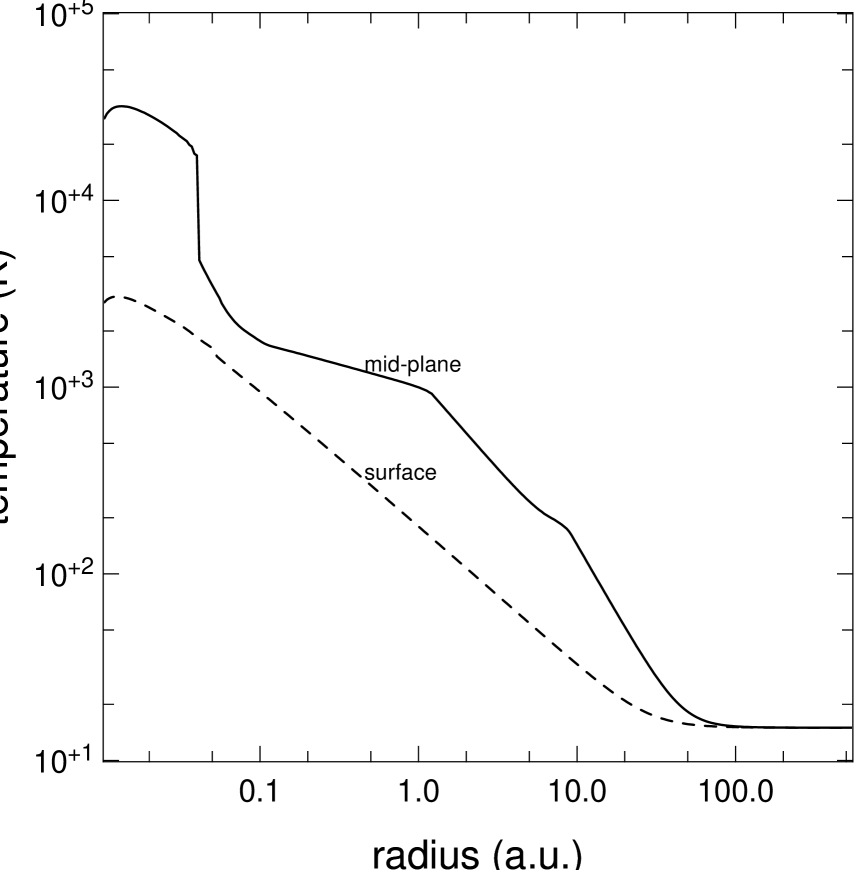
- 垂直温度プロファイルの解析的公式が導出され、円盤の光球層における温度上昇が主に粘性加熱と星からの照射の共同効果によって引き起こされることを示している。
- 水平放射平衡や周囲媒質からの照射といった追加の加熱源の組み込みが可能であり、モデルの柔軟性が向上している。
- 低質量準主系列星を対象に、自己相似的降着プロファイルとα/β粘性則を用いて、温度、圧力、密度の2次元マップを計算した。
- SED、高分解能画像、干渉測定可視度といった観測量を直接計算可能であり、恣意的なべき乗則よりも、円盤パラメータのより正確な制約が可能になる。
- 各エネルギー源(例:粘性加熱、照射加熱)の有効温度に対する導出式により、全加熱寄与の分解が可能となり、円盤放射の物理的起源の理解が明確になった。
この論文を読む
Nubintのビューアで原文を開き、読みながら気になる箇所をすぐに質問できます。
Nubintでこの論文を読むこのレビューはAIが論文の原文をもとに作成しました。引用する前に原文をご確認ください。